
Greeting
Good day, dear Professor Doctor …,
I would now like to present the patient Ms. Wally Geier to you.
She is 27 years old, one meter sixty-five tall and weighs approximately 71 kg. The body mass index (BMI) is 26.07 kg/m² which places her in the range of slight overweight.
Current history
The patient presented to us as an emergency due to increasing, dull and pressing upper abdominal pain on the left side since this morning, radiating to the left shoulder, following a bicycle accident. Immediately after the accident, according to the patient, she had upper abdominal pain yesterday with an intensity of 4, which decreased after about two hours so that she was able to sleep. Since waking this morning, however, she has had pronounced pain with an intensity of 8.
Accompanying symptoms and findings reported by the patient include: Hematuria, Tachycardia, Dizziness as well as a hematoma on the left side below the ribs, about five centimeters in diameter.
She reported that her abdominal girth had increased.
The patient denied the following complaints: head injury, loss of consciousness, amnesia, vision problems, epistaxis, dyspnea, nausea, vomiting , abrasion , lacerations, vaginal bleeding, limited range of motion, paresthesias, hypoesthesia , visible malpositions, dislocations or fractures as well as fever.
Regarding the course of the accident, the patient reported the following:
At 9 p.m. she was on her way home from work at the train station. At the Plärrer, near the intersection, she looked at WhatsApp while riding and missed a hydrant . As a result, she collided with it and crashed into it. She struck the hydrant with her left upper body and was wearing a helmet at the time.
She arrived accompanied by her partner.
She stated that she last ate something yesterday at 8 p.m.
Review of systems (vegetative history):
The review of systems is unremarkable, apart from a vegan diet, insomnia in the form of both difficulty falling asleep and maintaining sleep due to pruritus from eczema as well as constipation.
Past medical history
The following past medical conditions are reported anamnestically:
For one year the patient has suffered from hemorrhoids grade II.
She stated that for about 5 years she has had atopic dermatitis with pruritus on the scalp, which worsens with emotional stress and showers that are too hot.
She added that for 3 years she has had migraine with approximately one attack every two months, which often coincides with her period.
Previous surgeries
Concerning previous surgeries the patient reported the following:
Three years ago an operation on the right upper ankle was performed after a skateboard accident. Screws and plates (osteosynthesis) were used for fixation. Additionally, a laceration on the forehead was treated with sutures. Approximately one year later the implants were removed.
Gynecology:
She reported having had a vaginal delivery four years ago.
She stated that her last menstruation occurred about two weeks ago.
Her last gynecological visit was six months ago with no abnormal findings.
Medications
According to her prescription, the patient is currently taking the following medications:
Aspirin 300 mg in combination with a caffeine preparation.
She also uses a lidocaine-containing ointment as well as Linola-fat ointment.
Allergies
The patient reported the following allergies or intolerances:
There is an allergy to amoxicillin with the occurrence of urticaria, most recently in the context of tonsillitis after taking 500 mg. Subsequently, therapy with azithromycin was given.
In addition, there is lactose intolerance with flatulence and diarrhea.
Noxae
Regarding recreational substances, the patient stated that she has been a non-smoker for 4 years. Previously she smoked about 20 cigarettes per day for a period of 5 years, corresponding to 5 pack-years.
She occasionally drinks one to two glasses of sparkling wine.
She denied drug use.
Social history
Regarding the social history the patient reported that she swims about two to three times a week and works as a conductor for Deutsche Bahn. Two years ago she divorced and is now in a civil partnership. She currently lives with her partner and her daughter, who suffers from strabismus and wears glasses for treatment, in an apartment.
Family history
Regarding the family history, the patient reports the following:
Her father suffered from a laryngeal carcinoma two years ago and now has a tracheostomy, through which he breathes.
Her mother is 62 years old and suffers from severe obesity with a body weight of approximately 107 kg. Due to the overweight, she developed osteoarthritis of the hip joints and received bilateral total endoprostheses (TEP).
She has no pets.
Suspected and differential diagnosis
The anamnestic information suggests a blunt abdominal trauma. The course of the pain most likely indicates a bilateral splenic rupture. However, injuries to other abdominal organs such as pancreatic rupture, abdominal wall injuries, bladder rupture, as well as possible injuries of the uterus and adjacent structures should also be excluded. A possible rib fracture and an injury to the spine should also be clarified.
Diagnostic workup
physical examination
First, as with any trauma, the ABC scheme should be performed to secure the airway, breathing and circulation. Since there is suspicion of a splenic rupture and the patient shows signs of hypovolemia such as tachycardia and orthostatic hypotension , she should be admitted to the hospital. Two large-bore intravenous catheters should be placed, the fluid balance corrected, and blood group and Rh factor determined and blood units reserved for possible transfusion .
On inspection, hematomas in the upper abdominal or flank area, an asymmetric abdominal wall due to blood collections (hemoperitoneum), and signs of hypovolemia such as pale skin may be noticeable.
On palpation, a localized guarding may indicate peritoneal irritation . On percussion , a dull percussion sound over the affected area may suggest a hemoperitoneum. On auscultation, tachycardia and changes in breath sounds, such as diminished vesicular sounds or crackles, may be detected. Absence of bowel sounds may also indicate a paralytic ileus or a severe abdominal injury.
Subsequently, the extremities should be checked for perfusion (e.g., by pulse and capillary refill time), motor function (active and passive movements as well as reflexes) and sensation (e.g., by touch or light pressure stimuli).
Laboratory tests
As part of the initial diagnostics, the following laboratory parameters should be determined for further evaluation: complete blood count, coagulation parameters, blood group determination and Rh factor, blood gas analyses, creatinine and electrolytes, amylase, lipase, β-hCG as well as liver values (including alanine aminotransferase (ALT, GPT), aspartate aminotransferase (AST, GOT) and gamma-glutamyl transferase (γ-GT)).
Anatomical diagnosis
FAST ultrasound (Focused Assessment with Sonography for Trauma)
FAST ultrasound is a rapid ultrasound examination performed in trauma patients to detect free fluid (e.g., blood) in body cavities.
It includes four standardized scanning areas:
right upper abdomen (Morison’s pouch: liver – kidney),
left upper abdomen (spleen – kidney),
pelvis (Douglas pouch),
pericardium (subxiphoid view of the heart for cardiac tamponade).
You must lie still on your back – we apply some gel to the skin and examine four specific areas of the body with the probe. The examination is painless, requires no special preparation and is completely risk-free – complications are not expected.
X-ray examination:
For this patient, a chest x-ray would be useful for complementary assessment of the hematoma and especially to exclude rib fractures and pulmonary contusions. We can also assess the upper back at the same time.
An x-ray examination is an imaging procedure that visualizes internal structures such as bones, the lungs and other tissues using x-rays. The patient removes jewelry and clothing in the area to be examined and stands facing the x-ray plate. The examination lasts only a few seconds and is completely painless.
Computed tomography
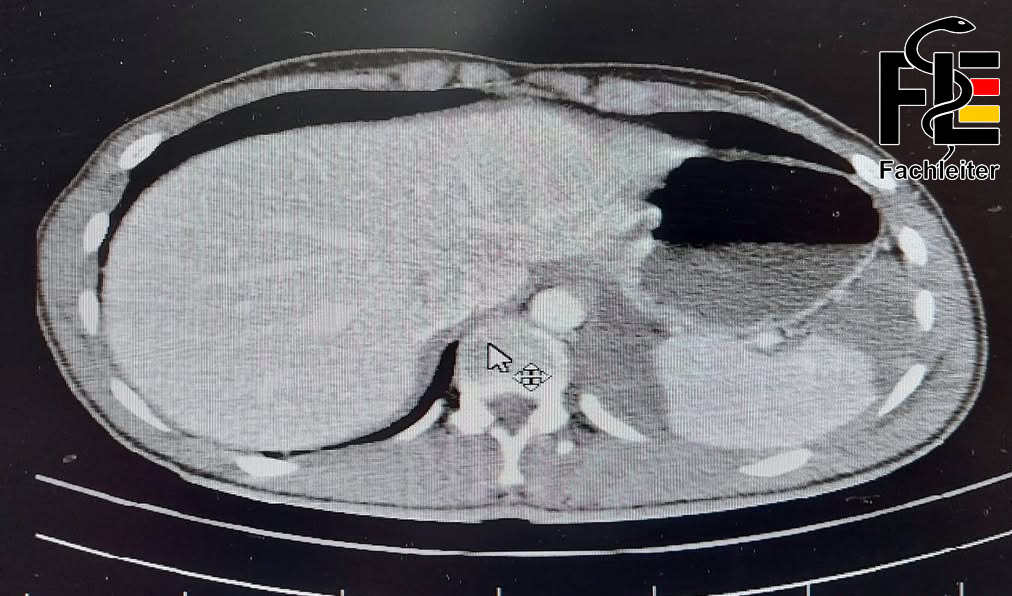
A contrast-enhanced CT abdomen is necessary when splenic rupture is suspected, as it provides a fast and precise depiction of the spleen and the abdominal cavity. The contrast helps to better detect blood collections (hemoperitoneum) and the extent of the injury and to assess the severity of the rupture.
If the patient is allergic to contrast medium, a non-contrast CT abdomen can be performed to diagnose a splenic rupture.
Computed tomography (CT) is an imaging procedure that uses x-rays to create detailed cross-sectional images of the internal organs. The patient is moved into a tubular scanner and must lie still during the examination. Sometimes a contrast agent is administered to allow more precise visualization. The examination is painless and lasts only a few minutes. Before an examination with contrast, it is important that you drink sufficient fluids. Certain medications such as metformin should be paused beforehand – we will clarify that with you. In rare cases, an allergic reaction to the contrast agent may occur (but do not worry: we are prepared and have all necessary medications and measures on site).
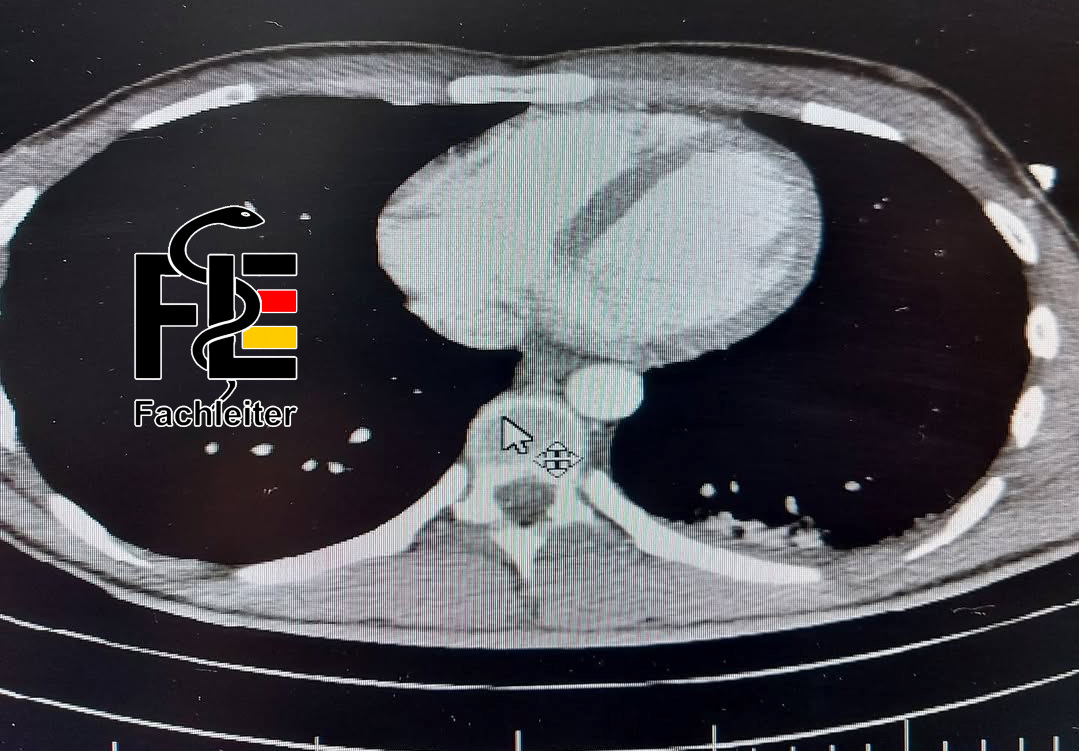
Splenic rupture Grade IV according to AAST classification + left renal and adrenal hematoma
MRI (Magnetic Resonance Imaging)
In an emergency such as suspected splenic rupture, MRI is usually not preferred because it is more time-consuming and cannot be performed as quickly as a CT scan. An MRI without contrast may not provide the same level of detail in assessing bleeding or organ injuries as a contrast-enhanced CT.
An MRI (Magnetic Resonance Imaging) is an imaging technique that uses magnetic fields and radio waves to produce detailed images of organs, tissues, and structures in the body. The patient must first remove jewelry and other metallic objects and inform staff about implants. Then they are placed into a tubular scanner. During the examination, which takes about 20 to 60 minutes, the patient must lie still. In some cases, contrast medium may be administered to better visualize certain structures.
Consultations
Surgery / Trauma surgery consultation as well as anesthesiology consultation
Treatment:
After stabilizing the patient with a unilateral or bilateral splenic rupture, treatment depends on the severity of the injury:
Conservative treatment: In stable patients with a unilateral splenic rupture, conservative therapy with strict bed rest and close monitoring (blood pressure, hemoglobin levels) may be sufficient. In some cases spontaneous healing can also occur, especially with small ruptures.
Surgical treatment: For bilateral splenic rupture or severe unilateral ruptures, surgery is required. This may include removal of the spleen (splenectomy) or splenic repair depending on the extent of the injury.
Complications
Bleeding, infections: Especially after splenectomy particularly from encapsulated bacteria (e.g. pneumococci), hematomas and abscesses as well as thromboses and embolisms.
Precautions After Splenectomy
Vaccinations against pneumococci, meningococci and Haemophilus influenzae
avoid strenuous physical activities or sports
Splenic rupture in pregnancy
A splenic rupture during pregnancy is a rare but potentially life-threatening condition for mother and child. It most often occurs after blunt abdominal trauma, for example as a result of a traffic accident or fall. In rare cases a spontaneous splenic rupture can also occur, for example with infections, hematologic diseases or marked splenomegaly.
In pregnant patients diagnosis can be more difficult because symptoms may initially be attributed to gynecological or obstetric causes.
Diagnosis is primarily performed by ultrasound or FAST examination to detect free fluid in the abdomen. In hemodynamically stable patients a CT scan can be performed additionally. Therapy depends on the severity of the injury and the patient’s circulatory status. While conservative management may be possible in stable patients, unstable conditions usually require emergency surgical care, possibly with splenectomy.
Interdisciplinary collaboration between trauma surgery, general surgery, gynecology, anesthesiology and neonatology is particularly important to improve the prognosis for mother and fetus.
With a splenic rupture in pregnancy there are important differences depending on the trimester. In the first trimester diagnosis is usually easier because the uterus is still small; differential diagnosis must however consider gynecological causes such as an ectopic pregnancy. In the second trimester the enlarging uterus makes clinical examination and imaging more difficult. In the third trimester the situation is particularly critical because the large uterus significantly complicates diagnosis and surgical management and at the same time there is an increased risk of fetal hypoxia, preterm birth and maternal shock. Additionally, the symptoms can mimic gynecological emergencies such as placental abruption.
Extra
Names:
Lukas Bradl, Franziska Lehmann
History:
At home the patient took ASA 500 mg, but without pain relief
Course of the incident:
he wants to avoid a dog
He overlooked a bottle recycling container.
Pre-existing conditions:
Espumisan chewable tablets: bloating
8 ligations for haemorrhoids
Family history:
Twin brother: bronchial asthma
Social history:
Train conductor (shift work)
Questions
1. What is the difference between vegetarian and vegan?
The difference between vegetarian and vegan is that vegetarians abstain from meat and fish but still consume animal products such as milk, eggs and honey. Vegans, on the other hand, avoid all animal products including milk, eggs, honey and anything derived from animals.
2. What is the risk with pruritus in dermatitis?
The risk of developing secondary infections is increased by frequent scratching.
3. Can I get a painkiller and go home?
This is a serious injury that usually requires intensive treatment and observation. Painkillers can help relieve the pain, but because of possible complications you must stay in the hospital so that we can ensure no further problems occur. It is therefore unlikely that you can go home without continued monitoring and treatment. In addition, you should receive a saline infusion to compensate for fluid loss and stabilize your circulation.
4. What are hemoglobin and hematocrit?
Hemoglobin (Hb) is a protein in red blood cells that transports oxygen in the blood.
Hematocrit (Hct) is the proportion of red blood cells in the total blood volume.
5. When is a transfusion required for hemorrhage?
Hemoglobin value < 7 g/dl
6. What are Berufsgenossenschaften?
Berufsgenossenschaften are the providers of statutory accident insurance in Germany. They cover the costs of occupational accidents and occupational diseases and offer affected persons medical treatment, rehabilitation and financial support.
(In Germany, an accident on the direct route between work and home is generally considered a work accident if no private detours were made. This so-called commuting accident is covered by statutory accident insurance.)
7. How do we proceed if the patient refuses inpatient treatment?
If a patient refuses inpatient treatment, a detailed informed discussion about the medical necessity and possible risks is first conducted. The patient’s capacity to consent is assessed. The refusal is carefully documented, ideally with a written statement. If feasible, outpatient alternatives can be offered.
8. What types of shock are there?
• Hypovolemic shock
• Cardiogenic shock
• Septic shock
• Anaphylactic shock
• Neurogenic shock
9. How does ligation treatment for hemorrhoids work?
Ligation for hemorrhoids is a procedure for treating enlarged or swollen hemorrhoids. A hemorrhoid is tied off with a special rubber band (ligated), interrupting its blood supply. As a result the hemorrhoid shrinks and falls off after several days or weeks.
Notes
BMI
Body mass index (BMI)
BMI is a dimensionless index for classifying body weight. It is calculated by dividing body weight in kilograms by the square of height in meters. A BMI of 26.07 therefore corresponds to a classification above the normal range and is considered overweight.
m²
Square meter (m²)
m² is the SI unit for area and denotes a region one meter long by one meter wide. In the BMI formula m² appears in the denominator because height in meters is squared.
Hematuria
Blood in the urine
Possible urinary tract injury
Tachycardia
Tachycardia
Tachycardia denotes a pathologically increased heart rate that often presents clinically as palpitations or a rapid pulse. It can be caused by physical exertion, stress, fever, blood loss or cardiac disease and should be evaluated regarding cause and hemodynamic significance.
Hematoma
Hematoma
A hematoma is a localized collection of blood in soft tissue that arises from injury to smaller or larger vessels. Clinically it usually appears as a painful swelling with livid skin discoloration and can cause a sensation of pressure depending on its extent.
Significance: Size and location provide clues about the extent of bleeding and possible associated injuries; an increase in swelling or severe pain requires diagnostic evaluation.
Amnesia
Amnesia
Amnesia denotes a partial or complete loss of memories or an impaired ability to form new memories. Retrograde amnesia (loss of already stored memories) is distinguished from anterograde amnesia (impairment of forming new memories).
Epistaxis
Epistaxis
Epistaxis denotes bleeding from the nasal cavity, ranging from minor self-limiting bleeds to more significant nosebleeds. Causes include local mucosal injury, dry nasal mucosa or systemic coagulation disorders.
Dyspnea
Dyspnea
Dyspnea denotes the subjective sensation of breathlessness or difficulty breathing. It can be acute or chronic and vary in quality and severity.
Meaning: The assessment includes triggers, accompanying symptoms (e.g., cyanosis, tachypnea) and the impact on exercise tolerance to differentiate possible cardiac, pulmonary or other causes.
Nausea
Nausea denotes the subjective feeling of queasiness with the typical sensation of discomfort and urge to vomit, without necessarily leading to emesis.
Emesis
Emesis denotes actual vomiting, i.e., the active expulsive reaction of gastric contents through the mouth.
Abrasion
Abrasion describes a superficial injury to the skin layers, typically an abrasion resulting from friction or scraping of the epidermis.
Lacerations
Lacerations refer to deeper tearing or cutting injuries of the skin and subcutaneous tissue, which usually show visible wound edges and bleeding.
Paresthesias
Paresthesias
Paresthesias denote abnormal or pathologically altered sensations such as tingling, pins-and-needles or prickling dysesthesias without external stimuli. Such symptoms often indicate irritation or damage to peripheral nerves or central conduction pathways and require further evaluation in clinical contexts.
Hypesthesia
Hypesthesia
Hypesthesia describes a reduced sensory capacity to touch, pressure, temperature or pain. It can indicate local nerve lesions, neurophysiological disorders or central causes and may require neurological examination for clarification.
Malpositions
Malpositions
Malpositions are visible misalignments of body parts or limbs that can occur after trauma, fracture or dislocation. They are often associated with deformity, loss of function and pain and indicate possible structural damage.
Dislocations
Dislocations
Dislocations are joint separations in which the articular surfaces lose their normal relation to each other. They typically lead to marked functional impairment, pain and visible deformity and usually require medical treatment.
Fractures
Fractures
A fracture is a disruption in the continuity of a bone. Typical findings can include local pain, swelling, deformity, restricted mobility and tenderness to pressure.
Hydrants
Hydrants
Hydrants are permanently installed connection points in public spaces for drawing firefighting water, recognizable as above-ground columns or inlet openings at street level. They serve fire and rescue services in firefighting. In the described accident report the patient collided with such a hydrant.
Insomnia
Insomnia
Insomnia describes persistent difficulties initiating or maintaining sleep or frequent nocturnal awakenings that can impair daytime function. In the patient there are both sleep-onset and sleep-maintenance problems, which she attributes in the report to itching caused by an eczema.
Pruritus
Pruritus
Pruritus denotes the sensation of severe itching of the skin. Common causes are dermatologic diseases such as eczema; the itch can impair sleep quality and lead to secondary problems. In the present history pruritus is described as a consequence of eczema and cited as a cause of sleep disturbances.
Constipation
Constipation
Constipation denotes reduced or difficult bowel movements with less frequent defecation and often hard stool.
Hemorrhoids
Hemorrhoids
Classification and definition: Hemorrhoids are vascular cushions in the anal area that can enlarge internally or externally.
Causes: Common triggers are repeated strong straining with constipation, diarrhea, pregnancy and prolonged sitting.
Clinical presentation: Typical complaints are itching, pain, a feeling of swelling at the anus and blood in the stool during defecation.
Therapeutic approaches: Conservative measures such as dietary changes, local care and sitz baths are considered first; for persistent or advanced findings, interventional or surgical options exist.
Atopic dermatitis
Atopic dermatitis
Clinical picture: Atopic dermatitis is a chronic relapsing skin disease with dry, inflamed and intensely itchy skin.
Typical localization and course: In adults lesions often occur on flexural surfaces as well as the face and scalp; here the patient reports itchy scalp findings.
Triggering or worsening factors: Psychological stress and overly hot showers were named as amplifiers of the complaints.
Migraine
Migraine
Characteristics: Migraine is characterized by recurrent, often unilateral, pulsating headache attacks.
Associated symptoms: Nausea, vomiting and increased sensitivity to light and sound commonly occur; occasionally an aura with visual or sensory symptoms precedes the headache.
upper ankle joint
Short definition and anatomy
The upper ankle joint (talocrural joint) connects the lower leg with the talus and forms the joint for dorsiflexion and plantarflexion.
Components
Anatomically the bony components consist of the distal tibia, the distal fibula and the talus.
Functional significance
The talocrural joint transmits weight load from the lower leg to the foot and enables movements in the upper region of the ankle.
Aspirin
Drug class
Aspirin is a nonsteroidal anti-inflammatory drug (NSAID).
Mechanism of action
It inhibits cyclooxygenase enzymes and thereby reduces prostaglandin synthesis, leading to analgesic, anti-inflammatory and antipyretic effects. Additionally, it irreversibly inhibits platelet aggregation.
Important indications
Aspirin is used symptomatically for pain, fever and inflammation; due to its anticoagulant effect it is also used prophylactically in certain cardiovascular diseases.
Risks and side effects
Common adverse effects affect the gastrointestinal tract (e.g., discomfort and increased bleeding tendency). Increased bleeding risk and occasional allergic skin reactions are also possible.
Linola
Product type and indication
Linola is an emollient lipid ointment or moisturizing skin care preparation for the treatment and prevention of dry and irritated skin.
Effect and use
Topically applied, the ointment forms a lipid film that reduces moisture loss and supports the skin barrier; it is used for regular care of dry skin areas.
Side effects and precautions
Systemic side effects are rare with topical use; however, local skin irritation or contact allergies can occur. In unclear skin changes medical advice should be sought.
Pack years
Definition and calculation
One pack year is calculated by dividing the number of cigarettes smoked daily by 20 (one pack) and multiplying by the years of smoking: (cigarettes/day ÷ 20) × years.
Example
Someone who smoked 20 cigarettes daily for 5 years has 5 pack years (20/20 × 5 = 5).
Clinical relevance
The pack years value serves to estimate risk exposures for smoking-associated diseases.
Ticket inspector (female)
A ticket inspector works in rail transport and is responsible for checking tickets and enforcing carriage conditions. Her tasks include providing information to passengers, assisting with boarding and alighting, and monitoring safety on board. In the event of disruptions or emergencies she coordinates hazard response measures and enforces operational regulations.
Civil partnership
A civil partnership denotes a long-term partnership relationship between two people. It can be organized privately, but often involves shared living and mutual support in daily life. In many cases there are also legal or financial interdependencies, such as shared household management or mutual care obligations.
Strabismus
Strabismus (squint)
Strabismus is a misalignment of the visual axes in which the gaze direction of the two eyes is not parallel. This can impair stereoscopic perception and risks the development of amblyopia if one side is consistently suppressed. Causes are diverse and range from congenital muscular anomalies and differing refractive errors to neurological disorders. Treatment depends on the cause and the patient’s age and includes nonoperative measures such as spectacle correction and occlusion therapy and, if indicated, surgical interventions on the ocular muscles.
Laryngeal carcinoma
Laryngeal carcinoma (larynx cancer)
A laryngeal carcinoma is a malignant tumor of the larynx, often of the squamous cell type. Clinical signs can include persistent hoarseness, difficulty swallowing, chronic cough, throat pain, weight loss and, in advanced disease, dyspnea. Treatment consists depending on stage of surgery, radiotherapy, chemotherapy and occasionally immunomodulatory approaches. Prognosis depends largely on tumor stage. With extensive tumor spread or after certain surgeries a tracheostomy may be necessary; in that case patients breathe through the tracheal opening.
Tracheostoma
A tracheostoma is a surgically created opening in the anterior neck region that provides an airway to the trachea.
Indications:
It is created when the normal airway passage is insufficient or must be secured long term, for example after surgeries in the neck region, with persistent airway obstruction or after prolonged intubation.
Important aspects of care:
Care includes regular cleaning of the stoma opening, securing the cannula and monitoring for secretion problems, infections, or airway obstructions. Possible complications are stenoses, infections, bleeding or dislocation of the cannula; if complications are suspected, specialist evaluation is required.
Obesity
Definition:
Obesity refers to a persistently increased body fat and is generally defined by a body mass index (BMI) of 30 or higher.
Consequences and risks:
Excess body weight increases the risk for cardiovascular diseases, metabolic diseases such as type 2 diabetes, as well as mechanical joint problems and other comorbidities.
Therapeutic principles:
Treatment pursues lifestyle changes (dietary modification, physical activity) and can, in suitable patients, be complemented by pharmacological measures or surgical procedures; therapy planning should be individualized and interdisciplinary.
Splenic rupture
Clinical classification:
A splenic rupture is a tear of the spleen that can lead to internal bleeding. A distinction is made between acute tears that occur immediately after trauma and delayed hemorrhages, where deterioration occurs hours to days after the event.
Causes and typical symptoms:
Common causes are blunt abdominal traumas such as falls or traffic accidents. Clinical warning signs are pain in the left upper abdomen, radiating left shoulder pain (Kehr sign), pallor and signs of volume depletion up to shock.
Diagnostics and therapy:
Evaluation is clinical and by imaging (e.g., ultrasound/FAST, CT). With hemodynamic stability, conservative management with observation may be considered; in persistent bleeding or circulatory instability, surgical treatment up to splenectomy is required.
Spine
Structure and function:
The spine is the bony axis of the trunk and protects the spinal cord. It consists of the cervical, thoracic and lumbar vertebrae, the sacrum and the coccyx.
Anatomical segmentation and significance:
It typically consists of 7 cervical, 12 thoracic and 5 lumbar vertebrae; the sacrum and coccyx follow caudally. The spine bears loads, enables movements of the trunk and serves as an attachment point for ligaments and muscles.
Clinical relevance:
In trauma patients, a possible spinal injury should be excluded, as damage to the bony canal or spinal cord can have serious neurological consequences.
Hypovolemia
Hypovolemia – definition and clinical significance
Hypovolemia refers to a reduced circulating blood or plasma volume that can lead to impaired organ perfusion. Common causes are acute fluid loss due to vomiting or diarrhea, medication effects (e.g., diuretics) and especially blood loss from injuries.
Clinical signs and significance in trauma
Typical findings are tachycardia, blood pressure drop up to orthostasis, reduced urine output and increasing signs of hypoperfusion. In suspected splenic rupture, hemorrhagic hypovolemia is a possible explanation for the symptoms.
Relevant measures (brief overview)
In the emergency context, securing the airway, breathing and circulation is paramount. For stabilization, large-bore intravenous accesses are usually established, intravascular volume is replenished and blood group and rhesus factor are determined with preparation of blood units for possible transfusion.
orthostatic hypotension
Orthostatic hypotension – term and causes
Orthostatic hypotension denotes a significant blood pressure drop when changing to an upright position, which can trigger dizziness, weakness or syncope. Pathophysiologically, there is usually an insufficient rapid vasoconstrictive and tachycardic response.
Causes and clinical relevance
Triggers include volume deficit (dehydration, blood loss), certain medications, cardiovascular diseases or autonomic nervous system disorders. In the context of trauma, an orthostatic pattern can indicate a relevant volume deficit, but must be evaluated according to the situation.
Two large-bore
Upper arm vein (e.g., vena brachialis) or in the femoral vein (groin)
Fluid balance
Fluid balance – significance and examples of infusion solutions
Fluid balance describes the equilibrium of water and electrolytes in the body and their distribution between compartments. A disturbance of this balance can impair tissue perfusion and organ function.
Blood group and rhesus factor
Blood group and rhesus factor
The blood group describes the classification of blood according to antigen patterns on erythrocyte surfaces, primarily in the ABO system (A, B, AB, O). The rhesus factor mainly refers to the D antigen and is indicated as Rh positive or Rh negative. Both pieces of information are crucial for compatibility in blood transfusions and for assessing risk constellations such as hemolytic disease of the newborn.
In emergency situations, for example with traumatic bleeding, rapid determination of blood group and rhesus factor is important to allocate needed blood products correctly or to reserve immediately compatible donor products.
Blood units
Blood units
Blood units are blood products prepared from donor blood for clinical use. Common divisions are red blood cell concentrates for treating significant anemia or blood loss, plasma preparations for coagulation disorders and platelet concentrates in relevant thrombocytopenia.
In acute blood loss or planned transfusion, blood units are selected and, if necessary, held in reserve based on blood group and compatibility testing.
Transfusion
Transfusion
A blood transfusion involves the administration of prepared blood products to treat blood loss, severe anemia or coagulation disorders. Prior to any transfusion, the purpose and possible side effects should be discussed with the patient and consent obtained.
Preparation and execution include determination of blood group and compatibility testing, verification of the transfusion product, recording baseline vital signs and continuous monitoring during and after administration to detect possible complications early.
Peritoneal irritation
Peritoneal irritation
Peritoneal irritation refers to painful irritation or inflammation of the peritoneum. Causes can be local inflammatory processes, perforating diseases or traumatic injuries.
Clinically this often manifests as localized tenderness, guarding or peritonitic signs such as rebound pain; accompanying symptoms can be nausea, vomiting or fever. On percussion and examination, finding a dull percussion note can indicate free fluid in the abdomen. Peritoneal signs generally require prompt further diagnostics and therapy planning.
Percussion
Percussion
Technique: By repeatedly and deliberately tapping a body area with a finger of the hand, a sound event is produced. Usually, a placed finger serves as the pleximeter, which is tapped with another finger or special instruments.
Interpretation of findings: The resulting percussion qualities range from tympanic to dull. A dull or muffled percussion note suggests denser tissue or fluid beneath the surface; a tympanic sound is more indicative of air-filled spaces.
Limitations: The informative value depends on location, patient habitus, muscle tone and examination technique. Results should always be assessed in the clinical context with palpation and auscultation.
Pulse
Pulse
Definition and purpose: The pulse describes the palpable pressure wave in arteries resulting from the heartbeat. It is used to assess perfusion and cardiovascular function.
Palpation sites: Common sites for palpation include the radial artery at the wrist and the dorsalis pedis artery on the dorsum of the foot.
Examination aspects: Recorded are rate, rhythm, strength (amplitude) and side comparison. Absent or markedly weakened pulse at a distal point can indicate arterial hypoperfusion and requires further evaluation.
Capillary refill time
Capillary refill time
Measurement: After briefly applying pressure to a nail bed until it blanches, the time is measured until normal color returns. Measurement is done immediately after release of pressure.
Interpretation and influencing factors: A rapid return of blood refill suggests adequate peripheral perfusion; a delayed return can indicate hypoperfusion. Measurements are, however, influenced by ambient and patient factors such as temperature, circulatory status, age and measurement method and are therefore not always specific.
Blood count
Blood count
Components and purpose: The blood count includes parameters such as hemoglobin, erythrocytes, leukocytes and platelets and serves as orientation diagnostics in blood loss, infections, anemias or coagulation disorders.
Significance of individual parameters: Hemoglobin reflects oxygen-carrying capacity and can be decreased in significant losses or chronic diseases. An elevated leukocyte count indicates an immune response, for example in infections or inflammation, but is not specific.
Limitation: Deviations in the blood count are indicators but not definitive proof of a single diagnosis; findings must always be interpreted in the overall clinical context.
Blood gas analyses
Blood gas analyses
Purpose: Assessment of respiratory function, acid-base balance and oxygenation, and additionally indications of tissue perfusion.
Measured parameters: Typically pH, pCO2, pO2, bicarbonate (HCO3-) and oxygen saturation are recorded; in many situations lactate is also determined to detect accumulated anaerobic metabolism or hypoperfusion.
Significance: The combination of values allows differentiation of respiratory and metabolic acid-base disturbances and estimation of oxygenation and ventilation problems as part of the initial diagnostics.
Creatinine
Creatinine
Significance: Creatinine is a laboratory chemical parameter used as a rough indicator of renal function and glomerular filtration performance.
Clinical interpretation: Elevated creatinine values indicate impaired renal function, can occur in both acute and chronic kidney injury, and arise among other causes from reduced renal perfusion (e.g., hypovolemia or shock) as well as structural kidney diseases.
Use in context: In the context of initial diagnostics, creatinine is used to estimate kidney function before further diagnostic or therapeutic measures.
β-hCG
β-hCG
Purpose: Detection of β-hCG is primarily used to exclude or confirm pregnancy.
Use in initial diagnostics: In women of childbearing age β-hCG is routinely determined to exclude pregnancy before further examinations or treatments.
Note: A positive detection requires further clarification according to the clinical situation.
PatientSalutation: Mr/Ms Senior Physician ……….., I would like to present the patient Wally Geier to you. | Date12/06/2025 |
| Age 27 years | Weight 71 kg | Height 165 cm |
Allergies (keywords)
Amoxicillin (urticaria), lactose intolerance (flatulence, diarrhea)
Recreational substances / drugs (keywords)
Non-smoker for 4 years, previously 5 pack-years
Occasionally 1–2 glasses of sparkling wine
Denies drug use
Social history (keywords)
Conductor at Deutsche Bahn
Swims regularly (2–3x per week)
Divorced, lives in a partnership with boyfriend and daughter (strabismus, wears glasses)
No pets, no recent travel
Family history (keywords)
Father: laryngeal carcinoma, tracheostomy
Mother: obesity (107 kg), hip TEPs due to osteoarthritis
Medications (keywords)
Aspirin 300 mg + caffeine preparation
Linola fatty ointment
Lidocaine-containing ointment
History (full sentences)
The patient presented emergently due to increasing, dull-pressing upper left abdominal pain radiating to the left shoulder since the morning after a bicycle accident. Immediately after the accident she initially reported pain (VAS 4/10) which subsided after about two hours. Since waking up, however, there has been severe pain (VAS 8/10). She also reported hematuria, tachycardia, dizziness and an approximately 5 cm hematoma beneath the left ribs. She stated that abdominal circumference had increased.
Denied were head injury, loss of consciousness, amnesia, dyspnea, nausea, vomiting, skin or mucous membrane injuries, vaginal bleeding, movement restrictions, sensory disturbances, malpositions, fractures and fever.
Regarding the course of the accident, the patient stated that at about 9 p.m. on her way home from work she collided with a hydrant after having looked at WhatsApp while riding. She struck the hydrant with the left upper body; she had been wearing a helmet.
The last food intake was the previous evening at 8 p.m.
She arrived accompanied by her partner.
The autonomic history is unremarkable except for insomnia (difficulty falling and staying asleep due to an itchy eczema), chronic constipation and a vegan diet.
Pre existing conditions known in her:
Hemorrhoids grade II for one year
Atopic dermatitis for 5 years with scalp pruritus that worsens with emotional stress and hot showers
and migraine with on average one attack every two months for the past 3 years.
Previous operations: three years ago osteosynthetic fixation of the right upper ankle after a skateboard accident, including suture of a laceration on the forehead. According to the patient the implants were removed one year later.
Gynecologically she stated she had a spontaneous delivery three years ago. The last menstrual bleeding occurred about two weeks ago. The last gynecologist visit was six months ago and was unremarkable.
Suspected diagnosis – differential diagnosis (full sentences)
The clinical symptomatology and mechanism of injury suggest a blunt abdominal trauma with suspicion of bilateral splenic rupture. Differentially, injuries to other intraabdominal organs (e.g., pancreatic rupture, bladder rupture), the abdominal wall, the uterus or adjacent structures should also be considered.
Rib fractures and involvement of the spine must also be excluded differentially.
Further management – therapy (full sentences)
The focus is on ensuring the ABC scheme.
Imaging and laboratory diagnostics will be performed, including blood count, blood type determination and Rh factor. Additionally, sonography and an abdominal CT will be carried out to assess a possible splenic injury and to exclude further intraabdominal organ involvement.
The patient will be admitted as an inpatient and closely monitored clinically.
A surgical consult must be obtained urgently.
Signature
First name Last name
Kind regards