
Greeting
Good day, dear Professor Doctor …,
I would now like to present the patient Detlef Schon to you.
He is 48 years old, one meter eighty-nine tall and weighs about 75 kg. The body mass index (BMI) is 21.0 kg/m² and is therefore within the normal range.
Current history
The patient presented to our practice due to a left-sided peripheral facial palsy since yesterday.
The patient reported reduced visual acuity and dyschromatopsiasince the day before yesterday. With monocular covering there is no diplopia phenomenon. In addition, he describes brief, bright photopsias at the periphery of the visual field, each lasting only a few seconds and occurring several times daily.
Furthermore, the patient reported slowly developing headaches for five days, localized mainly in the neck area.
There was slight neck stiffness, more precisely a meningismussymptomatology.
Accompanying are hypesthesias, paresthesias as well as pareses of the upper extremities.
He stated that when shaving he could hardly hold the razor and when eating could barely hold the spoon properly.
In addition he reported nocturnal, pulling back pain occurring.
He also complained of concentration problems, in particular forgetfulness.
A low-grade fever of 38.3 degrees and general malaise were noted.
The following symptoms were denied:
Pain or sensory disturbances in the face, tearing or salivation, hearing impairment or tinnitus, signs of an epileptic seizure, breathing problems, gastrointestinal complaints, dizziness or gait instability, cardiac complaints, joint or urogenital complaints, night sweats, rigors, lymphadenopathy, loss of appetite as well as unintended weight loss.
The patient reported that about three months ago during a hiking holiday in Garmisch-Partenkirchen he suffered a tick bite on the right thigh .
A few days later the patient noticed, according to his report, a reddish, ring-shaped skin rash of about 10 cm in diameter at that site. In the center there was a small pinpoint corresponding to the puncture site. After about three weeks the redness subsided spontaneously. He removed the tick himself.
(The aforementioned findings indicate an erythema migrans.)
Subsequently he had a mild cold.
He explained that his health insurance had not yet been active at that time, which is why he could not consult a doctor.
He has not undertaken any recent trips abroad.
He has no pets.
The autonomic history
The autonomic history is unremarkable, apart from insomnia due to the complaints and a constipation.
lasting for over ten years.
Pre-existing conditions
The following pre-existing conditions are known from the history: arterial hypertension for five years, which is currently well controlled. So far no complications have occurred. The last ophthalmologic examination took place two years ago.
The patient has suffered since childhood from bronchial asthma and allergic rhinitis, especially in spring with pollen exposure. Other triggers are not known; an eczema is not present.
For over ten years the patient has complained of neck pain, presumably degenerative between C five and C six.
Two years ago the patient had a bicycle accident with a left zygomatic arch fracture, which was treated conservatively and healed without complications.
Previous operations
——————————
Gynecology
——————————
Medications
Currently the patient takes the following medications according to prescription:
Metoprolol 50 mg 1-0-0
Ibuprofen 400 mg as needed
Movicol as needed
He uses Foster® spray in spring with pollen exposure.
She stated that she is vaccinated against COVID-19 and TBE.
Note: When a statement can be objectively confirmed by a medical observation – for example by means of a prescription – the indicative is appropriate.
Allergies
Pollen allergy: rhinitis
Noxae
He is a non-smoker, drinks one to two glasses of beer on weekends and reported no drug use.
Social history
He is a civil servant at the town hall, married and has a ten-year-old son and a thirteen-year-old daughter, both healthy.
Family history
He reported that his father is 75 years old, suffers from arterial hypertension and had a stroke three years ago. Since then he has required care and suffers from a right-sided hemiparesis.
His mother is 70 years old, had breast cancerseveral years ago, underwent surgery and received chemotherapy. She is currently cured.
Suspected and differential diagnosis
In my opinion the anamnesis is indicative of Lyme borreliosis.
Initially, after an incubation period, an erythema migrans appeared with subsequent nonspecific, flu-like symptoms.
Thereafter the patient developed neurological complaints consistent with early disseminated disease.
A Bell palsy, a viral meningitis or a mechanical radiculopathy can clinically be mistaken for early neurological Lyme borreliosis.
A babesiosis is a differential consideration, however fever spikes, signs of hemolysis and anemia are absent.
In rheumatoid arthritis one expects a symmetric involvement of small joints, which differs clearly from the pattern typically observed in Lyme arthritis.
When a patient presents with an erythema migrans, differential diagnoses include Lyme borreliosis, erythema annulare (non-infectious) and tinea corporis .
A bacterial cellulitis can be considered as a differential in stage I, i.e. with erythema migrans, since both conditions can present with local redness, swelling and warmth.
Diagnostic workup
In neuroborreliosis
Since there is suspicion of neuroborreliosis with CNS involvement in this patient, inpatient admission for further diagnostics and therapy is indicated.
With erythema migrans
If there is only an erythema migrans without neurological symptoms, treatment can be performed on an outpatient basis.
For classic erythema migrans (EM) the clinical diagnosis is sufficient, so serology is not required. Because serology is often still negative in the early phase, it would unnecessarily delay therapy.
Lyme carditis
With suspected Lyme carditis, especially with symptoms such as dizziness, syncope or changing AV block degrees, immediate ECG monitoring should be performed. Depending on the findings, inpatient admission for monitoring and further diagnostics is indicated.
physical examination
Initially vital signs are recorded, including heart rate, blood pressure, respiratory rate, oxygen saturation and body temperature.
A targeted physical examination follows, beginning with inspection.
|
Stage |
Main |
Important physical examination |
Typical findings |
|
I |
Erythema migrans |
Skin inspection, lymph nodes |
Ring-shaped redness, regional lymphadenopathy, flu-like symptoms |
|
II |
Neuroborreliosis, carditis |
Neurological exam, cardiac examination |
Facial palsy, meningism, AV block |
|
III |
Lyme arthritis, peripheral neuropathy, acrodermatitis |
Neurological exam, joint examination, skin |
Encephalomyelitis, peripheral neuropathy, knee joint effusion, skin atrophy |
Stage I – Early localized infection (erythema migrans)
On physical examination the skin lesion is initially noticeable.
On inspection there is a greater than 5 cm rounded, slightly raised, reddish skin patch with central clearing on the right thigh and a small dot in the middle corresponding to the former tick bite.
(Sometimes mild pruritus may be present.)
The edges are sharply demarcated and the skin appears slightly warm.
On palpation the affected skin area is mildly warm but not tender to pressure. In the right inguinal region slightly enlarged, movable and tender lymph nodes can be palpated.
Percussion yields no pathological findings.
Auscultation of heart and lungs reveals no abnormalities.
Body temperature is slightly elevated (about 37.8 °C).
With flu-like symptoms temperature should be measured and attention paid to the presence of myalgias or arthralgias.
No further signs of systemic infection are present.

“Bull’s-eye” or target-shaped lesion, Source: CDC – Public Domain
Stage II – Early disseminated infection (neuroborreliosis, carditis, multiple EM)
On facial inspection there is asymmetry with a drooping left corner of the mouth and incomplete left eyelid closure, indicating a peripheral facial palsy. (This can be unilateral or bilateral in borreliosis.)
The tongue is protruded straight.
Additional erythemata migrantes are visible on the trunk, each about 3–4 cm, rounded and slightly reddish.
On palpation there is marked neck stiffness as an expression of meningism.
There is paravertebral tenderness in the cervical spine region.
Pulse is regular but bradycardic with a rate of about 50/min.
On cardiac auscultation an irregular rhythm with occasional pauses is heard, indicating an atrioventricular conduction disorder.
Lung auscultation shows no pathological additional sounds.
Neurological exam may reveal hypoesthesia of the upper extremities and reduced muscle strength.
In stage II neuroborreliosis may cause radicular pain. These radicular pains arise from inflammation of the spinal nerve roots
The result of the neurological examination depends on the involvement of the respective structures or cranial nerves, for example the abducent nerve (with diplopia due to gaze palsy), the oculomotor nerve (with ptosis and pupillary disturbance) or the vestibulocochlear nerve (with dizziness or hearing impairment).
The neurological status should be completely assessed, including testing of the cranial nerves, ophthalmoscopy, reflexes, sensation and coordination.
More rarely a mononeuritis multiplex involving multiple anatomically unrelated nerves, plexopathies of the brachial or lumbosacral plexus as well as a papilledema may develop.
Stage III – Late manifestation (Lyme arthritis, chronic neuroborreliosis, acrodermatitis chronica atrophicans)
On inspection the right/left knee joint shows marked swelling with slight redness and restricted mobility. The skin is tense but only moderately warm. The finding is consistent with monoarticular arthritis of the knee joint, as typically occurs in late-stage Lyme borreliosis.
On the extensor side of the lower leg bluish-reddish atrophic skin changes consistent with acrodermatitis chronica atrophicans are noted.
(Acrodermatitis chronica atrophicans (ACA) occurs mostly in women and typically affects the extensor sides of the hands and feet.)
On palpation a marked knee joint effusion can be felt. The joint is slightly warm but only moderately tender to pressure.
A taut-elastic resistance palpable in the popliteal fossa may correspond to a Baker’s cyst.
In late-stage borreliosis neurological manifestations can occur. These include encephalomyelitis, peripheral neuropathy as well as encephalopathy with memory or other cognitive disturbances.
Sensory testing reveals distal symmetric paresthesias and reduced vibration sense at the toes (“stocking-glove pattern”).
Gait is slightly limping.
Percussion is unremarkable.
Auscultation of heart and lungs reveals no pathological findings.
Reflex status should be checked and sensation assessed, including vibration testing with a tuning fork on the toes.
Coordination is assessed with the finger-nose test and the Romberg test.
If there is a joint effusion, joint aspiration should be performed if indicated.
Laboratory tests
Complete blood count (CBC, small or large) is usually unremarkable in Lyme borreliosis.
Liver enzymes (transaminases) may be slightly elevated in stage I.
Erythrocyte sedimentation rate (ESR) may be moderately elevated in all stages of the disease.
Cerebrospinal fluid examination (suspected neuroborreliosis) typically shows a lymphocytic pleocytosis, increased total protein and intrathecal antibody production against borrelia in borrelia-induced meningitis.
Laboratory diagnostics
Step 1:
First an ELISA or EIA test is performed as a screening test to determine whether antibodies against borrelia are present in the blood.
This test is sensitive but not very specific, meaning it can be positive in other infections or nonspecific reactions.
Step 2:
If the ELISA test is positive or equivocal, it is verified by a confirmation test.
Traditionally this is the Western blot for IgM and IgG antibodies, which analyzes specifically against which borrelia proteins antibodies are directed.
• IgM blot: indicates a recent or early infection, but is considered informative only in the first 4 weeks after symptom onset.
• IgG blot: indicates a past or earlier infection.
In very early infection the test may be negative → repeat after 7–14 days.
|
Additional knowledge |
|
The modified two-tier testing (EIA + EIA) is increasingly used in the USA (CDC), but is not yet established nationwide in Germany. Some laboratories use it as a supplement, but not as the sole standard. |
 Alternatively (e.g., in the USA or some newer laboratories):
A culture to detect Borrelia burgdorferi is not performed routinely because it is complex, time-consuming and has low sensitivity.
A negative PCR result in blood, CSF or joint fluid does not exclude Lyme borreliosis, as the sensitivity of PCR is low and pathogen detection, especially in later disease stages, often fails.
ECG
In case of cardiac symptoms, an ECG should also be performed and, if abnormal findings are present, echocardiography should be arranged.
A high-degree first-degree AV block with a PR interval ≥ 300 ms as well as second- or third-degree AV block are considered severe cardiac manifestations of Lyme borreliosis.
MRI
MRI is not performed routinely in every case of borreliosis, but only for neurological symptoms, unclear findings, atypical course, or to exclude other causes (e.g., tumor, multiple sclerosis, vascular lesion).
MRI may also be useful for persistent neurological symptoms despite therapy.
Typical findings are:
• Leptomeningeal or radicular contrast enhancement
• Signal changes in the brainstem or spinal cord
• Thickening of the facial nerve in the petrous bone region
• Nonspecific T2 hyperintensities of the white matter
CT
CT is performed only if MRI is not available or contraindicated (e.g., in patients with a pacemaker).
Usually CT shows nonspecific or unremarkable findings and is therefore less informative when neuroborreliosis is suspected.
Consultations
Infectious diseases consult, neurology consult, ophthalmology consult, orthopedic or rheumatology consult, cardiology consult,
Treatment
Therapy of erythema migrans
Erythema migrans is usually treated with antibiotics for a period of 10 to 14 days.
First-line agents are:
• Doxycycline 100 mg p.o. twice daily
or
• Amoxicillin 500 mg p.o. three times daily
or
• Cefuroxime axetil 500 mg p.o. twice daily
Doxycycline can cause photosensitivity, which should be taken into account especially in summer, as Lyme borreliosis often occurs in this season.
During therapy direct sun exposure should be avoided and sun-protective clothing or sunglasses should be used if necessary.
Doxycycline is also relatively contraindicated in children under 8 years as well as in pregnant and breastfeeding women.
Points
Within 24 hours after starting antibiotic therapy some patients with erythema migrans may experience a Jarisch–Herxheimer-like reaction. This presents as a transient increase in redness or intensity of the skin lesion and influenza-like systemic symptoms such as fever, myalgias and malaise.
If fever occurs it usually subsides within 48 hours, and the skin lesion typically heals within 7 to 14 days.
If erythema migrans cannot be clinically distinguished from bacterial cellulitis, cefuroxime axetil or amoxicillin/clavulanic acid (e.g., Augmentin) should be preferred, as these agents are effective against both infections.
After completion of antibiotic therapy routine serological follow-up (ELISA or Western blot) is not required.
Post-Lyme disease syndrome (post-borreliosis syndrome)
Post-Lyme disease syndrome involves persistent or recurrent complaints despite the infection having been adequately treated with antibiotics.
Typical symptoms are fatigue, malaise, diffuse muscle and joint pains, as well as concentration and memory disturbances.
It is assumed that these complaints are due to an exaggerated immune or inflammatory response of the host organism and not to persistent infection.
Basic knowledge about Lyme borreliosis
Lyme borreliosis (Lyme disease) is a zoonotic infection transmitted by certain tick species of the genus Ixodes.
The pathogen is a group of related spirochetes summarized under the term Borrelia burgdorferi sensu lato.
The disease was named after the towns of Lyme and Old Lyme in the US state of Connecticut, where it was first described by its arthritis-like symptoms.
Pathogen and transmission
Borrelia burgdorferi sensu lato includes several human-pathogenic species, of which in Europe especially
B. afzelii, B. garinii, B. burgdorferi sensu stricto, B. spielmanii, B. bavariensis and B. bissettii occur.
This diversity complicates serological diagnostics and explains the greater clinical variability of the disease in Europe.
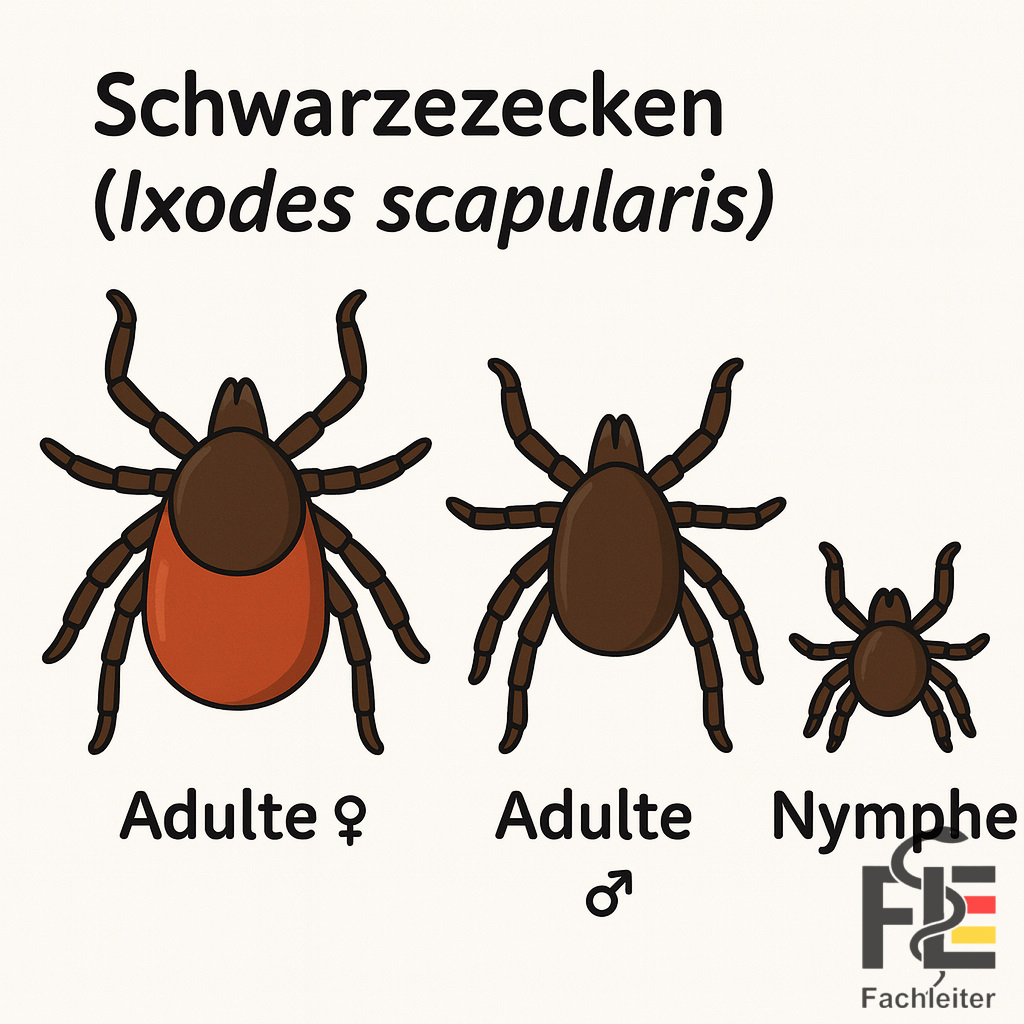
In Europe the infection is mainly transmitted by the tick Ixodes ricinus, which is particularly widespread in Scandinavia, Austria, Slovenia and Germany.
Ticks usually need to feed for at least 24–72 hours for transmission to occur.
The pathogen is introduced into the skin during feeding via saliva or regurgitation, not directly into the bloodstream.
Characteristics of the pathogens
Spirochetes are thin, spiral-shaped, motile bacteria.
Medically important genera include:
• Leptospira → leptospirosis
• Borrelia → Lyme borreliosis
• Treponema → syphilis
Borrelia are too thin for Gram stain but can be visualized by dark-field or phase-contrast microscopy.
Lyme borreliae do not produce toxins; the symptoms arise mainly from immune-mediated inflammatory reactions.
Pathophysiology
After the tick bite the spirochetes multiply locally in the skin and can subsequently spread hematogenously.
Extra
Names:
Nina Müller, Georg Rauter
Details:
He reported that last summer he had been bitten by ticks more than twice and had removed them himself.
He then reported that he had had a tick bite in the autumn. He went to his general practitioner who removed the tick but did not prescribe antibiotics. The patient then asked:
“Is this my GP’s fault?”
Travel history revealed that the patient had spent a two-week vacation in Mallorca six months ago.
For three days he has had malaise, joint pains and low-grade fever (37.9 °C).
In addition, for about twelve days there has been a ring-shaped, approximately 5 cm red skin lesion on the left thigh.
The lesion is paler in the middle, is slowly expanding and was initially painful.
The patient had been hiking in the Black Forest two weeks ago; the skin redness has been present since then.
He lives in the city and does not keep pets.
Engineer in municipal sewer system
Works in the citizens’ office
Own office cleaning company
Administrative employee
Past medical history:
Hypothyroidism for 13–14 years
Hoarseness after an argument at work ten years ago.
Two years ago arrhythmia, hospitalized for long-term ECG monitoring.
History of measles in childhood.
History of tick bite three years ago (treated with doxycycline). No regular GP contact.
History of appendectomy 20 years ago.
History of arthroscopy for meniscal rupture three years ago.
Family history:
The father is 85 years old and has a history of uremia (urinary poisoning) in the history.
Medications:
Candesartan
Salbutamol spray
L-thyroxine 100 mg 1-0-0
Valerian capsules
Allergy:
Intolerance to aspirin, allergy to rubber gloves as well as allergy to apple cider vinegar.
Sun allergy for three years.
Questions
1. What do I have?
Based on your complaints and the findings so far, there is suspicion of neuroborreliosis, i.e., an inflammation of the nervous system due to a Borrelia infection transmitted by a tick bite.
2. Should I stay here?
Yes, we would like to admit you to hospital to confirm the diagnosis by lumbar puncture (examination of the cerebrospinal fluid) and to start intravenous antibiotic treatment.
3. What will we do next?
We will now perform further blood and CSF tests and then start targeted antibiotic therapy.
In addition, neurological monitoring will be carried out until your symptoms improve.
4. What is opisthotonus? What happens in it and who can be affected?
Opisthotonus is a pathological body posture in which the body arches backward due to severe muscle tension (spasm), especially of the back and neck muscles.
It occurs mainly with central nervous system disorders, for example in tetanus, meningitis, severe encephalitides or hypoxic brain injury.
Newborns, children or adults can be affected, depending on the underlying disease.
5. Questions on stroke (diagnostics, clinical features and treatment).
Read the booklet “Stroke”.
6. Detailed neurological examination – see booklets on stroke, migraine and epilepsy.
Notes
BMI
Definition and calculation
The body mass index (BMI) is a simple measure for a rough assessment of body weight. It is calculated by dividing body weight in kilograms by the square of height in meters (kg/m²).
peripheral facial palsy
Definition
A peripheral facial palsy results from damage to the facial nerve at a peripheral level and leads to paralysis of the entire affected side of the face.
Clinical picture
Typical is impairment of the forehead and eye muscles as well as the mouth muscles on the affected side, resulting in limited forehead wrinkling, eyelid closure and movement of the mouth corner, for example.
Causes and differentiation
Possible causes are idiopathic facial palsy (Bell), infectious triggers such as borreliosis or inflammatory processes of the middle ear. In contrast, a central facial palsy usually affects only the lower facial muscles contralaterally, because the forehead is often spared.
Reduced visual acuity
Definition
Reduced visual acuity refers to a decrease in visual sharpness or impaired visual performance.
Clinical relevance
A concurrent disturbance of color perception (dyschromatopsia) as well as subjective phenomena such as photopsias can indicate involvement of the optic nerve or the retina. In certain infections or inflammatory diseases, for example in the context of neuroborreliosis, optic neuritis can lead to reduced visual acuity and disturbed color perception.
Dyschromatopsia
Definition
Dyschromatopsia refers to a disturbance of color perception in which colors are recognized incorrectly or cannot be distinguished.
Causes and significance
Such abnormalities often arise in diseases of the optic nerve or the retina; dyschromatopsia is therefore an indication of possible optic or retinal involvement and should be assessed in conjunction with other symptoms (e.g. reduced visual acuity, photopsias).
Photopsias
Photopsias
Brief light perceptions described as flashes, sparks or flickering. Causes range from vitreoretinal problems (e.g. posterior vitreous traction, retinal lesions) to migraine phenomena to inflammatory processes of the visual pathway.
Clinical importance
Photopsias can occur together with reduced visual acuity, disturbances of color perception or scotomas. With inflammatory involvement of the optic nerve or visual pathway, pain on eye movement and worsening of vision are typical; however, vitreoretinal causes are particularly likely for short-lasting, peripheral light flashes.
Meningism-
Meningismus
Term
Meningismus denotes the clinical signs of irritation of the meninges, typically neck stiffness, headache and photophobia.
Association with neuroborreliosis
In a Borrelia-induced central inflammation, aseptic meningitis can occur. Cerebrospinal fluid diagnostics usually show a lymphocytic pleocytosis and increased protein; additionally, an intrathecal antibody detection against Borrelia may be present.
Differentiation
Unlike bacterial (purulent) meningitis, the aseptic form often lacks the typical pus formation, very high temperatures and a predominant neutrophilic cell reaction in the CSF.
Accompanying
Accompanying symptoms
Conceptual classification
“Accompanying” here refers to additional neurological complaints that occur alongside meningeal symptoms.
Clinical statement
Sensory disturbances such as hypoesthesias, paresthesias and motor weaknesses in the upper extremities indicate involvement of nerve roots or peripheral nerves. In neuroborreliosis, this combination often manifests as a meningo-radicular syndrome (Bannwarth-like symptomatology).
Hypoesthesias
Hypoesthesias
Definition
Hypoesthesias describe a reduced sensation to touch, temperature or pain in a skin area.
Causes and clinical relevance
Such sensory reductions can occur in diseases of the peripheral nerves, in radiculopathies or in inflammatory processes of the nerve roots. In the context of neuroborreliosis, radicular or peripheral nerve involvement is a possible cause of hypoesthesias.
Paresthesias
Short title: Paresthesias
Paresthesias are abnormal sensations such as tingling, “pins and needles” or burning dysesthesias that occur without external stimulus. They arise from irritation or dysfunction of sensory nerve pathways and occur in both peripheral (e.g. radicular) and central lesions. In the present clinical picture with neck stiffness and accompanying sensory disturbances, paresthesias fit a neurogenic cause, particularly with involvement of nerve roots or the spinal cord.
Pareses
Short title: Pareses
Pareses denote a partial paralysis or reduced muscle strength as opposed to complete paralysis. Clinically they present as decreased strength, often with impairment of fine motor tasks (e.g. problems shaving or holding cutlery). Causes can be both peripheral (e.g. radicular) and central lesions of the motor system; the accompanying symptom complex in this case points to a neurogenic cause of the upper extremities.
Back pain
Short title: Back pain
Nocturnal, dragging back pain is characteristic of radicular pain and can occur with neuroborreliotic involvement of the roots. This symptomatology is described in the literature in connection with the so-called Bannwarth meningo-radiculitis, in which painful, often unilateral radiculitides are prominent.
Concentration problems
Short title: Concentration problems
Concentration disorders include deficits in attention and memory and can be an expression of central nervous system involvement. In patients with suspected neuroborreliosis, such cognitive complaints can indicate diffuse or focal cerebral involvement, but are nonspecific and must be evaluated in the clinical context.
Tear or saliva flow
Short description
Changes in tear or saliva production can occur with a neurogenic lesion of the facial nerve.
Clinical classification
The facial nerve influences tear production and the secretion of the submandibular/sublingual salivary glands via parasympathetic fibers; a dysfunctional facial pathway can therefore lead to reduced or increased tear or saliva secretion. The symptom is relevant in combination with other facial signs for assessing possible involvement of this cranial nerve in neuroborreliosis.
Hearing disorders
Short description
Hearing loss or ear ringing (tinnitus) can indicate a disorder of the auditory and vestibular nerve.
Dizziness or gait instability
Short description
Feelings of dizziness and unsteadiness when walking can indicate a vestibular or cerebellar disorder.
Joint-
Short description
Joint complaints in Lyme borreliosis usually occur only in the late stage and preferentially affect large joints.
Rigors
Rigors
Rigors are a sudden, intense feeling of cold accompanied by involuntary, rhythmic muscle contractions. These muscle shivers serve the body to generate heat and raise body temperature. Clinically, rigors often occur in the context of febrile infections or systemic inflammatory reactions and can be an indication of an acute infection. In case of severe or persistent rigors, medical evaluation should be performed to identify an underlying cause.
Tick bite
Tick bite
A tick bite occurs when a tick embeds itself in the skin; ticks are arachnids and feed on the blood of humans and animals. When remaining in the skin for an extended time, they can transmit pathogens. Relevant transmissible pathogens include Borrelia (cause of Lyme borreliosis) and TBE viruses (agents of tick-borne encephalitis), with transmission risk depending on the pathogen and the duration of attachment. After a bite, local skin changes or later systemic symptoms may occur; therefore observation and, if necessary, medical reassessment are important.
Thigh
Thigh
The thigh is the proximal segment of the leg between hip and knee and contains powerful muscle groups as well as fat and connective tissue. Skin changes, injuries or insect and tick bites occur relatively frequently in this body region because the thighs are often exposed during outdoor activities.
Insomnia
Insomnia
Insomnia refers to persistent difficulties falling or staying asleep or unrefreshing sleep despite opportunity to sleep. Causes can be primary sleep disorders or secondary in connection with physical complaints, pain, psychological stress or gastrointestinal problems.
Constipation
Constipation
Constipation is a persistent disorder of bowel evacuation with less frequent or difficult defecation. Chronic course can lead to accompanying symptoms such as abdominal pain, bloating, hard stools and anal complaints. Causes are varied and range from dietary and lifestyle factors to medication side effects and neurological or metabolic diseases.
Arterial hypertension
Arterial hypertension
Arterial hypertension denotes a persistently elevated blood pressure burden of the arteries. Common pathophysiological mechanisms are increased peripheral vascular resistance and reduced elasticity of the vessel walls. The disease increases the risk for cardiovascular events and other organ damage.
Complications
Possible complications of hypertension
Heart: left ventricular hypertrophy, heart failure, coronary artery disease up to myocardial infarction.
Brain: ischemic or hemorrhagic stroke, transient ischemic attacks, hypertensive encephalopathy.
Kidneys: arterial nephrosclerosis with progressive renal function impairment.
Vessels: accelerated atherosclerotic changes, aneurysm formation and peripheral arterial occlusive disease.
Eyes: hypertensive retinopathy with possible visual disturbances up to blindness.
Asthma bronchiale
Asthma bronchiale
Definition and symptoms: Chronic inflammatory disease of the airways characterized by recurrent episodes of shortness of breath, cough, chest tightness and wheezing.
Causes: genetic predisposition, allergic sensitizations, respiratory infections, environmental factors and physical exertion can trigger it.
Diagnosis: based on history, physical examination and lung-specific function tests; allergy tests can be performed additionally.
Therapeutic principles: avoidance or minimization of triggers and pharmacological treatment for symptom control and inflammation reduction.
Medication groups and important notes:
– Short- and long-acting beta-2 agonists (e.g., salbutamol short-acting, salmeterol long-acting): relax bronchial musculature and are used for rapid symptom control or longer-term bronchodilation. Side effects may include tachycardia, tremor and electrolyte shifts.
– Inhaled corticosteroids: have anti-inflammatory effects in the airways and are central maintenance therapy for controlling inflammation. Important adverse effects are local oral fungal infections (candidiasis) and hoarseness; systemic effects are possible depending on dose.
Additionally, patient-specific educational measures are part of care to improve self-management and symptom control.
Rhinitis
Rhinitis (runny nose)
Definition and symptoms: Inflammation of the nasal mucosa with increased secretion, sneezing, nasal congestion and usually watery nasal discharge. In allergic rhinitis, itching and often eye symptoms also occur.
Causes and triggers: Can be allergic (e.g., pollen, house dust mites, animal dander) or non-allergic. Seasonal pollen exposure is a typical cause of recurring symptoms in spring.
Management: Treatment depends on cause; measures range from trigger avoidance to symptomatic pharmacotherapy and, for suitable patients, specific immunotherapy.
Eczema
Eczema (atopic dermatitis)
Key message: Chronic inflammatory skin disease with itching, dry skin and a relapsing course.
Epidemiology and localization: In infants, face and flexural areas of arms and legs are often affected; in older children and adults, lesions occur more frequently in elbow and knee flexures, hands and face.
Causes and triggers: The disease is based on a combination of genetic predisposition, impaired skin barrier, immunological mechanisms and external factors (e.g., irritants, allergens, stress).
Therapeutic principles: Foundation is skin care with emollients and avoiding known triggers; if necessary, anti-inflammatory therapies are additionally used.
Neck pain
Neck pain (cervicalgia)
Definition and complaints: Pain in the region of the cervical spine, often with movement limitations; pain can radiate to shoulders or arms.
Causes: Often muscular due to poor posture or overuse; degenerative changes of the cervical spine, disc problems, injuries or inflammatory diseases are also possible.
Warning signs: Accompanying fever, unexplained weight loss, night sweats or neurological deficits such as loss of strength, sensory disturbances or reduced reflexes indicate a more urgent evaluation.
Metoprolol
Metoprolol
Class: selective beta-1 adrenoceptor blocker.
Effect: Damps the sympathetic nervous system’s action on the heart, leading to slowed heart rate and reduced contractility; thus lowers blood pressure and reduces myocardial workload.
Indications: Used among others for arterial hypertension, certain arrhythmias, coronary artery disease/angina pectoris and for secondary prevention after cardiac events; it can also be used for migraine prophylaxis.
Important risks and notes: Common adverse effects are fatigue, dizziness and bradycardia; gastrointestinal complaints and cold extremities may occur. Caution is advised in patients with bronchial hyperreactivity, as cardioselective beta blockers can still provoke bronchial effects. Abrupt discontinuation should be avoided as cardiac symptoms may worsen.
Ibuprofen
Ibuprofen
Class: nonsteroidal anti-inflammatory drug (NSAID).
Effect: Inhibits cyclooxygenase enzymes, thereby reducing formation of certain prostaglandins, which produces analgesic and anti-inflammatory effects.
Use: For short-term treatment of pain, fever and inflammatory complaints.
Dosage forms: Available among others as tablets, capsules, oral suspensions and suppositories.
Important risks: Can cause gastrointestinal complaints up to mucosal damage, increase bleeding risk and impair kidney function with prolonged use or volume depletion. Allergic reactions are possible. Special caution is required with certain preexisting conditions and combination therapies.
Movicol
Movicol
Class: osmotic laxative (polyethylene glycol/macrogol).
Effect: Increases water in the intestinal lumen and thus facilitates stool transport by softening and increasing stool volume.
Indication: Symptomatic treatment of constipation.
Important risks: Can cause bloating, abdominal pain and diarrhea; do not use if bowel obstruction is suspected or in pronounced dehydration. With long-term or very extensive use, electrolyte shifts are possible.
Foster
Foster
Composition: Combination inhaler containing an inhaled corticosteroid and a long-acting beta-2 agonist.
Mechanism of action: The corticosteroid reduces inflammation in the airways; the long-acting beta-2 agonist produces sustained bronchodilation by stimulating beta-2 receptors.
Indication: For regular maintenance therapy in asthma and in certain cases for symptom control in COPD. Not suitable for treating acute shortness of breath.
Usage note: After inhalation, rinsing the mouth is recommended to reduce the risk of local fungal infections of the oral cavity.
Side effects and precautions: Possible adverse effects include tremor, palpitations, hoarseness and local fungal infections. Caution is advised in cardiovascular disease or unusual symptoms.
Official
Official at the town hall
Scope of duties: Handling municipal administrative matters, such as the residents’ register, issuing identity documents, processing building applications and managing social and financial matters.
Purpose of the role: Ensuring the lawful implementation of municipal regulations and supporting citizens with administrative questions.
Stroke
Stroke
Definition: A stroke occurs due to an acute loss of blood supply to an area of the brain, so that affected nerve cells no longer receive sufficient oxygen and nutrients.
Clinical picture: Typical consequences are sudden, focal neurological deficits such as one-sided weakness or paralysis, speech disturbances, visual deficits or changes in consciousness.
Causes: Most often an arterial occlusion underlies it (ischemic stroke); less commonly a bleed into the brain tissue (hemorrhagic stroke) is the cause.
Urgency: A stroke requires immediate diagnostic assessment and rapid therapeutic action, as treatment success is time-dependent.
Breast cancer
Breast cancer (mammary carcinoma)
Definition: Breast cancer is a malignant neoplasm of the glandular tissue in the breast.
Spread: Tumor cells can locally invade surrounding tissue and form distant metastases via lymphatic or hematogenous routes, commonly in lymph nodes, bone, lung or liver.
Clinical signs: Abnormalities may include palpable lumps, skin changes of the breast, nipple retraction or nipple discharge.
Therapeutic principles: Treatment is individualized and may include surgery, radiotherapy and systemic therapies such as hormonal or chemotherapy. Early detection improves prognosis.
Bell palsy
Bell palsy (idiopathic peripheral facial palsy)
Definition: Bell palsy is a sudden onset, unilateral paralysis of the facial nerve without an identifiable cause.
Pathophysiology: An inflammatory reaction with swelling of the nerve along its bony canal is suspected, leading to functional impairment.
Clinical features: Notable signs are a drooping corner of the mouth, difficulty with complete eye closure and reduced facial expression including absence of forehead wrinkling on the affected side.
Therapeutic approach: Treatment usually includes anti-inflammatory medication (e.g. corticosteroids), measures to protect the eye and supportive physiotherapeutic exercises.
Radiculopathy
Radiculopathy
Definition: Radiculopathy denotes damage or irritation of a spinal nerve root with corresponding segmental effects.
Causes: Common triggers are disc prolapse, degenerative narrowing of the intervertebral foramina, rarely tumors or inflammatory processes.
Clinical presentation: Typical are sharp, dermatomal-radiating pains, sensory disturbances, paresthesias and possibly segmental muscle weakness or reflex changes.
Diagnostics and therapy: Evaluation is based on clinical tests and imaging; therapy ranges from conservative measures such as pain management and physiotherapy to interventional or surgical options for persistent pain burden or progressive neurological deficits.
Babesiosis
Overview
Babesiosis is a tick-borne infection caused by intraerythrocytic protozoa of the genus Babesia.
Pathogen effect and clinical presentation
The parasites infect red blood cells and can therefore cause a hemolytic disease, leading to fever, chills, decreased performance, muscle pain and possibly jaundice and anemia. Clinically, the picture resembles malaria due to the cell-damaging effect on erythrocytes.
Particular risk groups
In patients with weakened immune systems or absence of the spleen, infections more often run a severe course.
Diagnostics and therapy
Diagnosis is based on microscopic findings or molecular detection. Common medical treatment concepts use combinations of antiprotozoal agents; in severe cases alternative combinations with established anti-infectives are used. Dosage information depends on severity and individual circumstances and must be decided by a physician.
Tinea corporis
Definition and pathogens
Tinea corporis is a superficial dermatophytosis of the body skin, caused by dermatophytes such as Trichophyton and Microsporum species.
Clinical picture
Typical are oval to ring-shaped, scaly and often itchy erythemas with central clearing; the trunk, arms and legs are commonly affected.
Therapy
For limited findings, topically active antifungals are used; for widespread or recurrent infections systemic treatment may be necessary. Hygiene measures and avoiding contact are additionally important.
Blood pressure
What blood pressure is and how it is measured
Blood pressure describes the pressure of circulating blood in the arterial vessels and is given by systolic and diastolic pressure.
Devices and procedure
Blood pressure is typically measured with an inflatable cuff together with a manometer; in manual measurement a stethoscope is used to auscultate Korotkoff sounds. Correct cuff size and positioning the arm at heart level are important.
Significance
Blood pressure measurement is one of the basic vital parameters and provides important information about cardiovascular status.
Respiratory rate
Definition and significance
Respiratory rate indicates the number of breaths per minute and is a central vital parameter.
Normal values and abnormalities
In adults the normal respiratory rate typically lies in the mid-range around 12–20 breaths per minute; values above are called tachypnea and values below bradypnea.
Measurement
Respiratory rate is most reliably recorded by direct observation of chest or abdominal movements for 30–60 seconds; conscious influence by the patient should be avoided.
Oxygen saturation
Oxygen saturation — measurement principle and practical notes
Oxygen saturation describes the proportion of oxygenated hemoglobin to total hemoglobin in the blood and is routinely measured noninvasively with a pulse oximeter. The device is typically placed on the finger, toe or earlobe and measures relative oxygenation by light absorption.
When interpreting, disturbed peripheral perfusion, movement, nail polish or foreign substances as well as certain hemoglobin forms (e.g. carboxy-/methemoglobin) should be considered, as these can distort measurements.
Body temperature
Body temperature — measurement sites and comparative values
Body temperature can be measured at various locations; rectal measurements are considered closest to core body temperature and are therefore often used as reference.
Axillary: add +0.5 °C,
Oral: add +0.3–0.5 °C
Rectal: considered the reference value
PatientSalutation: Mr./Ms. Senior physician ……….., I would like to present the patient Detlef Schon to you. |
Date16/10/2025 |
| Age48 years | Weight 75 kg | Height 189 cm |
Allergies (keywords)
Pollen allergy → rhinitis
Substances / drugs (keywords)
Non-smoker
occasional alcohol consumption (1–2 glasses of beer on weekends)
no drug use
Social history (keywords)
Civil servant at the town hall
married
two children (10 and 13 years), both healthy
Family history (keywords)
Father: 75 years, arterial hypertension, stroke 3 years ago, right-sided hemiparesis
Mother: 70 years, breast cancer (surgery + chemotherapy), currently cured
Medications (keywords)
Metoprolol 50 mg 1-0-0
Ibuprofen 400 mg as needed
Movicol as needed
Foster® spray with pollen exposure
History (full sentences)
The patient presented because of a left-sided peripheral facial palsy that has been present since yesterday.
Since the day before yesterday he complains of reduced visual acuity and dyschromatopsia without diplopia. He also describes short-lasting photopsias.
For five days there have been slowly increasing headaches, especially in the neck area, accompanied by mild neck stiffness consistent with meningismus symptoms.
Concomitantly there are hypoesthesias, paresthesias and pareses of the upper extremities.
The patient reports that when shaving or eating he can hardly hold objects properly.
There are also nocturnal, dragging back pains, concentration problems and forgetfulness as well as low-grade fever (38.3 °C) and general malaise.
The following complaints were denied:
Facial pain, hearing disorders, epileptic seizures, respiratory, gastrointestinal or cardiac complaints, vertigo, gait instability, joint or urogenital complaints, night sweats, chills, loss of appetite, weight loss.
He reported that about three months ago, during a hiking holiday in Garmisch-Partenkirchen, he suffered a tick bite on the right thigh. A few days later a reddish, ring-shaped skin rash of about 10 cm in diameter with a central punctum appeared there, which regressed spontaneously after about three weeks. He removed the tick himself. Subsequently, mild cold symptoms occurred.
No foreign travel, no pets.
The vegetative history is unremarkable, apart from insomnia due to the complaints and chronic constipation for over ten years.
Previous illnesses:
Arterial hypertension for 5 years (well controlled), bronchial asthma and allergic rhinitis since childhood, degenerative neck pain (C5–C6), left zygomatic fracture after bicycle accident (conservative, healed without complications).
Suspected diagnosis – differential diagnosis (full sentences)
There is a strong suspicion of Lyme borreliosis with neurological involvement (neuroborreliosis).
The history with preceding erythema migrans and the current neurological symptoms speaks for an early disseminated infection.
Differential diagnoses to consider include:
Idiopathic facial palsy (Bell palsy)
Viral meningitis
Babesiosis (however without fever spikes or signs of hemolysis)
Further management – therapy (full sentences)
Since there is suspicion of neuroborreliosis with CNS involvement, inpatient admission for further diagnostic work-up is recommended. Planned are a physical examination with neurological focus, a lumbar puncture, determination of the cerebrospinal fluid–serum antibody index, Borrelia serology and an MRI of the head.
After confirmation of the diagnosis, antibiotic therapy should be initiated. (Additionally, symptomatic treatment with analgesics is recommended.)
Signature
First name Last name
With kind regards