
Greeting
Good day, esteemed Professor Doctor …,
I would now like to present the patient Dieter Nuhr to you.
He is 47 years old, one meter eighty-one tall and weighs approximately 87 kg. The body mass index (BMI) is 26.5 kg/m² and thus falls in the range of mild overweight.
and thus falls in the range of mild overweight.
Presenting complaint / history of present illness fatigue and lack of drive that have been present for three months.
According to his account the course was slowly progressive and has intensified particularly over the last four weeks.
There are cold intolerance, depressive mood, alopecia, onychorrhexis, concentration difficulties, hoarseness, bradykinesia and proximal muscle weakness.
In addition, over the past two months he gained about two kilograms despite loss of appetite .
He also stated that he suffers from long-standing constipation which has not only worsened recently but also no longer responds to lactulose administration.
He reported having suffered from fatigue already six months ago, in the context of a possible sleep apnea syndrome due to a nasal polyp, which was diagnosed by an ENT specialist.
At that time he was probably treated with mometasone spray, which led to an improvement of about 30–40%. He declined surgery.
The following symptoms were denied: negative thoughts and impressions, self-harm, pallor, dizziness, signs of a myxedema (periorbital edema or peripatellar), tachycardia, dyspnea, dysphagia, odynophagia, goiter as well as cervical lymphadenopathy.
He stated that he had not visited a doctor because he had neither the desire nor the energy.
He made no statements regarding iodine intake.
Autonomic history
The autonomic history is unremarkable, apart from constipation.
(Please note: patients with sleep apnea syndrome (especially obstructive sleep apnea, OSA) often have no subjective complaints about their night sleep.)
Past medical history
The following prior conditions are known for him:
For three years he has suffered from tension-type headaches that last on average 1.5 hours and occur about once a month.
In addition, there is a seborrheic eczema, which, according to the patient, worsens with stress.
Previous surgeries
Three years ago a bilateral blepharoplasty to remove the tear bags was performed for cosmetic reasons; the aesthetic result is assessed as satisfactory.
He has a status post fracture of the third cervical vertebra due to a fall from about three meters while climbing; since then he has suffered from chronic cervicalgia.
Note: When a statement can be objectively confirmed by a medical examination – for example by visible scars – the indicative is appropriate. (No physical examination takes place in the specialist language exam.)
Gynecology
——————————–
Medications
The patient is currently taking the following medications as prescribed:
• Aspirin 500 mg as needed
• Lactulose syrup, as needed
• Ibuprofen 400 mg, as needed
• Fexofenadine 120 mg, as needed
In addition he uses a ketoconazoleshampoo.
———————-
NASONEX spray
Note: When a statement can be objectively confirmed by a physician’s observation – for example by means of a prescription – the indicative is appropriate.
Allergies
He is allergic to horse hair, which manifests as coughing and urticaria . It is treated with fexofenadine 120 mg and wearing a mask. He also has an allergy to diclofenac with occurrence of urticaria.
Substance use / toxic exposures
He has been a non-smoker for five years after successful varenicline therapy; previously he had smoked about 20 pack-years . The hoarseness that existed then has significantly improved. He also drinks about one glass of beer per week and has used so-called magic mushrooms once or twice.
Social history
for about ten years. He works as a tax consultant in the Bavarian Ministry of Finance and is married for the second time. He lives with his family in an apartment. He also has a 9-year-old son who has been severely disabled since birth. A tracheostomy was created for long-term respiratory support. He also frequently develops pneumonias and decubitus ulcers.
According to his report, perinatal hypoxia is considered the likely cause.
Family history
His father is 68 years old and has had Addison’s disease, which is being treated medically with hydrocortisone.
His mother died at age 55 from a sudden cardiac death due to a Asystole deceased; she also suffered from vitiligo.
He has no pets and has not traveled recently.
Suspected and differential diagnosis
In my view, the anamnesis — in particular the weight gain despite loss of appetite, cold intolerance and worsening constipation — most likely points to hypothyroidism. This can occur primarily , for example as a result of Hashimoto thyroiditis, iodine deficiency, subacute thyroiditis, neck region radiotherapy or lithium intake, or secondarily, caused by diseases of the pituitary gland or the hypothalamus.
An anemia must be excluded by a blood count and, if necessary, an iron panel .
At the first contact, organic causes should be ruled out first before considering a depressive genesis. However, the symptoms present here such as cold intolerance, alopecia, onychorrhexis and progressive constipation argue against depression.
Heart failure should be considered in older patients with dyspnea and chest pain, especially against the background of multiple atherosclerotic risk factors.
Differentially, adrenal insufficiency is also a possibility; symptoms such as salt craving, weight loss, hypotension, hyperpigmentation and gastrointestinal complaints would be expected.
Diagnostic workup
physical examination
After completing the history, a thorough physical examination is performed. We begin by recording the vital signs (heart rate, blood pressure, respiratory rate, oxygen saturation and body temperature). This is followed by a focused examination starting with inspection. In hypothyroidism, one can typically see dry, doughy skin, thin brittle hair as well as alopecia. In addition, a myxedema, periorbital edema, a rough and hoarse voice, depressive mood and lack of drive may be noticed.
On palpation, the thyroid may be slightly enlarged or nodular, while non-pitting edema is typical.
Auscultation often shows bradycardia. In addition, delayed reflexes, especially delayed muscle relaxation, and carpal tunnel syndrome may occur.
In women, inquire about menstrual irregularities as well as the duration and intensity of bleeding.
Loss of libido is a known symptom of hypothyroidism.
Because of the suspected hypothyroidism, ask the seated patient to tilt the head back to inspect the neck. Then stand behind the patient and palpate the thyroid with both hands. The patient should keep the head straight and not raise the chin. Place the thumbs at the patient’s nape and palpate with the other fingers, starting at the isthmus and moving laterally. Ask the patient to swallow while palpating.
(The thyroid is approximately 4 centimeters long, 2 centimeters wide and 1 centimeter thick.)
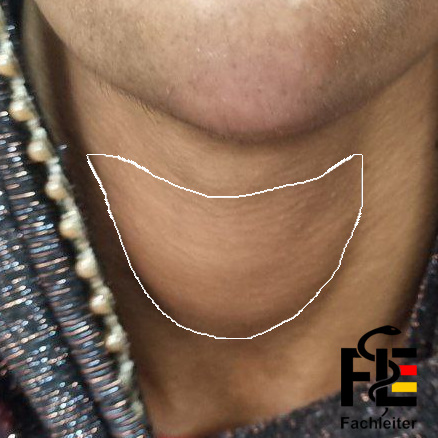
Fluctuation on palpation of the thyroid may indicate a cystic change. Tenderness may point to an acute inflammatory process such as thyroiditis. A thyroid malignancy is often characterized by an especially hard swelling. On auscultation, flow murmurs and a thrill may indicate hyperthyroidism, where thyroid blood flow is increased.
Laboratory investigations
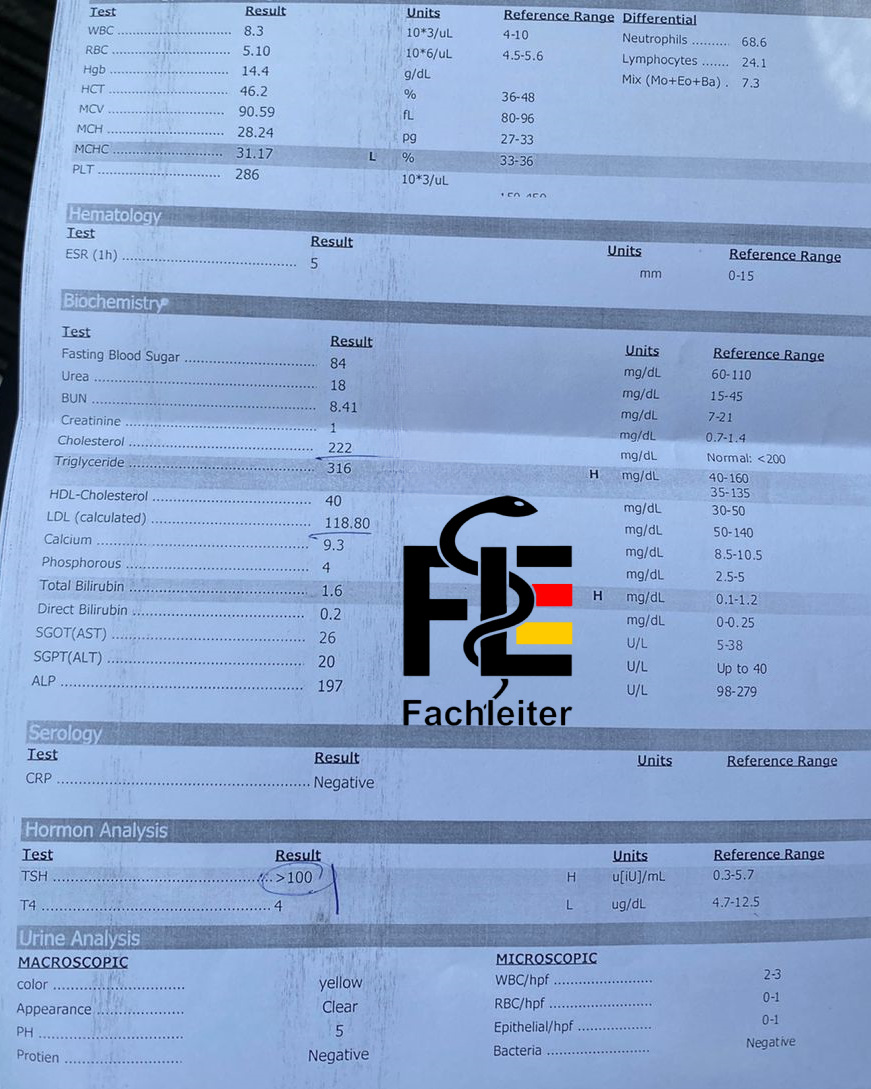
For this we would perform a small blood count, C-reactive protein (CRP), the erythrocyte sedimentation rate (ESR), TSH and free T4 as well as thyroid antibodies – thyroid peroxidase antibodies (TPO antibodies) and thyroglobulin antibodies (TG antibodies) –.
Further diagnostics
Electrocardiogram
In hyperthyroidism an ECG is performed to detect cardiac arrhythmias.
Fine-needle aspiration
Specifically, a fine-needle aspiration is performed when ultrasound identifies solid nodules with malignant sonographic features (e.g. microcalcifications, indistinct margins, hypoechoic areas) or when a nodule increases in size.
First the site is disinfected, then a thin needle is advanced through the skin into the suspicious tissue layer. Tissue samples are taken and examined in the laboratory for possible pathological changes. This procedure is usually performed under local anaesthesia.
The result is usually available after a few days, but may be delayed somewhat with additional analyses or if sent to a reference laboratory.
Scintigraphy:
Indication for thyroid scintigraphy in suspected autonomous adenoma, multifocal autonomy or to clarify the functional status of thyroid nodules.
If areas of the thyroid show increased uptake of the radioactive tracer, these are called hot nodules. They may indicate hyperfunction, as seen for example in functional autonomy (autonomous adenoma or multifocal autonomy).
Cold nodules, on the other hand, take up less or no tracer and could indicate malignancy. They often require further diagnostics.
Scintigraphy is a nuclear medicine imaging method in which radioactive substances (radiopharmaceuticals) are used to assess the function and metabolism of tissues and organs. A radioactive tracer is administered intravenously. Images are taken with a gamma camera showing tracer activity.
Thyroid ultrasound
A thyroid ultrasound is performed to evaluate nodules, cysts or lesions appearing malignant. The size and shape of the thyroid, echogenicity (homogeneous – unremarkable or heterogeneous – e.g. in thyroiditis, goiter or carcinoma), characterization of nodules in terms of number, size, shape, margins (regular or indistinct) and internal structure (solid, cystic or mixed) and the presence of microcalcifications (suggestive of malignant changes) are assessed.
Special gel is applied first to optimise sound wave transmission. The ultrasound probe is then placed over the thyroid. The examination is painless, takes about 20 minutes and requires no special preparation.
Treatment
L-thyroxine is a thyroid hormone used in hypothyroidism to replace the deficiency of endogenous thyroxine. It increases metabolism, regulates growth and energy balance and supports cardiovascular functions. Possible side effects include palpitations (palpitation), weight loss, sleep disturbances, increased nervousness and muscle twitching. L-thyroxine should preferably be taken in the morning on an empty stomach.
The dosage of levothyroxine is determined individually, depending on the diagnosis, age, body weight and health status (for example in younger patients 1.5 µg/kg body weight per day.
In older people or in the presence of heart disease the dose should preferably be halved.)
Patients should initially be monitored every 6 to 8 weeks with physician visits and TSH checks until clinical euthyroidism is achieved and the TSH value has normalized.
Hashimoto thyroiditis usually requires lifelong therapy.
Common brand names:
• Euthyrox®
• L-Thyroxin Henning®
• L-Thyroxin Aristo®
• L-Thyroxin HEXAL®
Surgery
Goiter with mechanical complaints (e.g. dyspnea, dysphagia, tracheal deviation)
Suspicion of thyroid carcinoma
Complications
In children and adolescents complications often manifest as delayed growth and cognitive impairment, while older people are primarily at risk from cardiovascular complications.
Extra
Names:
Valentin Peters, Alexander Bauermann, Toni Kroos, Rita Süßwuht, Johannes Schäffner, Marc Rhode, Karl May
Occupations:
Civil servant, castle administration, secretary
Details:
The patient reported immediately that he had suicidal thoughts. His wife had heard during a telephone conversation with a pastor that he no longer wanted to live and intended to kill himself. Therefore she brought him to the hospital and is now waiting for him in the waiting room. He mentioned that he had obtained these complaints from his brother through his contacts Captagon (Fenetylline) received.
(Note: Serious suicidal thoughts are an indication for inpatient admission.)
The patient reported: “I could no longer close my shirt collar (due to a goitre).” After the operation I took thyroxine for 3 months, but I stopped it myself because of severe side effects.
(missing question, What do you mean by side effects?)
He also reported that he can no longer cope with his tasks at work and his colleagues consider him lazy.
According to the patient, she was also under medical treatment by the GP a quarter of a year ago and he never examined her and yet she was diagnosed with depression.
Concentration disorder (I forget things when shopping) + facial oedema
His wife complains that he always falls asleep when they watch series together.
Past medical history:
Thyroidectomy → Hypothyroidism
Arm fracture while ice-skating
Calcaneus fracture, scaphoid fracture
Leukoplakia
Cervicalgia due to work
In childhood he suffered a retinal detachment and today wears glasses due to high myopia.
Arterial hypertension for three years.
She underwent myoma surgery two years ago and ptosis surgery three years ago.
Endoscopy: polypectomy
Vasectomy
Axillary abscess eight years ago.
Gynecology:
—————————-
Medications:
He gave me the family doctor’s phone number because he could not remember the name of the blood pressure medication.
L-thyroxine
Lavender oil (half a pack)
Lasea capsules
Caffeine tablets – 2–3 (at work)
Allergies:
Diclofenac: eyelid oedema
Midazolam allergy (with anaphylactic shock)
House dust with manifestation of sneezing and epiphora
Paracetamol with manifestation of exanthema
Drugs:
Cocaine
Family history:
Father: rheumatism (RA!), Arcoxia 90 mg film-coated tablets
Mother died of breast cancer.
Daughter: urinary incontinence
Son: Down syndrome, congenital encephalopathy
1 son (cystic fibrosis)
Father died of bronchial carcinoma
Questions
1. Do I need surgery?
We cannot say that for sure at the moment. We must first carry out further investigations to determine the exact cause and severity of the thyroid overactivity. Afterwards we will discuss the findings in the team and jointly decide on the best approach for your treatment. However, if there is an enlarged thyroid (goitre), nodules suspicious for malignancy, or inadequate control of the overactivity, surgery or radioiodine therapy may be required.
2. What does hormone substitution mean?
Hormone substitution refers to the medical treatment in which missing or insufficiently produced hormones are replaced with medications, e.g. in hypothyroidism with levothyroxine.
3. Why are total T4 and T3 levels less reliable than free T3 and T4?
Although total T4 and T3 levels change with alterations in thyroxine-binding globulin (TBG), the free serum levels of these hormones remain constant.
4. Why are tests for free T3 in serum less reliable than tests for free T4?
Tests for free T3 in serum are less reliable than tests for free T4 because of the low concentrations of circulating free T3.
5. Why was goitre common in Bavaria in the past?
The main reason was iodine deficiency in the diet. Soils and waters in many parts of Bavaria (especially in the Alpine region) are low in iodine.
6. How can the heart suddenly stop beating?
The heart can suddenly stop beating—this is called sudden cardiac death—and it usually occurs due to a severe electrical disturbance in the heart, particularly in ventricular fibrillation.
7. Can you prescribe cannabis for me?
I would first like to know why you want cannabis. We can discuss the situation in detail and review all options together. Cannabis is not the only solution. I want to emphasize that in many cases the disadvantages outweigh the benefits.
8. What complications can cannabis use cause in both older and younger people?
Cannabis use can lead to cognitive impairment, psychiatric disorders (e.g. anxiety, psychoses) and concentration problems in younger people; in older people it increases the risk of falls, cardiovascular complications and confusion, among other things.
9. What complications can occur with surgeries in the neck region?
Surgeries in the neck region can involve various risks, including injury to nerves (e.g. the recurrent laryngeal nerve with vocal cord paralysis), blood vessels, infections, postoperative bleeding as well as swallowing or voice disorders.
10. What do asthenia and adynamia mean?
Asthenia denotes weakness or lack of strength. Asthenia often occurs as an accompanying symptom of other diseases such as infections or arises as a side effect of certain medications. It can also be due to an unhealthy lifestyle, lack of sleep or lack of exercise.
Adynamia refers to a general exhaustion or a pronounced lack of strength and drive.
11. How do you treat depression?
After a confirmed diagnosis, treatment of depression is usually carried out pharmacologically and/or psychotherapeutically. In pharmacological therapy, primarily selective serotonin reuptake inhibitors (SSRIs) such as citalopram or sertraline, as well as serotonin-norepinephrine reuptake inhibitors (SNRIs) such as venlafaxine are used.
12. Can children with Down syndrome attend a regular school like other children?
Yes, many children with Down syndrome attend mainstream schools, especially if they have a mild form of intellectual disability. An individual support plan and, if necessary, a school assistant are prerequisites. In Germany there is also the concept of inclusive education, which enables children with disabilities to attend general schools. In other cases, a special school focusing on intellectual development may be more appropriate.
13. What is the difference between a myomectomy and a hysterectomy?
In a myomectomy, only the myomas (benign muscle nodules of the uterus) are surgically removed while preserving the uterus—this is particularly important when fertility is desired.
In a hysterectomy, by contrast, the entire uterus is removed, which makes pregnancy impossible. This operation is performed, for example, for large myomas, heavy bleeding or tumors when other therapies are insufficient.
14. How is blood drawn and what are the devices used?
To draw blood, a vein is usually punctured—most often in the crook of the arm. The following are used:
• Tourniquet (for venous stasis)
• Disinfectant (for skin disinfection)
• Needle or butterfly (for puncturing the vein)
• Adapter/holder for blood collection tubes
• Vacuum tubes (e.g. EDTA, serum, or citrate tubes, depending on the test)
• Plaster or swab (to press the puncture site)
15. What is the difference between strabismus and nystagmus? Which types of strabismus do you know?
Strabismus (squint):
Misalignment of the eyes in which the visual axes are not aligned parallel.
Types:
• Strabismus convergens (esotropia)
• Strabismus divergens (exotropia)
• Strabismus verticalis (vertical deviation)
Nystagmus:
Involuntary, rhythmic eye movements (horizontal, vertical or rotary) that cannot be voluntarily suppressed.
16. What is CPAP? What are the indications and how should it be used?
CPAP (Continuous Positive Airway Pressure) is a method in which a continuous positive airway pressure is maintained via a mask to keep the upper airways open.
Indications:
Obstructive sleep apnea syndrome (most common indication)
Usage:
Via a nasal or nasal‑oral mask connected to a CPAP device
The pressure is set individually (usually 5–15 cmH₂O)
Regular monitoring of fit, tolerability and therapy success is required
Important: consistent nightly use for sleep apnea
Notes
BMI
BMI — Body Mass Index
Brief description: BMI is a rough indicator for classifying body weight in relation to height in adults.
Calculation: It is determined by dividing body weight in kilograms by the square of height in meters.
Limitations: BMI does not account for body composition (muscle vs. fat mass), age, or fat distribution and is therefore only a guideline.
Application in the present case: At 87 kg and 1.81 m, the BMI is approximately 26.5 kg/m², indicating mild overweight.
m²
m² — square meter
Definition: m² is the SI unit for area and denotes the area of a square with a side length of one meter.
Fatigue
Fatigue — persistent exhaustion
Term description: Fatigue refers to a persistent, burdensome exhaustion with reduced performance and motivation that cannot be easily resolved by sleep.
Alopecia
Alopecia — pathological hair loss
Definition: Alopecia denotes partial or complete loss of scalp or body hair, which can occur diffusely or in localized areas.
Onychorrhexis
Onychorrhexis
Brief description: Congenital or acquired brittleness of the fingernails, often with longitudinal ridging and increased fragility.
proximal muscle weakness
Proximal muscle weakness
Description: Weakness of the muscle groups close to the trunk, typically apparent when rising from a squat, climbing stairs, or combing hair.
Differential diagnosis: Common causes include inflammatory myopathies (e.g., polymyositis), endocrine disorders (e.g., Cushing syndrome), and medication-induced myopathies (e.g., statin association). Long-term glucocorticoid therapy can also lead to proximal weakness. Hypothyroidism can in some cases also be associated with muscle weakness.
inappetence
Inappetence
Definition: Reduced or absent appetite with decreased desire to eat.
constipation
Constipation
Brief description: Persistent constipation with difficult or infrequent bowel movements.
nasal polyps
Brief description
Benign mucosal overgrowths within the nasal and paranasal sinus mucosa that can narrow the nasal lumen.
Causes
Chronic inflammatory processes or allergic reactions are usually the initial drivers of polyp formation.
Clinical features
Typical complaints include impaired nasal breathing, reduced sense of smell, and possibly a feeling of nasal obstruction; very extensive polyps can narrow the nasal passages enough to promote sleep disturbances or worsen preexisting sleep-related breathing problems.
Therapy
Topical intranasal corticosteroids are often used as first-line treatment and can reduce the volume of polypoid changes. If response is insufficient or the disease is severe, endoscopic surgical intervention is performed. An individualized decision between conservative therapy and surgery is made by ENT specialists.
negative thoughts and impressions, self-harm
Core features and significance
Persistent negative thought patterns, feelings of hopelessness, as well as self-harming behavior or suicidal thoughts are possible core symptoms of a depressive disorder.
pallor, dizziness
Symptom description
Pallor of the skin or mucous membranes and dizziness are nonspecific clinical signs.
Possible associations
These symptoms can occur with reduced hemoglobin (anemia), but also due to circulatory disorders, dehydration, or cardiovascular and neurological causes; in the clinical context, accompanying symptoms and vital signs are important for interpretation.
myxedema
Definition and cause
Myxedema denotes non-pitting tissue swelling caused by deposition of glycosaminoglycans in the interstitium and is typically associated with clear hormone deficiency in marked hypothyroidism.
Clinical features
Characteristic are doughy, usually non-pitting swellings, often in the face and periorbital area. Myxedema is an indication of longstanding or severe thyroid dysfunction.
tachycardia
Tachycardia — accelerated heart rate
Tachycardia denotes an increase in heart rate above the age-appropriate range, perceived as palpitations or increased heartbeats. It can have various causes, such as cardiac, metabolic, or drug-related factors, and may be accompanied by symptoms like palpitations, dizziness, or exercise intolerance. In the present record the presence of tachycardia was denied.
dyspnea
Dyspnea — shortness of breath
Dyspnea describes the subjective sensation of difficulty breathing or breathlessness. Causes are varied and range from pulmonary and cardiac diseases to neuromuscular or psychogenic triggers. In the documented history dyspnea was explicitly denied.
dysphagia
Dysphagia — swallowing disorder
Dysphagia refers to difficulty swallowing, which can occur in the oropharyngeal phase (e.g., swallowing saliva or food) or during passage through the esophagus. Mechanical compression, neuromuscular disorders, or inflammations are possible causes. In the present record dysphagia was denied.
odynophagia
Odynophagia — painful swallowing
Odynophagia describes the occurrence of pain during swallowing and often indicates inflammatory, infectious, or ulcerative changes in the pharynx or esophagus. Pain can occur alone or together with dysphagia. In this case odynophagia was denied in the history.
goiter
Goiter (thyroid enlargement)
Definition: A goiter is a pathological enlargement of the thyroid gland that may be visible or palpable as a swelling in the anterior neck.
Causes and significance: Enlargements arise, for example, with endemic iodine deficiency, autoimmune thyroid diseases, nodular transformations, or inflammatory processes. Clinically, a goiter can be associated with normal, decreased, or increased hormone production.
Clinical clues: A goiter is evident as an abnormal finding on inspection/palpation of the neck; larger goiters can cause swallowing or breathing difficulties as well as voice changes and require further evaluation (laboratory tests, imaging, possibly scintigraphy or sonography).
tension-type
Tension-type headache
Definition: Tension-type headaches are a primary headache disorder that typically occurs bilaterally and is characterized by a pressing or tightening pain.
eczema
Seborrheic eczema
Clinical description: Seborrheic eczema is a chronic-relapsing inflammatory skin condition that mainly affects sebum-rich areas such as the scalp, forehead, nasolabial fold, ears, and chest.
Appearance and triggers: Typical are greasy scales, reddish skin patches, and itching. The disease is favored by a combination of increased sebum production, higher colonization with yeasts of the genus Malassezia, and individual factors; psychological stress can trigger or exacerbate flares.
blepharoplasty
Blepharoplasty
Purpose and indication: A blepharoplasty is a surgical procedure on the eyelids used to remove excess skin and fat as well as to tighten the soft tissues. It is performed both for cosmetic reasons and to eliminate functional impairments (e.g., restricted visual field).
Procedure and outcome: Depending on the findings, upper and/or lower lids are treated; excess skin and herniated fat are reduced or repositioned to improve contour and function. In the present context a bilateral cosmetic eyelid correction to remove tear troughs was performed three years ago; the cosmetic result is reported as satisfactory.
cervicalgia
Cervicalgia (neck pain)
Definition:
Pain in the region of the cervical spine, often described as local or radiating neck and shoulder discomfort.
Causes and course:
Can arise after acute trauma such as a cervical vertebral fracture or due to degenerative changes. In this case, there is a long-lasting (chronic) symptomatology since a fracture event.
Clinical features:
Typically there is pain, limitation of movement and muscular tension; if nerve roots are involved, sensory disturbances or radicular pain may occur.
Management:
Treatment depends on cause and severity and includes conservative measures such as physiotherapy exercises, analgesic and anti-inflammatory approaches, and interdisciplinary pain management for chronic courses. Surgical measures may be necessary in cases of structural instability or neurological impairment.
Aspirin
Acetylsalicylic acid (Aspirin)
Drug class:
Salicylate from the group of nonsteroidal anti-inflammatory drugs (NSAID/NSAR).
Mechanism of action:
Action is based on inhibition of cyclooxygenase enzymes; inhibition of platelet function occurs through irreversible modification of the enzyme in platelets.
Indications:
Used for temporary relief of pain, reduction of fever, and influence on inflammatory processes; at low doses it is used to affect platelet aggregation.
Important risks and side effects:
May exacerbate gastrointestinal complaints and bleeding tendencies; bronchial reactions possible in sensitive individuals. Other risks include renal burden and specific risks in children (e.g., risk of Reye syndrome).
Note:
The original note contained a specifically stated maximum dose; such dosing information has not been included here.
Lactulose
Lactulose
Drug class and mode of action:
Lactulose is a non-absorbable sugar with an osmotic effect in the bowel. Bacterial fermentation produces osmotically active breakdown products that soften the stool and promote intestinal transit.
Areas of use:
Used to treat chronic constipation; additionally, the active ingredient is used in specific clinical situations to influence intestinal processes.
Side effects:
Common side effects include bloating, abdominal cramps and diarrhea; excessive effect can lead to electrolyte shifts. If troublesome symptoms occur, use should be reviewed by a physician.
Ibuprofen
Ibuprofen
Drug class:
Nonsteroidal anti-inflammatory drug (NSAID).
Mechanism of action:
Acts by reversible inhibition of cyclooxygenase enzymes, thereby reducing the formation of proinflammatory mediators.
Indications:
Used to relieve pain and reduce signs of inflammation as well as in febrile conditions. The maximum daily dose of ibuprofen for adults is normally 2400 mg, divided into 3 doses.
Important risks and side effects:
Relevant risks include gastrointestinal complaints up to bleeding tendencies and gastric mucosal damage, possible impairment of renal function, and an increased cardiovascular risk with long-term use. Allergic reactions are possible.
Ketoconazole
Drug class
Ketoconazole belongs to the group of azole antifungals.
Use
Topical formulations such as shampoos and creams are frequently used for superficial fungal or yeast populations of the skin, for example in scaly scalp conditions.
Important notes
Systemic oral use of ketoconazole is severely limited in many cases due to serious hepatotoxicity and pronounced interactions. Local reactions are possible with topical use; in case of uncertainty about use or signs of systemic infection, medical advice should be sought.
Urticaria
Definition
Urticaria (hives) is a clinical syndrome of transient, itchy wheals and occasionally accompanying angioedema.
Clinical picture
Typical are sudden, well-demarcated, edematous skin lesions that disappear within hours or reappear elsewhere. Intense itching is common.
Triggers and course
Urticaria can be triggered by allergens, physical stimuli or drugs; in some patients non-allergic mechanisms are involved. Acute forms are distinguished from chronic urticaria when complaints persist for weeks to months.
Pack years
Term and calculation
Pack years are a simple unit for cumulative tobacco exposure. Calculation is performed with the formula: (number of cigarettes smoked per day ÷ 20) × number of years of smoking.
Pressure ulcers
Pressure ulcers
Definition
Decubitus ulcers are local damage to the skin and underlying tissue caused by prolonged shear and pressure forces and typically occur over bony prominences.
Causes and risk factors
Prolonged immobility, reduced sensation, malnutrition and moisture favor development. Particularly at risk are bedridden or highly immobilized individuals.
Clinical aspects
The spectrum ranges from superficial redness to deep tissue loss involving muscle and bone. Infections and delayed wound healing are common complications.
Prevention and basic management
Important measures are regular repositioning, pressure-relieving aids, skin care and nutritional optimization; existing lesions are treated locally and specialist care is provided if infection is suspected.
Addison’s disease
Addison’s disease (primary adrenal insufficiency)
Definition
Addison’s disease denotes insufficient function of the adrenal cortex with lack of production of life-essential steroid hormones.
Causes
Common causes are autoimmune destruction of the adrenal cortex; other possible triggers include infectious processes, infiltrations, or rare genetic diseases.
Clinical signs
Typical complaints include persistent exhaustion, muscle weakness, weight loss, low blood pressure and increased craving for salty foods; some patients also show changes in skin pigmentation.
Therapeutic principle
The disease is treated with lifelong hormone replacement using appropriate glucocorticoids and, if necessary, mineralocorticoids, accompanied by patient education and emergency plans.
Asystole
Asystole
Definition
Asystole is the complete absence of visible electrical cardiac activity; on the ECG it appears as an essentially flat line without discernible excitation waves.
Clinical significance
It represents a form of cardiocirculatory arrest and is associated with absent pulse and lack of circulation effect; it requires immediate emergency measures.
Diagnostics
The diagnosis is based on the ECG pattern together with the clinical examination (no signs of breathing or circulation).
primary
TSH (elevated) + T4 (decreased)
Hashimoto’s thyroiditis
Definition and pathophysiology:
Hashimoto thyroiditis is a chronic autoimmune disease of the thyroid in which antibody-mediated inflammatory processes destroy the parenchyma and impair hormone production. Antibodies against thyroid peroxidase and thyroglobulin are often found.
Clinical features:
The course can be insidious; common consequences are signs of hypothyroidism such as fatigue, cold intolerance, weight gain and constipation. Thyroid size can vary (normal size up to goiter).
Diagnosis and therapy:
Diagnosis is based on clinical presentation, autoantibodies and laboratory findings of thyroid function. Many affected individuals develop overt hypothyroidism and require permanent hormone replacement therapy with thyroid hormone; treatment needs are guided by functional status and course.
Iodine deficiency
Implications for the thyroid:
A low iodine status reduces synthesis of thyroid hormones and often leads to a compensatory enlargement of the thyroid gland (goiter formation). Persistent iodine deficiency can contribute to hypothyroidism and other endemic thyroid diseases.
Particular risk groups and prevention:
Pregnant and breastfeeding women have an increased iodine requirement, so adequate iodine intake is particularly important during these phases. Population-wide measures such as iodized table salt or iodized foods are used for prevention; the specific reference values for daily intake follow national or international recommendations.
subacute thyroiditis
Cause and pathogenesis:
Subacute (de Quervain) thyroiditis is usually seen after a viral infection and is based on a painful, inflammatory reaction of the thyroid tissue.
Clinical presentation and course:
Typical findings are a tender or painful goiter, fever and general signs of infection. An initial release-induced hyperthyroidism often occurs, which can develop into a transient hypothyroidism before function usually normalizes again.
Therapy and prognosis:
Treatment is primarily symptomatic; the course is self-limiting in many cases, but pronounced symptoms may require specific anti-inflammatory therapy.
Lithium intake
Indication and mechanism of action:
Lithium is primarily used as a mood stabilizer for treatment and relapse prevention in bipolar affective disorders; it influences several neurochemical signaling pathways.
Relevant thyroid-related side effects:
A known adverse effect of lithium is impairment of thyroid function, which can manifest as hypothyroidism or goiter. Therefore lithium is clinically relevant as a causal factor for drug-induced hypothyroidism.
Further notes:
Lithium can cause side effects in other organs; for long-term intake various monitoring measures are recommended (e.g. kidney and thyroid function).
secondary
secondary
Brief description:
The term here refers to a central (secondary/tertiary) cause of thyroid underfunction in which the problem lies in the pituitary or hypothalamus.
Laboratory characteristics:
Typically low thyroid hormone levels (e.g. free T4) are found alongside low or inappropriately normal TSH, since control by the pituitary is absent.
Clinical clues:
Central causes can arise from pituitary diseases, surgeries, hemorrhagic events or infiltrative processes and require further endocrinological evaluation of pituitary function.
Pituitary gland
Pituitary gland
Function:
The pituitary (hypophysis) is a central endocrine gland that controls multiple hormonal systems of the body and transduces signals from the hypothalamus.
Sheehan syndrome:
In Sheehan syndrome, severe obstetric blood loss leads to hypoperfusion of the pituitary with subsequent damage and reduced hormone production. This can result in partial or complete pituitary insufficiency and cause various endocrine deficits.
Iron panel
Iron panel
Purpose:
An iron panel is used to assess iron metabolism and to clarify iron deficiency or iron-related anemias.
Typical components:
Such a panel usually includes hemoglobin (from the blood count), ferritin to assess iron stores, serum or plasma iron, transferrin or TIBC and transferrin saturation, which together provide information on iron transport and storage.
Heart rate
Heart rate
Definition and reference range:
Heart rate indicates the number of heartbeats per minute. In an adult at rest the typical reference range is about 60 to 100 beats per minute.
Significance in examination:
Heart rate is an important vital parameter and deviations from the normal range can indicate cardiac, metabolic or drug-related disorders.
Blood pressure
Blood pressure measurement
Device components: A standard blood pressure monitor includes an inflatable cuff, a hand pump for inflation and a pressure gauge (manometer). For auscultatory measurement a stethoscope is also used.
Physiological understanding: Arterial blood pressure describes the pressure in the vessels during cardiac contraction and during relaxation. The higher number corresponds to the pressure during contraction (systolic value), the lower to the pressure in the relaxation phase (diastolic value).
Clinical classification: An isolated elevation of the diastolic pressure is referred to as diastolic hypertension and means that primarily the pressure in the relaxation phase is increased, while the systolic value can remain comparatively normal.
Atemfrequenz
Respiratory rate
Definition: The respiratory rate indicates how many breaths a person takes per minute and is one of the vital signs.
Resting range in adults: In the awake state, the normal respiratory rate in adults is typically about 12 to 20 breaths per minute. Deviations upward (tachypnea) or downward (bradypnea) can indicate underlying disorders.
Sauerstoffsättigung
Oxygen saturation (SpO2)
Term and measurement: Oxygen saturation describes the proportion of oxygenated hemoglobin to total hemoglobin in arterial blood. It is often measured noninvasively using a pulse oximeter attached to the finger, earlobe, or toe.
Clinical significance: The measurement provides a quick overview of the blood’s oxygenation function and is one of the routinely recorded vital parameters.
Körpertemperatur
Body temperature
Measurement sites and comparison: Body temperature can be determined at different sites.
Axillary: add +0.5 °C,
Oral: i.e. add +0.3–0.5 °C
Rectal: considered the reference value
Blutbild
Complete blood count — purpose and contents
The complete blood count is a basic laboratory test for the evaluation of anemia. It records parameters such as hemoglobin, erythrocyte count, hematocrit, and indices for erythrocyte characterization (e.g., MCV, MCH, MCHC). Additionally, leukocyte and platelet counts are determined. The results provide clues about the presence and likely classification of an anemia (e.g., microcytic, macrocytic, normocytic) and prompt targeted further diagnostics.
CRP
C-reactive protein (CRP) — significance and use
CRP is an acute-phase protein produced in the liver that rises rapidly with inflammation, infection, or tissue damage. It is a sensitive but nonspecific marker for inflammatory processes and is useful for monitoring trends and estimating the activity of an inflammation.
In the context of thyroiditis, CRP can be elevated in painful subacute (de Quervain) thyroiditis. However, a normal CRP value does not rule out autoimmune or chronic thyroiditis; therefore, antibody testing and thyroid function diagnostics are crucial for clarification.
BSG
Erythrocyte sedimentation rate (BSG/ESR) — interpretation and limitations
The ESR indicates how quickly red blood cells settle in anticoagulated blood within one hour and serves as a nonspecific marker of inflammation. It can be elevated in inflammatory processes but is not very specific and is influenced by factors such as anemia, age, and pregnancy.
When thyroiditis is suspected, the ESR can be particularly elevated in subacute thyroiditis. A normal ESR does not exclude thyroiditis; therefore, it should always be considered together with CRP, the clinical findings, and specific thyroid investigations.
TSH
TSH (thyroid-stimulating hormone) — function and diagnostic significance
TSH is produced in the anterior pituitary and regulates the synthesis and release of thyroid hormones (T3, T4). The hypothalamic–pituitary–thyroid axis controls hormone secretion via feedback mechanisms: increased free thyroid hormone levels suppress TSH secretion and vice versa.
Normal range
TSH: 5 and 10 mU/L
freies T4
free T4
Definition: Free T4 is the unbound, biologically active form of the thyroid hormone thyroxine in the blood.
free T4: 0.8 to 1.9 ng/dL
Schilddrüsenantikörper
Thyroid antibodies
Definition: Thyroid antibodies are antibodies produced by immune cells that target structures of the thyroid gland or thyroid-related proteins.
Important types: Clinically relevant antibodies include thyroperoxidase antibodies (TPO antibodies), thyroglobulin antibodies (TG antibodies), and TSH receptor antibodies; they differ in target antigen and diagnostic significance.
Clinical relevance: Detection of thyroid antibodies supports the diagnosis of autoimmune thyroid diseases (e.g., Hashimoto’s thyroiditis, Graves’ disease) and can be relevant for prognosis and therapy decisions.
Notes on result interpretation: Antibody findings must be interpreted in the context of laboratory values and clinical picture; positive antibodies can occasionally occur in asymptomatic individuals and laboratory methods and cutoffs vary.
PatientSalutation: Mr/Ms Senior Physician ……….., I would like to present to you the patient Dieter Nuhr. |
Date25/06/2025 |
| Age 47 years | Weight 87 kg | Height 181 cm |
Allergies (keywords)
Horse hair → cough, urticaria
Diclofenac → urticaria
Substance use / drugs (keywords)
Non-smoker for 5 years, formerly 20 pack-years, varenicline therapy one year, improvement of hoarseness
1 glass of beer/week
1–2× magic mushrooms
Social history (keywords)
Tax advisor at the Bavarian Ministry of Finance
married (second marriage)
lives with family in apartment
9-year-old son, severely disabled with tracheostomy, cause: suspected perinatal hypoxia, frequent: pneumonias and decubitus ulcers
Family history (keywords)
Father (68): Addison’s disease for 5 years, hydrocortisone
Mother (55): sudden cardiac death (asystole), vitiligo
Medications (keywords)
Aspirin 500 mg (as needed)
Lactulose syrup (as needed)
Ibuprofen 400 mg (as needed)
Fexofenadine 120 mg (as needed)
Ketoconazole
Nasonex® spray
History (full sentences)
The patient presented with fatigue and lack of drive that had been present for three months. According to him the course has been slowly progressive and especially increased over the last four weeks.
As accompanying symptoms he reported cold intolerance, depressed mood, alopecia, onychorrhexis, concentration disturbances, slowed speech, proximal muscle weakness as well as a weight gain of 4 kg despite loss of appetite within the last three weeks.
He also stated that he suffers from long-standing constipation that has not only worsened recently but also no longer responds to lactulose administration.
He reported that six months ago he had suffered from fatigue due to an ENT-diagnosed sleep apnea syndrome caused by a nasal polyp. Under mometasone spray there was an improvement of about 30–40%; he declined surgery.
He denied the following complaints: negative thoughts, suicidal ideation, pallor, dizziness, signs of myxedema, known cardiovascular diseases/mental disorders.
Die vegetative Medical history is unremarkable, except for constipation.
Past medical history:
Tension-type headache (once/month, for 3 years)
Scalp eczema (stress-related)
SAS (nasal-related, 30–40% improved).
Previous surgery:
Blepharoplasty 3 years ago (cosmetic)
C3 cervical spine fracture after climbing accident, since then chronic cervicalgia (10 years).
Suspected diagnosis – Differential diagnosis (full sentences)
In my opinion the anamnestic information — in particular weight gain despite loss of appetite, cold intolerance and therapy-resistant constipation — most likely point to hypothyroidism.
Possible causes: primary hypothyroidism (Hashimoto’s, iodine deficiency, thyroiditis, radiotherapy, lithium), less commonly secondary (pituitary/hypothalamic disease).
Anemia should be excluded by a blood count and, if necessary, an iron panel.
Organic causes should be excluded first; the present symptoms (cold intolerance, alopecia, onychorrhexis, progressive constipation) argue against a depressive origin.
Further management – Therapy (full sentences)
Laboratory assessment of thyroid function is recommended (TSH, fT4, TPO antibodies, TG antibodies). If hypothyroidism is confirmed, initiation of L-thyroxine substitution therapy.
TSH follow-up: after 6 to 8 weeks
Signature
First Name Last Name
Sincerely
1. BMI
2. Main complaint
1. Mild overweight
2. Progressive fatigue and lack of drive for several months in the form of sleepiness and reduced activity, increasing symptoms in the last few weeks
3. Associated symptoms
3. Cold intolerance, depressed mood, alopecia, onychorrhexis, concentration difficulties, slowed speech/hoarseness, proximal muscle weakness, weight gain despite loss of appetite in recent weeks, constipation
4. Important negatives
4. Fever, night sweats, negative thoughts and impressions, self-harm, pallor, dizziness, signs of myxedema (periorbital or peripatellar), tachycardia, dyspnea, dysphagia, goiter as well as cervical lymphadenopathy.
5. Similar complaints
5. Similar complaints in the past:
Partial thyroidectomy, therapy discontinued on own initiative due to side effects.
Morning fatigue; cause: nasal polyps → sleep apnea syndrome (SAS)
Depressive symptomatology
6. Physical Examination
6. Vital signs
Dry, doughy skin, thin, brittle hair, alopecia, myxedema, periorbital edema, rough, slowed voice
7. Thyroid palpation
7. Thyroid palpation:
Patient sits, head slightly tilted back, inspection of the neck, examiner stands behind the patient, hands placed laterally on the neck, thumbs at the nape, palpation starting at the isthmus → palpate laterally, ask the patient to swallow during the process
8. Differential diagnoses
8. Hypothyroidism
Primary Causes: Hashimoto thyroiditis, iodine deficiency, subacute thyroiditis, neck radiotherapy, lithium intake
Secondary Causes: pituitary disease, hypothalamic disease
Anemia (blood count), depression (exclusion of organic causes), heart failure (age, risk factors, dyspnea)
9. Laboratory
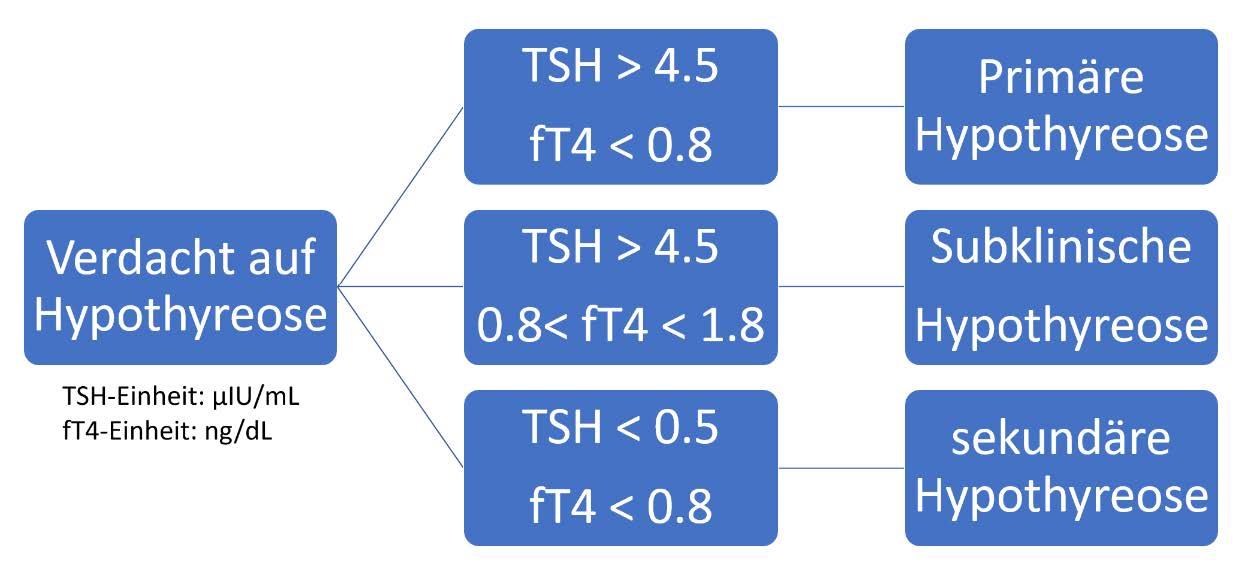
9. TSH > 4.5 & fT4 < 0.8 → Primary hypothyroidism
TSH > 4.5 & 0.8 < fT4 < 1.8 → Subclinical hypothyroidism
TSH < 0.5 & fT4 < 0.8 → Secondary hypothyroidism
(TSH unit: µIU/mL | fT4 unit: ng/dL)
TSH as well as free T4 and thyroid antibodies – thyroid peroxidase antibodies (TPO antibodies) and thyroglobulin antibodies (TG antibodies)
14. Therapy
14. Standard dosage: 1.5 µg/kg BW/day (levothyroxine)
In older patients and those with cardiac comorbidities: reduce by about 50%
Laboratory monitoring: after 6–8 weeks from start of therapy (TSH, fT4)
15. Fine-needle biopsy
16. Scintigraphy
15. Indicated when solid nodules with malignant echo-structures (e.g., microcalcifications, ill-defined margins, hypoechoic areas) are identified on ultrasound or a nodule increases in size.
16. Suspected autonomous adenoma, multifocal autonomy or to clarify the functional status of thyroid nodules
Imagine now: How would you typically report about a hypothyroidism?
I
The patient presented with fatigue and lack of drive that had been present for three months. According to his history, the course had been slowly progressive and particularly increased over the last four weeks.
Imagine now: How would you typically report about a hypothyroidism?
II
As accompanying symptoms he reported cold intolerance, depressed mood, alopecia, onychorrhexis, concentration problems, slowed speech as well as a weight gain of 4 kg despite loss of appetite within the last three weeks. In addition, he suffers from persistent constipation that had worsened and no longer responds to lactulose.
General term:
1. Exhaustion
2. Lack of energy
3. Breathing pauses
4. Mucosal hyperplasia
5. Cold sensitivity
6. Hair loss
7. Nail brittleness
Technical term:
1. Fatigue
2. Lack of drive
3. Sleep apnea syndrome (SAS)
4. Nasal polyp
5. Cold intolerance
6. Alopecia
7. Onychorrhexis
Common term:
8. Inattention
9. Loss of appetite
10. Constipation
11. Laxatives
12. Tissue swelling
13. Eye swelling
14. Knee swelling
Technical term:
8. Difficulty concentrating
9. Inappetence
10. Obstipation
11. Lactulose
12. Myxedema
13. Periorbital edema
14. Peripatellar edema
Common term:
15. Palpitations
16. Shortness of breath
17. Swallowing disorder
18. Pain on swallowing
19. Goiter
20. Neck lymph node swelling
Technical term:
15. Tachycardia
16. Dyspnea
17. Dysphagia
18. Odynophagia
19. Struma
20. Cervical lymphadenopathy
fachleiterinfo@gmail.com
instagram.com/fachleiterinfo
fachleiterinfo@gmail.com
instagram.com/fachleiterinfo
To run an AI simulation, download the PDF with the prompt, then upload it to an AI application such as ChatGPT.
Page 1 · 1–20 / 84
DOCTOR: Hello,
My name is Dr. Weiß. I am working on the ward today as a junior doctor. I would like to conduct a medical history interview with you.
If you do not understand something or have questions, please let me know. First I need some personal information, then we can continue.
What is your name?
PATIENT: My name is Dieter Nuhr.
DOCTOR: Could you please spell your first and last name slowly?
PATIENT: Of course, Dieter Nuhr
My first name: D, I, E, T, E, R
And my last name: N, U, H, R
DOCTOR: First of all I would like to find out whether you consider the pain or complaints tolerable.
PATIENT: Oh, doctor, I have endured this for three months — so 20 minutes now doesn’t make much difference.
DOCTOR: How old are you, Mr. Nuhr?
PATIENT: I am forty-seven years old.
DOCTOR: What is your exact date of birth?
PATIENT: Today is my birthday.
DOCTOR: Oh, happy birthday! Does that mean you were born on March 11, 1978?
PATIENT: That’s correct.
DOCTOR: How tall are you?
PATIENT: I am one hundred eighty-one centimeters.
DOCTOR: How much do you weigh?
PATIENT: I weigh about eighty-seven kilograms.
DOCTOR: What is the name of your primary care physician?
PATIENT: My primary care physician is Dr. Karla Scholz.
DOCTOR: Which complaints have already been present for three months?
PATIENT: I have absolutely no motivation, I can hardly get up in the mornings and sometimes even fall asleep in my office chair. A colleague noticed and was totally annoyed. He said I should go to the doctor.
DOCTOR: I can understand that this is distressing for you.
Did the complaints start suddenly or did they develop gradually?
PATIENT: They did not come overnight. It was not a sudden onset.
DOCTOR: Have the complaints improved, worsened, or remained the same over time?
PATIENT: They have become more intense over time, especially in the last 4 weeks.
DOCTOR: Have you ever had such complaints before? Have they changed in any way?
PATIENT: About six months ago I was sometimes a bit tired in the mornings, but not as severe and persistent as now. My family also told me that I snore in my sleep and even have breathing pauses. That is why I went to my primary care physician, and she referred me to the ENT specialist.
After the examination he said my nose was blocked by polyps. He suggested an operation, but I was afraid of that — so I declined. Instead I received a spray.
DOCTOR: What’s the name of the spray you received?
PATIENT: To be honest, I haven’t been able to concentrate well lately, and I can’t remember the name right now. But the cap was blue-green.
ARZT: How did the spray help you?
PATIENT: Well, after about three weeks it got a bit better – maybe around 30 to 40%. But after about three months I started having new problems again.
ARZT: What exactly do you mean by concentration difficulties?
PATIENT: I notice that I often can’t concentrate properly. That leads to me constantly losing my train of thought while speaking or forgetting what I actually wanted to say.
ARZT: Have you noticed your skin or mucous membranes looking paler than usual recently?
PATIENT: No, I haven’t noticed any changes lately.
ARZT: Have you noticed dizziness, rapid heartbeat, palpitations or irregular heartbeats?
PATIENT: No, I haven’t noticed that so far.
ARZT: Do you have shortness of breath, cough or chest pain?
PATIENT: No, all fine – no cough, no shortness of breath and no chest pain.
ARZT: Are any cardiovascular diseases known in you?
PATIENT: There are no known heart diseases.
ARZT: Do you often ruminate on negative thoughts or feel worthless?
PATIENT: No, but I do feel down.
Page 2 · 21–40 / 84
ARZT: Have you ever thought about harming yourself?
PATIENT: I’ve never thought about harming myself.
ARZT: Have you ever had mental problems, for example anxiety or panic?
PATIENT: No, I haven’t had problems with that so far.
ARZT: Have you taken any new medication since the onset of symptoms?
PATIENT: No, everything’s the same as before.
ARZT: Do you feel colder more often than before, even when the temperature is normal?
PATIENT: Yes, I’ve noticed that I feel colder more often. That’s why I often wear a jacket even on warm days or close the window, even when my colleagues find the weather pleasant.
ARZT: Have you noticed that your nails are more brittle or that your skin has become drier, more fragile, or thinner?
PATIENT: Yes, I’ve noticed that. My skin has become noticeably drier lately, especially on my hands. And my fingernails split more easily than before.
ARZT: Are you experiencing increased hair loss?
PATIENT: Yes, I’ve actually noticed that I’m losing more hair than before. In the mornings I often see many hairs on the pillow or in the brush.
ARZT: How is your appetite?
PATIENT: I do eat, but I don’t really have a proper appetite. I’m hardly hungry even if I don’t eat for hours.
ARZT: Has your weight changed recently?
PATIENT: Yes, I’ve gained a few kilos recently.
ARZT: How much have you gained and over what period?
PATIENT: In the last two months I’ve gained about two kilos.
ARZT: Have you noticed changes in bowel movements?
PATIENT: I’ve had problems with bowel movements for a long time. I often sit on the toilet for a very long time. Sometimes I take lactulose for it, but lately it’s gotten worse and the medication doesn’t help as much.
ARZT: We’ll take care of that immediately. But you can also do something yourself: try to eat enough fiber – especially from vegetables – drink enough water and exercise regularly. That often helps very well against constipation.
PATIENT: Thank you very much for your advice. But what exactly do you mean by enough or sufficient?
ARZT: That means: about five portions of fruit and vegetables per day, e.g. an apple, a banana, a small salad and some vegetables at lunch or dinner. And drink about 1.5 to 2 liters of water daily.
Do you have difficulty getting up from a squat?
PATIENT: Yes, lately I do. I often lack energy, and when getting up from a squat I notice it’s difficult for me.
ARZT: Have you noticed a visible or palpable swelling or lump on your neck?
PATIENT: No, I haven’t noticed anything unusual like a lump or swelling on my neck.
ARZT: Have you noticed your shirt collar fitting tighter?
PATIENT: No, I haven’t noticed that.
ARZT: Do you have a sore throat?
PATIENT: No, I haven’t noticed a sore throat.
ARZT: Do you have difficulty swallowing or breathing?
PATIENT: No, I have no problems with that at all. Swallowing and breathing work completely normally.
ARZT: Have you noticed a hoarse voice or a lump in the throat?
PATIENT: Yes, exactly. My voice has become rougher and hoarse. In addition, I noticed that I move more slowly – a kind of slowness of movement.
DOCTOR: Do you have swelling in your face, especially around the eyes or in the legs?
PATIENT: No, I haven’t noticed anything like that.
DOCTOR: Have you seen a doctor so far?
PATIENT: I haven’t, because I simply lacked the desire and energy.
DOCTOR: Do your fingers sometimes tingle? Or do they go numb – that is, lose feeling? For example the thumb, index finger or middle finger?
PATIENT: No, I haven’t noticed such symptoms.
DOCTOR: Have you recently had enough iodine intake?
PATIENT: I have no idea about that.
Page 3 · 41–60 / 84
DOCTOR: Do you use iodized table salt at home?
PATIENT: Yes, that’s correct.
DOCTOR: How did you get to the hospital?
PATIENT: My brother brought me here by his car.
DOCTOR: Do you have fever, night sweats, chills or sudden sweating?
PATIENT: No, I haven’t noticed any of that.
DOCTOR: Do you have nausea? Have you vomited?
PATIENT: No, I didn’t have nausea or vomiting.
DOCTOR: Do you have difficulty urinating?
PATIENT: No, everything is fine there.
DOCTOR: Do you have problems in the anal area, such as hemorrhoids or a fissure?
PATIENT: I haven’t had such problems so far.
DOCTOR: How do you cope with stress?
PATIENT: I try to cope with stress by taking a trip or a vacation.
DOCTOR: Wonderful – that is sometimes really the best medicine.
Do you suffer from chronic illnesses such as hypertension, diabetes, or elevated blood lipids?
PATIENT: No, such conditions are not known for me. But for 3 years I have suffered from headaches that manifest as a dull, pressing pain that feels like a tight band around my head and often occurs on both sides.
DOCTOR: How long do the headaches usually last?
PATIENT: Usually the headaches last about one and a half hours.
DOCTOR: How often do you have such tension headaches, and what do you do about them?
PATIENT: Once a month. I take A-S-S 500 milligrams and drink herbal tea. It gets a little better that way.
I would like to know if it is possible that cold weather causes such headaches.
DOCTOR: Yes, cold weather can promote tension headaches. Cold often leads to muscle tension in the neck and shoulder area, which in turn can trigger headaches. In addition, cold air can constrict blood vessels and thereby worsen headaches.
PATIENT: Thank you, doctor. In addition, for ten years I have had neck pain after an accident. Sometimes it is really unbearable. Surgery was performed, but the pain remained.
DOCTOR: Did the surgery proceed without complications?
PATIENT: As far as I know, the surgery proceeded without complications. However, the pain has remained. That’s why I occasionally take ibuprofen 400 milligrams.
DOCTOR: How often do unbearable pains occur?
PATIENT: About every two months, and then it usually lasts two to three days.
DOCTOR: Do you also take something for stomach protection, for example pantoprazole?
PATIENT: No, I don’t take that. Why do you ask?
DOCTOR: Because pain medications – like ibuprofen or other anti-inflammatories – can irritate the stomach. That’s why we sometimes also recommend stomach protection like pantoprazole to prevent side effects.
Have you ever noticed numbness, tingling, neck stiffness, weakness or movement problems in the arms or hands?
PATIENT: Nothing noticeable.
DOCTOR: How did that happen?
PATIENT: Back then I fell while climbing from a certain height – I think it was about three meters.
DOCTOR: Which vertebra was operated on?
PATIENT: I think it was the fifth cervical vertebra.
In addition, I have dandruff and itching on the scalp. I used a shampoo several times on the recommendation of my GP. That was helpful, but it comes back again.
DOCTOR: What is the name of the shampoo? Was it ketoconazole?
PATIENT: That’s right.
DOCTOR: Do you know specific triggers that make it worse? For example stress, weather changes or certain care products?
PATIENT: Yes, I think it gets worse when I’m stressed.
DOCTOR: Are other areas affected as well? Do you perhaps have asthma or hay fever?
PATIENT: No, I have not.
ARZT: Have you previously undergone another operation or medical procedure?
PATIENT: Yes, three years ago I had both tear troughs removed for cosmetic reasons. I am satisfied with the result.
Page 4 · 61–80 / 84
ARZT: Do you take any other medications?
PATIENT: No, none others.
ARZT: Do you have a prescription for your medications?
PATIENT: Yes, I do.
ARZT: Are you fully vaccinated, meaning have you received all vaccinations since childhood?
PATIENT: Phew, I don’t know exactly – I would have to look in the yellow vaccination booklet. I can only say: last year I was vaccinated against flu and TBE, and also twice against Covid.
ARZT: Do you have known allergies, for example to foods, medications, animals or other substances?
PATIENT: Yes, I am allergic to horse hair, which repeatedly causes conflicts because my wife likes to ride. After exposure I get symptoms.
ARZT: How does your allergy manifest?
PATIENT: My allergy manifests as coughing and hives.
ARZT: What do you do about it?
PATIENT: When in contact with horse hair I take Fexofenadine 120 mg beforehand and wear a mask. I also cannot tolerate Diclofenac – then I get a rash all over my body and severe itching.
ARZT: I recommend that you take the medication – that is Fexofenadine or another antihistamine – about one to two hours beforehand.
Do you smoke? How many cigarettes do you smoke daily and since when?
PATIENT: I quit five years ago. Before that I smoked a packet a day for 20 years.
ARZT: That’s great that you quit smoking. Can you tell me what motivated you? And how did you manage it?
PATIENT: I had hoarseness, and so I took a medication called Varenicline for a year. That was really effective.
ARZT: Has your hoarseness improved since then?
PATIENT: Yes, definitely – my voice is much clearer than before.
ARZT: Do you drink alcohol? What kind? How much?
PATIENT: One glass of beer per week
ARZT: May I ask if you have ever used drugs?
PATIENT: Yes, I tried mushrooms a few years ago – so-called ‘magic mushrooms’. But only once or twice, not regularly.
ARZT: Do you exercise regularly? What type and how often?
PATIENT: Unfortunately not.
ARZT: What is your occupation?
PATIENT: I am a tax consultant and work in the Bavarian Ministry of Finance.
ARZT: What is your marital status?
PATIENT: I divorced 15 years ago, but remarried 5 years ago.
ARZT: Who do you live with?
PATIENT: I live with my family in an apartment.
ARZT: How many children do you have?
PATIENT: I have a 9-year-old son.
ARZT: Is he healthy?
PATIENT: No, Christoph has been severely disabled since birth. He also has a hole in his neck through which he breathes.
ARZT: Could you describe that a bit more precisely?
PATIENT: I mean that he is severely limited mentally and physically. He cannot speak or walk independently and requires round-the-clock care. Therefore someone always has to be with him and look after him – either me, my wife or a caregiver. He also frequently develops pressure sores or pneumonia.
ARZT: Do you know if there were any complications at birth?
PATIENT: As far as I know, he did not receive enough oxygen at birth. I suspect that is the cause.
ARZT: Are there significant illnesses in your family, for example in your parents, siblings or other close relatives?
PATIENT: My 68-year-old father lives alone and has had adrenal insufficiency for five years, which manifests as constant tiredness and weakness. The doctor said the immune system attacks the adrenal cortex. He has to take medication regularly.
My mother died at age 55 of sudden cardiac death due to an arrhythmia. She also suffered from vitiligo.
Page 5 · 81–84 / 84
ARZT: My heartfelt condolences.
Do you know which medications your father takes?
PATIENT: I think it’s called Hydrocortisone.
ARZT: Have you traveled recently?
PATIENT: No, I haven’t traveled recently.
ARZT: Do you have pets?
PATIENT: I have no pets.
DOCTOR: We are finished with the medical history.
Do you have any other questions?
PATIENT: Do I need surgery?
DOCTOR: We cannot say that for sure at the moment. Your previous symptoms suggest hypothyroidism, which we need to confirm or exclude with laboratory tests. In general, surgery is not necessary for this—especially since you have not described any complaints that would make an operation necessary. Treatment is usually medical. I will let you know as soon as all the results are available.