
Greeting
Good day, dear Professor Doctor …,
I would now like to present the patient Reiner Winter to you.
He is 36 years old, 1.78 meters tall and weighs approximately 71 kg. The body mass index (BMI) is 24.9 and is therefore within the normal range.
Current history
The patient presented to our facility as an emergency with sharp pain in the right knee and the left hip of about 45 minutes’ duration.
The symptoms occurred after the right knee struck the dashboard .
The knee pain was rated by the patient as 8/10 at rest and described as about twice as severe as the hip pain.
The patient complained of movement restrictions in the affected knee due to pain.
On the right knee there was an abrasion about the size of a two-euro coin Abrasion as well as a palm-sized hematoma on the anterior aspect.
An effusion of the knee joint was also present.
The patient reported a sensation of crepitus in the knee during the accident.
The following were denied:
Signs of limb ischemia such as cyanosis, coldness or paresthesias, Laceration, visible malpositions or fractures as well as dislocations, neck pain, back pain
(Further were denied: signs of impaired ABC stability such as dyspnea, stridor or hypotension, abnormalities in the abdomen as well as signs of a craniocerebral injury, loss of consciousness, amnesia, nausea or emesis.)
Course of the accident:
The patient stated that he was the front-seat passenger. He and his wife were driving to the Viktualienmarkt.
Suddenly his wife had to brake because a deer ran across the road.
In the process he struck his right knee against the dashboard and injured his left hip with the seatbelt.
At the time of the accident he was not driving particularly fast – in his estimate about 30 to 40 km/h.
According to his report, the seatbelt did not function properly during the accident because it did not fully lock.
The older vehicle was, according to the patient, in need of repair, and the belt buckle applied pressure to the pelvis on the right side.
The patient arrived accompanied by his wife.
The tetanus vaccination status was last updated two years ago.
The last food intake (breakfast) was about three hours ago.
Autonomic history
The autonomic history is unremarkable, apart from insomnia with difficulty falling and staying asleep for 4 months related to work stress, and a constipation.
Past medical history
The following pre-existing conditions are reported in the history:
Since childhood there has been a cough in the context of a house dust mite allergy. Under an allergen immunotherapy the symptoms improved significantly.
He has suffered from chronic pain in the right shoulder for about four years, which partially limits him in everyday life.
Four years ago there was a riding accident in which he sustained a clavicle fracture and the scapula was contused.
He was hospitalized for one day at that time and received conservative treatment. A performed physiotherapy led to a marked improvement.
In the medical history there is atopic dermatitis on the hands, which worsens with stress or after contact with certain detergents.
The patient also occasionally develops fissures on the fingers.
In the history there was a tonsillitis about four weeks ago, which was treated with a penicillininjection.
Previous operations
In addition, about ten days ago he sustained a laceration to the fingertip of the left index finger.
This was followed by antibiotic therapy with Cephalexin 500 mg.
In the history the patient sprained his right ankle while playing volleyball six years ago.
Initially he only wore a bandage, but the pain progressively increased.
He was then seen by a physician, and a loose body (corpus liberum) in the ankle joint was diagnosed.
This was later surgically removed during an
arthroscopy
Note: When a statement can be objectively confirmed by a medical examination – for example by visible scars – the indicative is appropriate. (No physical examination takes place in the specialist language examination.)
——————–
Gynecology
Medications
Hydrocortisone-ointment 0.5% for topical treatment of the dermatitis
Intake of Ibuprofen 600 mg as needed as well as Pantoprazole
Baldrian-tablets 300 mg
Note: When a statement can be objectively confirmed by a physician’s observation – for example by means of a prescription – the indicative is appropriate.
Allergies
The patient reported an intolerance to egg products.
He also has a lactose intolerance.
In both cases epigastric pain occurs.
Noxae
He began smoking at the age of 20 and consumed about 10 cigarettes per day.
He has been nicotine-abstinent for 8 years, which is about 5 pack‑years equivalent.
He drinks alcohol occasionally, mainly liqueur, especially on social occasions.
He does not use recreational drugs.
Social history
The patient is permanently employed by the municipal utilities as a electricity tariff consultant , is married and has an eight-year-old daughter who was hospitalized for three days last month due to a laryngitis .
Family history
The patient’s mother is 58 years old and developed a colon carcinomaat the age of 42, which was treated by partial colectomy; since then she has had a colostomy.
The father is 61 years old, has suffered from hearing impairment since a mumps infection in childhood and four years ago suffered a stroke resulting in dysphasia, dysgraphia, dyslexia as well as partial oculomotor palsy and diplopia.
Suspected and differential diagnosis
Based on the anamnesis, in particular the direct trauma to the right knee from the impact against the dashboard and the localized pain symptoms, there is suspicion of a patellar fracture and a possible sprain of the left hip joint.
For further clarification, radiographs of the right knee and the left hip joint in two planes are indicated; additionally, CT imaging may be required if findings remain unclear.
In the context of radiographic diagnostics, attention should also be paid to possible concomitant injuries of the bony structures, particularly of the distal femur as well as the proximal tibia and fibula.
In this case, soft tissue injuries such as lesions of the cruciate ligaments, menisci or collateral ligaments should also be assessed.
Diagnostic workup
After imaging and the orthopedic consultation we can better decide on further treatment.
physical examination
After completion of the history, a thorough physical examination is performed. First, the vital signs are recorded (heart rate, blood pressure, respiratory rate, oxygen saturation and body temperature). Afterwards a focused examination with emphasis on the lower extremity is carried out, always comparing right and left.
On inspection, edema, hematomas, abrasions, deformities and skin discolorations (e.g. cyanosis as an indication of impending ischemia) may be noted.
On palpation particular attention should be paid to tenderness to pressure, crepitus, warmth, step-offs and joint effusions.
Circulation, motor function and sensation (DMS) should also be checked. Peripheral circulation is assessed by palpation of the foot pulses (A. dorsalis pedis, A. tibialis posterior) and by evaluation of skin temperature, capillary refill time and skin color.
Motor function is assessed by testing active range of motion of the toes and ankle as well as by strength testing. In the acute phase, however, pain symptoms often complicate or prevent.
the examination.
Percussion and auscultation do not play a significant role in the diagnosis of knee injuries.
Special knee tests:
• Range of motion (ROM): test active and passive mobility. A locked knee can indicate a meniscal lesion (e.g. “bucket-handle” tear), loose intra-articular bodies or an impingement syndrome. In a patellar fracture, a pain-related restriction of knee motion is usually expected, particularly limited active extension due to involvement of the extensor mechanism.
• Lachman test: performed at 30° knee flexion; increased anterior translation of the tibia compared with the contralateral side indicates a lesion of the anterior cruciate ligament. This test is considered the most sensitive clinical test for an anterior cruciate ligament rupture.
Laboratory tests
In an uncomplicated case in an otherwise healthy 36-year-old patient without comorbidities, extensive laboratory testing is not necessarily required — at least not primarily for diagnostic confirmation.
• (Complete blood count → to check for anemia)
• (Arterial blood gas analysis (ABG) for pneumothorax)
• (Blood group and Rh factor in case of blood loss)
• (Urinalysis)
Radiography
A radiograph is an imaging method that visualizes internal structures such as bones, the lungs and other tissues using X-rays. The patient removes jewelry and clothing in the area to be examined. The examination lasts only a few seconds and is completely painless.
Radiographs of the right knee and the left hip joint should be obtained in two planes each, anteroposterior (a.-p.) and lateral.
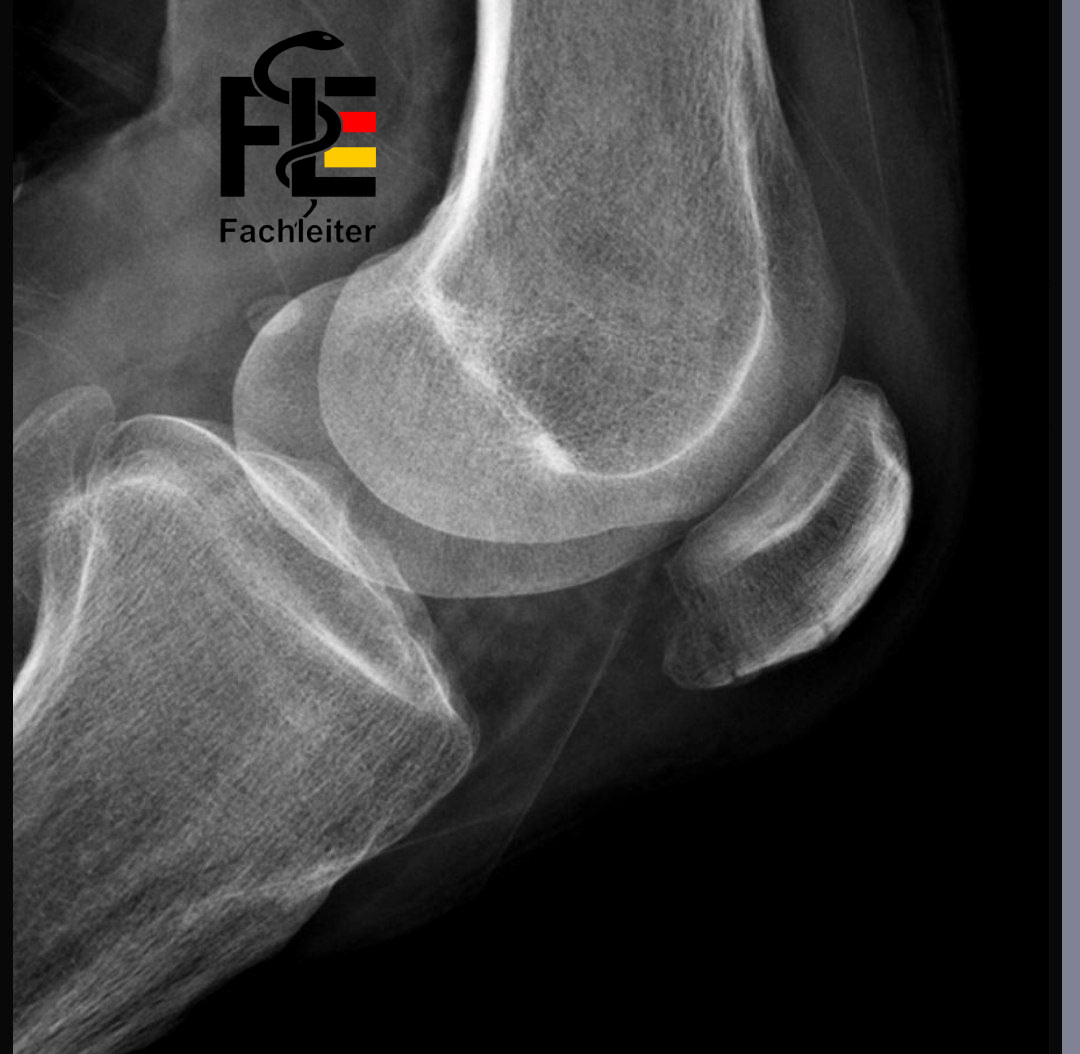
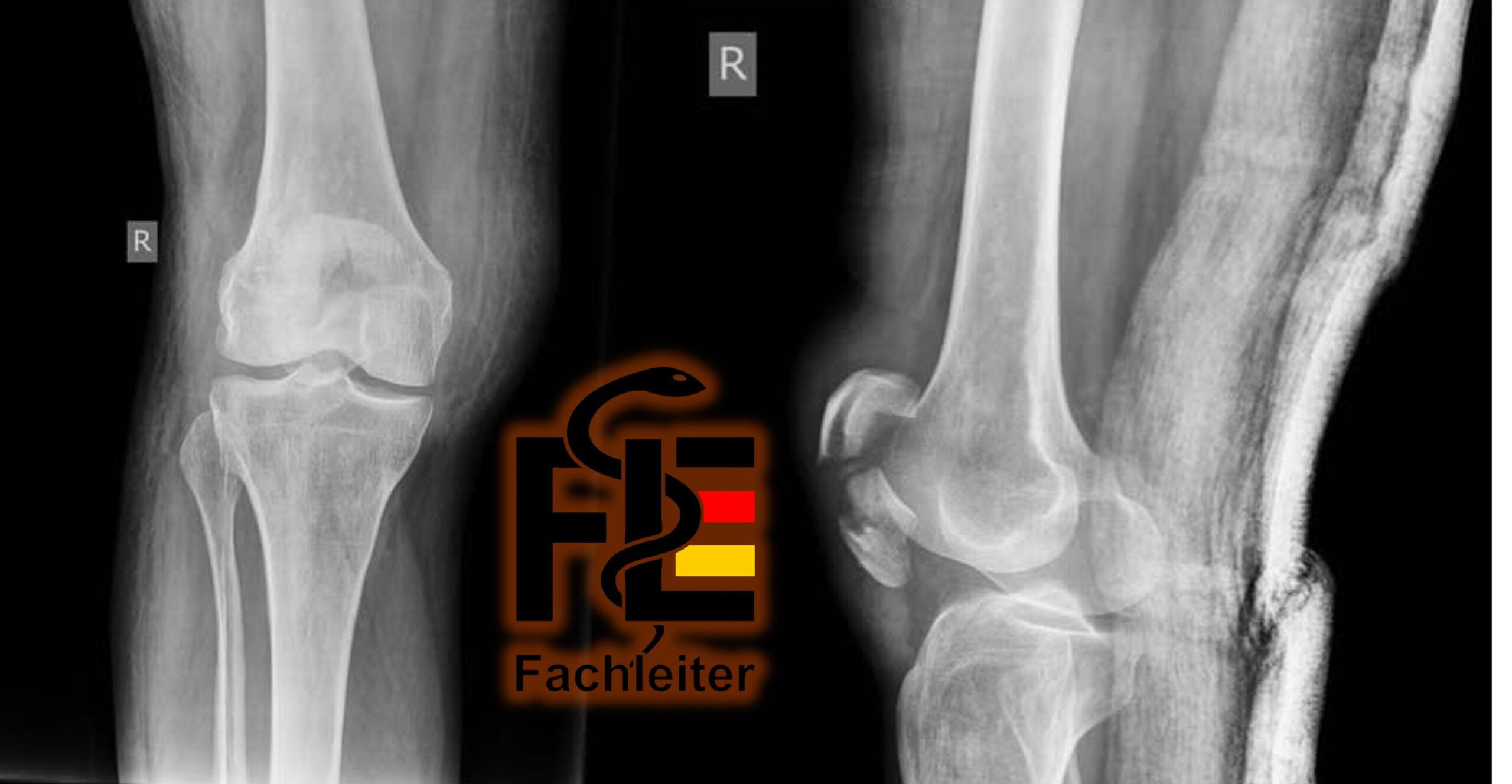
CT
CT is particularly helpful when there is suspicion of a fracture despite an unremarkable X-ray, as some fractures are not visible on radiographs.
MRI
MRI is especially useful when soft tissue injuries are suspected, such as a rupture of the retinaculum, a lesion of the medial patellofemoral ligament (MPFL), or involvement of cartilage or meniscus.
Consultations
Orthopedics, Radiology
Treatment:
Conservative therapy
Indicated for non-displaced fractures with an intact extensor mechanism. Treatment using an extension brace (hinged knee brace in extension), followed by gradual restoration of flexion after 2–3 weeks.
Surgical therapy:
An inability to extend the knee or perform a straight leg raise indicates an insufficient extensor mechanism.
Tension-band wiring osteosynthesis: standard procedure for simple fracture patterns; can be performed with Kirschner wires or cannulated screws.
Other procedures depending on fracture type (e.g. partial/total patellectomy, screw fixation).
Important note: For accompanying soft tissue injuries, especially lesions of the anterior or posterior cruciate ligaments, meniscal injuries (medial or lateral) or damage to the medial or lateral collateral ligaments, an orthopedic consultation should definitely take place.
Complications
Persistent pain, restricted mobility, malunion / deformity
[Image 3 – select from media in the issue editor][Image 4 – select from media in the issue editor]Anatomy
1. Thigh bone / Femur
2. Kneecap / Patella
3. Inner femoral condyle / Condylus medialis femoris
4. Outer femoral condyle / Condylus lateralis femoris
5. Medial tibial plateau / Facies articularis superior medialis tibiae
6. Lateral tibial condyle / Condylus lateralis tibiae
7. Anterior and posterior tibial spines
8. Shin bone / Tibia
9. Calf bone / Fibula
[Image 5 – select from media in the issue editor][Image 6 – select from media in the issue editor]
1. Thigh bone / Femur
2. Quadriceps tendon / Tendo quadriceps femoris
3. Kneecap / Patella
4. Patellar tendon / Ligamentum patellae
5. Tibia / Tibia
6. Fibula / Fibula
7. Tibial plateau
Extra
Names:
Ms. Wolf, Monika Thumb, Susanne Walte
Details:
She also mentioned that she had taken 2 ibuprofen 600 mg tablets, but without improvement.
She called the police and was then transported to the hospital by ambulance.
His partner braked suddenly at the zebra crossing.
when she suddenly braked hard to avoid a fallen e-bike rider.
He was a passenger with his fiancée and there was a cyclist who had fallen in the street; the girlfriend had to brake.
Her husband was driving the car when suddenly a dachshund appeared in front of them. Her husband had to brake very suddenly, and her right knee struck the dashboard of the car forcefully.
A small child ran onto the road
Her husband brought her a wheelchair.
we will marry in 2 months.
She was with her husband on the way to clients to view a property and was wearing a seatbelt. The husband braked suddenly because he noticed e-scooters on the road. The patient struck her right knee against the dashboard and injured the left hip joint.
as a result of a bicycle accident
This situation has existed for four weeks. This happened after a soccer match: I did not hit the ball correctly, twisted my right leg and fell. I experienced the same problems again – but this time everything became worse.
Smoked hashish for 2 years. Quit 4 years ago
Occupations:
Seamstress, real estate agent
Past medical history:
Myomectomy 6 years ago
Tonsillitis 3.5 weeks ago
Tonsillitis 3.5 weeks ago, treated with antibiotics (amoxicillin).
Bicycle accident while mountain biking with clavicle fracture and shoulder contusion
Low back pain
Asthma bronchiale
Arterial hypertension
Rheumatoid arthritis
Heartburn for 5 years
Medications:
Psyllium husk
Loratadine
Family history:
Daughter (had meningitis 3 years ago, was treated with antibiotics)
Father: status post dissection of the A. carotis 8 years ago (carotid artery dissection)
a 4-year-old daughter (receiving inpatient treatment, suspected meningitis)
Mother: has suffered from a chronic anal prolapse since age 42, which has recently worsened; surgical treatment is planned.
Mother: dementia, DM type II
Allergy:
Hazel pollen hay fever (allergic rhinoconjunctivitis)
House dust mite allergy with rhinorrhea (uses anti-mite bedding)
Eczema on hands and feet every winter
Birch pollen: hay fever
Novalgin. Manifests as exanthema
Questions
1. Will you admit the patient as an inpatient?
Yes, the patient should be admitted for further diagnostic measures and initiation of appropriate therapy. After presentation to the orthopedic consult, further treatment will follow.
2. What would you do if the physical examination is painful?
If the physical examination is limited by pain, I would perform it as gently as possible, avoid unnecessary strain and prioritize the most important tests. Additionally, I would provide adequate analgesia to enable better examination tolerance.
3. What is a backpack bandage and why is a splint/bandage needed for a fracture at all?
A backpack bandage is a special dressing to immobilize a clavicle fracture by pulling the shoulders backward and fixing them. This brings the fracture ends of the clavicle into as anatomical a position as possible and promotes healing.
4. In which organs can myomas occur?
Myomas most commonly occur in the uterus, but can also appear in other organs with smooth muscle, e.g., in the gastrointestinal tract, bladder or vessels.
5. Which shoulder fracture is treated conservatively?
Clavicle fractures (middle third, not or only minimally displaced → backpack bandage)
Proximal humerus fractures, if they are not displaced or the fragments are in an acceptable position
6. Can you explain the indication for tetanus booster vaccination in different situations?
A booster is recommended every 10 years.
For contaminated or deep wounds a booster is required if the last vaccination was more than 5 years ago.
With unclear or missing vaccination status active immunization should be given and, if necessary, passive immunization (tetanus immunoglobulin) in addition.
7. Are there alternatives to colonoscopy?
Colonoscopy is the standard method for colon evaluation and screening because it can be used both diagnostically and therapeutically (e.g., polyp removal).
Alternatives in certain cases include:
Stool tests (e.g., immunochemical fecal occult blood test, iFOBT)
CT colonography (virtual colonoscopy)
Capsule endoscopy (less common, rather complementary)
However, these methods are less sensitive and do not allow direct therapy. Therefore, colonoscopy remains the gold standard.
8. The patient wants to leave the hospital immediately because he has to work and asks for a sick note. How do you proceed?
First, the patient is informed about the medical necessity of inpatient treatment and the possible risks of premature discharge. If he insists on discharge despite this information, this should be documented as discharge against medical advice. A certificate of incapacity for work can be issued if there is an appropriate medical indication.
9. What is parotitis?
Parotitis is an inflammation of the parotid gland, mostly viral (mumps) or bacterial (staphylococci), characterized by painful swelling, fever and possibly trismus and is treated symptomatically or with antibiotics.
10. What is angina tonsillaris?
Angina tonsillaris denotes an acute tonsillitis, usually caused by streptococci, with sore throat, difficulty swallowing, fever and purulent coverings, treated symptomatically or with antibiotics.
11. What is epiglottitis?
Epiglottitis is a life-threatening inflammation of the epiglottis caused by Haemophilus influenzae type B, which presents suddenly with high fever, severe odynophagia, stridor and drooling and requires immediate airway protection and IV antibiotic therapy.
12. Which structures form the knee joint?
The knee joint is mainly formed by the femur, the tibia and the patella. Additionally, menisci, cruciate ligaments, collateral ligaments, joint capsule and articular cartilage are important structures of the knee joint.
Notes
BMI
Body Mass Index (BMI)
The BMI is a simple metric for assessing body weight in relation to height. It is calculated by dividing body weight in kilograms by height in meters squared (unit kg/m²) and is used for the rough classification of weight status in adults.
Dashboard
Dashboard
The dashboard is the front interior panel of a motor vehicle into which instruments and controls are integrated. It houses the speedometer, indicator lights, switches and often parts of the steering column and forms a structural surface in the passenger compartment; in accidents it can serve as a contact surface between vehicle occupants and the vehicle.
Abrasion
Abrasion
An abrasion is a superficial skin defect caused by friction or scraping. Typical features are loss of the outermost skin layers, local pain and occasionally minor bleeding; exposed wound surfaces carry an increased risk of infection and the wound should be cleaned and protected.
Hematoma
Hematoma
A hematoma is a localized collection of blood in the tissue resulting from vascular injury. Clinically it presents with swelling, tenderness to pressure and a discolored skin area that may change over time; size descriptions (e.g. palm-sized) describe the extent of the bruise.
Crepitus sensation
Crepitus sensation
Crepitus sensation refers to the subjectively perceived grinding or rubbing in the joint. Causes can include smooth cartilage defects, joint effusion, loose intra-articular bodies or damage to joint structures after trauma. Clinically such a sound or sensation points to possible intraarticular injuries and warrants further examination of the knee.
Cyanosis
Cyanosis
Cyanosis is the bluish discoloration of skin and mucous membranes due to an increased proportion of insufficiently oxygenated hemoglobin. One distinguishes peripheral cyanosis (e.g. on hands and feet in circulatory disturbances) from central cyanosis (on lips and tongue in systemic hypoxia). In the context of limb ischemia a bluish discoloration of the affected extremity can indicate inadequate perfusion and should be clinically assessed.
Paresthesias
Paresthesias
Paresthesias are subjective abnormal sensations such as tingling, pins-and-needles, numbness or burning sensations without an adequate external stimulus. They arise from dysfunction or irritation of nerves, for example due to compression, circulatory disturbances or injury. In impending limb ischemia paresthesias can be early signs of disturbed nerve function in the affected region.
Laceration
Laceration
A laceration denotes a traumatically caused tear or gaping wound of the skin and possibly the underlying tissue. Characteristics are irregular wound edges and frequent contamination; lacerations can occur in accidents and reveal accompanying injuries. Important note: A laceration is a type of soft-tissue injury and is not per se a typical sign of limb ischemia, but can occur with circulatory disturbances in trauma.
Malpositions
Malpositions
Malpositions refer to an abnormal position or alignment of a limb after trauma, recognizable by visible deformity or an unusual axis deviation. Such misalignments often result from bone fractures or soft-tissue injuries.
Clinical significance: Obvious malpositions can indicate accompanying vascular or nerve injuries and explain symptoms such as cyanosis, coldness or paresthesias distal to the injury. They are therefore a relevant finding during the initial examination of an injured limb.
Fractures
Fractures
A fracture is a complete or partial break of a bone. Clues can be visible deformity, swelling, pain or impaired function of the affected extremity.
Clinical significance: Fractures can lead to circulatory and sensory disturbances and thus cause symptoms like cyanosis, a feeling of cold or paresthesias; open fractures additionally increase the risk of soft-tissue and vascular damage.
Dislocations
Dislocations
A dislocation is the complete displacement of a joint partner from the normal joint socket, visible by malposition, tilt or pronounced joint deformity. Typical accompanying symptoms are severe pain and limited mobility.
Clinical significance: Joint dislocations can exert pressure on or damage vessels and nerves and thereby lead to signs such as coldness, cyanosis or sensory disturbances in the periphery.
Hypotension
Hypotension
Hypotension denotes a lowered arterial blood pressure. Clinically it often manifests as dizziness, weakness or signs of reduced perfusion, but can vary in presentation.
Clinical significance: Low blood pressure is a sign of impaired hemodynamic stability and is considered when assessing the ABC states.
Dyspnea
Dyspnea
Brief description: Dyspnea denotes the subjective sensation of breathlessness or difficulty breathing.
Clinical clues: Typical accompanying signs can include rapid breathing, visible use of accessory respiratory muscles, restlessness or cyanosis. In newly onset or progressive dyspnea a rapid assessment of airway, breathing and circulation is required, as various cardiac, pulmonary or systemic causes may be involved.
Amnesia
Amnesia
Brief description: Amnesia means a partial or complete loss of memory contents; it can be anterograde (inability to form new memories) or retrograde (loss of earlier memories).
Clinical clues: The presence and type of amnesia are important when suspecting traumatic brain injury, neurological disorders or intoxication. Differentiation and timing help in diagnostics.
Context: In the present history amnesia was denied.
Nausea
Nausea
Brief description: Nausea describes the subjective sensation of queasiness, which is not necessarily accompanied by vomiting.
Clinical clues: Causes range from gastrointestinal disorders to vestibular problems to systemic diseases or medication side effects. Accompanying signs and duration are important for assessment and further measures.
Emesis
Emesis
Brief description: Emesis refers to vomiting, i.e. the active expulsion of stomach contents.
Clinical clues: Vomiting can lead to volume loss, electrolyte disturbances and aspiration; accompanying findings and the occurrence of bloody vomit are clinically relevant and require targeted evaluation.
Roe deer
Roe deer
Brief description: The roe deer is a wild hoofed animal common in Europe and belongs to the deer family.
Characteristics and habitat: Roe deer are relatively small deer, living in forests, copses and edge agricultural landscapes and feed mainly on fresh plant parts.
Constipation
Constipation
Definition: Constipation describes a disorder of bowel emptying with less frequent, difficult or incomplete bowel movements.
House dust mite allergy
House dust mite allergy
General: A house dust mite allergy is an IgE-mediated sensitization to proteins from the feces and body parts of house dust mites.
Biology and relevance: House dust mites are tiny arachnids that thrive in adjacent living areas such as mattresses, upholstered furniture and carpets, especially at high humidity. Their excretions contain the relevant allergens and can trigger allergy symptoms such as cough, rhinitis or asthma in sensitized individuals.
Allergen immunotherapy
Allergen immunotherapy
Goal and mechanism: Allergen immunotherapy aims to reduce the allergic reaction to a specific allergen long-term through repeated, controlled exposure and thus decrease disease activity.
Application and forms: It is used for certain IgE-mediated allergies and can be administered in different application forms. The therapy is carried out over an extended period and should be planned individually according to indications.
Safety aspects: Local reactions at the application site can occur during treatment; in rare cases systemic allergic reactions are possible, which is why monitoring and appropriate measures should be provided.
Clavicular fracture
Clavicle fracture
Definition and cause: Fracture of the collarbone, typically caused by direct or indirect trauma such as a fall from a horse or a fall onto the shoulder.
Clinical presentation and findings: Pain in the affected clavicle region, swelling, palpable defect or displacement of bone fragments; shoulder movement may be impaired.
Diagnostics: X‑rays to assess fracture alignment and possible concomitant injuries.
Therapy and course: Many clavicle fractures can be treated conservatively (immobilization, gradual mobilization). Physiotherapy to restore mobility and strength is a central part of rehabilitation and can support functional improvements and pain reduction. Surgical treatment is considered in cases of marked displacement, soft tissue problems, or unsatisfactory healing.
Complications: Delayed healing, nonunion, malunion, or persistent shoulder pain can occur and impair function.
Physiotherapy
Physiotherapy
Goal: Restoration, maintenance, or improvement of movement, strength, coordination, and everyday function.
Methods: Individual exercise programs, manual techniques, guidance on activity and posture modification, functional training, and, where appropriate, physical modalities for pain relief.
Indications and application: Used for musculoskeletal disorders, after injuries or surgeries, and for chronic pain syndromes. In conservative treatment of bone fractures and accompanying soft tissue injuries, physiotherapy supports rehabilitation and return to daily life and work.
Effect: Reduction of pain, improvement of mobility and muscle strength, and promotion of independence in daily activities.
atopic dermatitis
Atopic dermatitis
Definition: Chronic inflammatory skin disease with a genetic predisposition and a typical tendency to dry, itchy skin.
Clinical presentation and triggers: Typical findings are dry, reddened, and often eczematous skin areas; hand involvement can lead to painful skin fissures (rhagades). Exacerbations are often triggered by stress, contact with irritating substances such as certain detergents, or by allergens.
Treatment: The basis is consistent skin care with emollients and avoidance of known triggers. During inflammatory flares, topical anti‑inflammatory therapies are used; for severe or therapy‑resistant courses, systemic therapies may be considered. For pronounced hand eczema or frequent fissures, specialist evaluation is recommended.
Prevention: Skin protection measures, avoiding exposure to irritants, and education on skin care are important to prevent recurrences.
Tonsillitis
Tonsillitis
Definition and causes: Inflammation of the palatine tonsils, caused by viral or bacterial pathogens (commonly streptococci).
Clinical presentation: Sore throat, difficulty swallowing, reddened and possibly pus‑coated tonsils, and enlarged cervical lymph nodes; fever may occur.
Therapy: Treatment depends on the suspected cause. Viral forms are managed symptomatically; in confirmed bacterial infection (e.g., streptococci) antibiotic therapy is indicated. In certain cases, parenteral antibiotic administration may be required.
Follow‑up: For recurrent or severe courses, further evaluation and possible ENT specialist treatment should be considered.
Penicillin
Penicillin
Group
Penicillin belongs to the β‑lactam antibiotics.
Mechanism of action
It inhibits bacterial cell wall synthesis by blocking penicillin‑binding proteins, leading to death of susceptible bacteria.
Indications
Penicillins are used for various bacterial infections, particularly against many gram‑positive pathogens; the spectrum varies by specific agent.
Important notes
Allergic reactions to penicillins are clinically relevant. If penicillin allergy is suspected, caution is required and medication should be adjusted accordingly.
Cephalexin
Cephalexin
Group
Cephalexin is a first‑generation cephalosporin.
Action
It disrupts bacterial cell wall synthesis via the β‑lactam ring system and is mainly active against many gram‑positive pathogens and some gram‑negative bacteria.
Indications
Cephalexin is used for skin and soft tissue infections as well as selected respiratory and urinary tract infections; indication depends on pathogen susceptibility and clinical findings.
Safety aspects
Gastrointestinal side effects and allergic reactions can occur; in known severe penicillin allergy, tolerability must be assessed individually.
loose body (joint)
Loose joint body (corpus liberum)
Definition
A loose joint body is a free fragment of cartilage, bone, or connective tissue that moves within the joint space.
Causes
Such fragments can arise after trauma, with degenerative joint changes, or as a result of osteochondral lesions.
Diagnostics
Imaging modalities such as X‑ray, ultrasound, or MRI are used to visualize and confirm the lesion.
Therapy
If loose bodies cause symptoms, joint locking, or pain, arthroscopic removal is often considered.
Hydrocortisone
Hydrocortisone (topical)
Drug class
Hydrocortisone is a corticosteroid with anti‑inflammatory properties.
Effect
Topically applied, it reduces local inflammatory reactions, relieves itching, and has vasoconstrictive effects in the skin.
Application
As an ointment or cream it is used to treat inflammatory skin conditions such as dermatitis; strength and duration of use are determined by severity and location.
Side effects and precautions
With short‑term, local use systemic effects are rare. Prolonged or large‑area application, use under occlusive dressings, or use in children can increase the risk of local skin atrophy, telangiectasia, pigment changes, and in rare cases systemic effects. Use should follow medical advice.
Ibuprofen
Group: Nonsteroidal anti‑inflammatory drug (NSAID).
Action: Inhibits cyclooxygenase enzymes, reducing prostaglandin synthesis; resulting effects are analgesic, anti‑inflammatory, and antipyretic.
Use: Employed for symptomatic treatment of pain, inflammatory conditions, and fever.
Important risks: Common adverse effects affect the gastrointestinal tract (e.g., dyspepsia up to ulcers and bleeding). It can impair renal function and trigger allergic reactions including bronchial reactions in sensitive individuals. Interactions with other drugs (e.g., anticoagulants, certain antihypertensives) are possible; prolonged high‑dose use carries increased cardiovascular risk.
Valerian
Description: Valerian is a medicinal plant whose roots have traditionally been used for their calming properties.
Effect and use: Extracts are mainly used to support sleep onset and maintenance and for short‑term relief of mild nervous restlessness.
Side effects and notes: Some users may experience drowsiness, dizziness, headaches, or gastrointestinal complaints. Caution is advised when taken with other sedating substances or alcohol, as effects may be potentiated.
Lactose intolerance
Definition: Lactose intolerance is an intolerance to milk sugar due to a deficiency of the enzyme lactase.
Pathophysiology: With lactase deficiency, lactose is not sufficiently broken down in the small intestine and passes into the colon, where it acts osmotically and is fermented by gut bacteria.
Clinical picture and management: Typical symptoms after lactose‑containing meals are bloating, abdominal pain, increased bowel sounds, and diarrhea. Diagnosis is made by history, provocation tests, or breath tests; treatment mainly consists of reducing lactose in the diet and, if necessary, lactase‑supporting measures.
Pack years
Term: Pack year(s) describe cumulative tobacco exposure.
Calculation: Number of cigarettes smoked per day divided by 20, multiplied by the years of smoking (packs/day × years = pack years).
Meaning: The value serves as a rough estimate of long‑term exposure to cigarette smoke but has methodological limitations (e.g., does not account for inhalation depth, product type, or temporal variations).
Liqueur
Short description
Liqueur is a sweet alcoholic beverage produced by flavoring alcohol with fruits, herbs, spices, or other flavorings.
Composition and properties
Typical characteristics of liqueurs are a high proportion of added sugar and intense flavor; alcohol content can vary. Production usually involves macerating or steeping aromatic ingredients in alcohol followed by sweetening.
Consumption and health aspects
Liqueurs are often consumed in small amounts at social occasions or as a digestif. Because of their sugar content and alcohol, they are not suitable for regular heavy consumption; caution is advised with certain medical conditions or concomitant medication.
Electricity tariff advisor
Job profile
An electricity tariff advisor is a consultant in the energy sector who informs private or business customers about available electricity tariffs.
Tasks
Core tasks include obtaining and comparing tariff offers, explaining contract terms, and assisting in the selection of an economical or needs-based tariff.
Benefits for customers
Through such consulting, customers can potentially find better conditions, gain transparency about price components, and ease the switching process.
Laryngitis
Definition
Laryngitis is an inflammation of the larynx, which can be acute or chronic.
Causes
Common triggers are viral infections, voice strain and irritating substances such as smoke; less commonly, bacterial infections or other underlying diseases are present.
Clinical signs
Typical symptoms are hoarseness or loss of voice, throat or laryngeal pain, often accompanied by cough or a dry foreign-body sensation.
Treatment
Therapy depends on the cause and severity: voice rest, adequate fluid intake and humidification of the air are basic measures. If a bacterial infection is proven, targeted medicinal treatment may be considered; in general, cause-oriented investigation is sensible if symptoms persist or worsen.
Colon carcinoma
Definition
A colon carcinoma is a malignant tumor of the large intestine that often can develop from benign colorectal polyps (adenomas).
Risk factors and development
Several factors are associated with an increased risk, including family predisposition, certain chronic inflammatory bowel diseases and lifestyle factors. Development typically occurs via dysplastic mucosal changes.
Clinical clues
Early stages can be paucisymptomatic; possible later signs are blood in the stool, unexplained weight loss, persistent changes in bowel habits or abdominal complaints.
Diagnosis and therapy
Evaluation includes endoscopic examination with tissue sampling and imaging procedures for staging. The primary treatment is usually surgical removal of the affected intestinal segment; depending on the findings, additional medicinal (adjuvant) systemic therapy may be indicated. Radiotherapy is not routinely used for colon carcinoma and plays a larger role in rectal carcinoma.
Prognosis
Prognosis depends primarily on the tumor stage at the time of diagnosis and on achieving complete surgical removal.
Mumps infection
Mumps infection
Cause: Mumps infection is caused by the mumps virus (a paramyxovirus) and is a systemic viral disease.
Clinical picture: Typical is a painful swelling of the parotid salivary glands (parotitis), which can occur unilaterally or bilaterally, accompanied by general symptoms such as fever and malaise. Other glands can also be affected.
Complications: In adolescents and adults, inflammation of other organs may develop, such as orchitis in postpubertal men, oophoritis in women, aseptic meningitis or pancreatitis. In rare cases, unilateral sensorineural hearing loss can occur.
Transmission and prevention: Infection is predominantly airborne via droplet contact; vaccination as part of the measles-mumps-rubella immunization offers protection.
Treatment: There are no specific antiviral therapies for mumps; care is primarily symptomatic and includes measures to relieve pain and support general condition.
Blood pressure
Blood pressure — Device and function
Device components: Noninvasive blood pressure measurement includes an inflatable cuff, a means of inflation (e.g., bulb or integrated pump) and a measuring instrument (aneroid or digital manometer). The device is often used together with a stethoscope for auscultatory measurement.
Principle of function and variants: The device is used to determine arterial pressure, which is usually given as systolic and diastolic values. In addition to manual auscultatory devices, automatic oscillometric devices are now also widespread.
Respiratory rate
Respiratory rate
Definition and normal range: Respiratory rate is the number of breaths per minute; in adults it is usually in the range of about 12 to 20 breaths per minute.
Deviations: Increased respiratory rate (tachypnea) is described at more than 20 breaths per minute, decreased frequency (bradypnea) at fewer than 12 breaths per minute.
Clinical significance: Deviations of the respiratory rate are an important indicator of disorders of breathing, gas exchange regulation or the central nervous system and should be assessed in the clinical context.
Oxygen saturation
Oxygen saturation (SpO2)
Measurement principle: Blood oxygen saturation is measured noninvasively with a pulse oximeter and expressed as the percentage of hemoglobin bound with oxygen (SpO2).
Application and limitations: The measurement serves to assess the course of arterial oxygenation in clinical practice. Measurements can be affected by peripheral perfusion disorders, movement, nail polish or certain hemoglobin variants and must be interpreted in the clinical context.
Body temperature
Body temperature can be measured rectally (in the rectum), orally (under the tongue) or axillary (in the armpit)
PatientSalutation: Mr/Ms Senior Physician ……….., I would like to introduce Mr Reiner Winter to you. |
Date27/07/2025 |
| Age36 years | Weight79 kg | Height178 cm |
Allergies (keywords)
Intolerance to egg products → epigastric pain
Lactose intolerance → epigastric pain
House dust mite allergy (cough, improved under immunotherapy)
Substance use / drugs (keywords)
Smoking history: started at age 20, about 10 cigarettes/day, nicotine abstinent for 8 years (≈ 5 pack-years)
Occasional alcohol consumption (liqueur, social occasions)
No drug use
Social history (keywords)
Employed by the municipal utilities as an electricity tariff advisor
Married, an 8-year-old daughter (hospitalized one month ago for laryngitis)
Family history (keywords)
Mother (58 y.): colon cancer at 42, partial colectomy, since then colostomy
Father (61 y.): hearing impairment since mumps in childhood; stroke 4 years ago with dysphasia, dysgraphia, dyslexia, partial ocular motor palsy and diplopia
Medications (keywords)
Hydrocortisone ointment 0.5% for dermatitis
Ibuprofen 600 mg as needed
Pantoprazole
Valerian tablets 300 mg
History (full sentences)
The patient presented to our facility as an emergency due to stabbing pain in the right knee and left hip for about 45 minutes.
The complaints occurred after impact of the right knee against the dashboard.
The knee pain was reported by the patient at rest with an intensity of 8/10 and described as about twice as strong as the hip pain.
The patient complained of pain-related movement restrictions in the affected knee.
On the right knee there was an abrasion about the size of a two-euro coin as well as a palm-sized hematoma on the anterior aspect.
Additionally, there was a knee joint effusion.
The patient reported a crepitus sensation in the knee during the accident.
The following were denied:
Signs of extremity ischemia such as cyanosis, coldness or paresthesias, laceration, visible malpositions or fractures as well as dislocations, neck pain, back pain
Autonomic history: unremarkable except for stress-related insomnia for 4 months and constipation for 5 years.
Previous illnesses: chronic shoulder pain after horseback riding accident (clavicle fracture, scapular contusion, conservative therapy, physiotherapy with improvement), atopic dermatitis with rhagades, cough in house dust allergy (improved under immunotherapy), tonsillitis 4 weeks ago (penicillin i.m.).
Prior surgeries: arthroscopy of the right ankle 6 years ago (loose body after sprain).
Additionally: cut injury to tip of left index finger 10 days ago, treated with cephalexin antibiotics.
Vaccination status: tetanus booster 2 years ago.
Suspected diagnosis – differential diagnosis (full sentences)
There is suspicion of a patella fracture after direct impact of the right knee on the dashboard. Differentially, a sprain of the left hip joint should be considered. In addition, possible concomitant injuries, especially to the distal femur, proximal tibia and fibula, as well as lesions of the cruciate ligaments, menisci or collateral ligaments should be assessed.
Further procedure – therapy (full sentences)
The patient will receive analgesics to relieve the complaints.
X-rays of the right knee and the left hip joint will be taken in two planes (AP and lateral).
If findings are unclear, complementary CT diagnostics will be performed.
An orthopedic consult will be involved to co-assess possible ligament or meniscal injuries.
Further treatment is carried out conservatively or surgically, depending on the orthopedic assessment.
Signature
First Name Last Name
Kind regards