
Greeting
Good day, dear Professor Doctor …,
I would like to now present the patient Alfons Ziegler to you.
He is 69 years old, one meter seventy-three tall and weighs about 89 kg. His body mass index (BMI) is 27 kg/m², which places him in the overweight range.
Current medical history
The patient presented today because of approximately four weeks of progressive, exertion-related, pulling pain in the area of the right lower leg, particularly at the dorsal calf.
According to his report, the complaints significantly intensified this morning . The pain radiates from the lower leg distally into the foot.
The pain intensity during exertion is almost twice as strong as at rest.
He reported that after about 100 meters of walking or after climbing one flight of stairs he usually has to take a break of several minutes. Today this exertion limit was already reached after about 50 meters.
(The patient reported that the complaints improve when he sits in an armchair and lets his legs hang down.)
The patient stated that ibuprofen 400 mg had no effect.
The skin is pale and cool, the surface dry and scaly. Above the malleolus there is an effluvium. In addition, there is onychorrhexis, particularly of the hallux.
In the interdigital space between digit I and II, walking barefoot in the garden led to the development of a poorly healing ulcer .
Furthermore he reports paresthesias in both feet as well as orthostatic hypotension .
The following symptoms were denied: pyrexia, cyanosis, edema, tachycardia, tachypnea, traumatic events, orthopnea, and syncope.
There are no indications of a deep venous thrombosis (DVT), erysipelas, varices or venous insufficiency, radiculopathy or spinal canal stenosis.
Due to the difficult appointment situation he came directly to us.
Autonomic history
The autonomic history is unremarkable, apart from polyphagia with increased feelings of hunger. The patient reported not having had a stable body weight in the last six months.
In addition, there has been chronic constipationfor about four years.
Furthermore, he suffers from insomnia in the form of sleep maintenance disorder, due to the nightly burden of caring for his wife.
Past medical history
The following pre-existing conditions are known from the anamnesis:
The patient has had type 2 diabetes mellitusfor 15 years, which is currently poorly controlled due to irregular therapy.
Blood glucose values fluctuate: fasting between 130 and 160 mg/dl, sometimes up to 200 mg/dl after meals. He also has diabetic polyneuropathy.
|
No diabetes |
prediabetes |
diabetes |
|
|
Fasting blood glucose |
< 100 mg/dl |
100–125 mg/dl |
≥ 126 mg/dl |
|
Random blood glucose |
– |
– |
≥ 200 mg/dl |
|
HbA1c |
< 5,7 % |
5,7–< 6,5 % |
≥ 6,5 % |
|
OGTT (2 h value) |
< 140 mg/dl |
140–199 mg/dl |
≥ 200 mg/dl |
Arterial hypertension has also been known for 15 years and is currently adequately controlled.
|
systolic (mmHg) |
diastolic (mmHg) |
Treatment |
|
|
Normal blood pressure |
< 120 |
< 70 |
– |
|
Elevated blood pressure |
120–139 |
70–89 |
+ |
A hypercholesterolemia has been known for 15 years.
About four years ago the patient experienced exertion-dependent and postprandial chest pain consistent with angina pectoris. At that time a coronary stenosis – presumably of the right coronary artery – was treated by balloon dilatation and a stent was implanted.
In the interdigital space between digit I and II, walking barefoot in the garden led to the development of a poorly healing ulcer. In this context, amoxicillin 1000 mg, ibuprofen 400 mg as needed and a local treatment with Betaisodona were prescribed.
For about five years he has had chronic obstructive pulmonary disease (COPD). Exacerbations are rare and are mostly observed in connection with upper respiratory tract infections.
The patient has exertion-dependent Back pain stated. Further diagnostics have not yet been performed.
Previous surgeries
——————–
Note: If a statement can be objectively confirmed by a medical examination – for example by visible scars – the indicative is appropriate. (No physical examination takes place in the Fachsprachprüfung.)
Gynecology
——————–
Medications
The following medications are listed on his prescription:
• Icandra® 1-0-1
• Metoprolol 50 mg in the morning
• Lisinopril 10 mg once daily
• Atorvastatin 40 mg in the evening
• Ibuprofen 400 mg as needed
• Tamsulosin 0.4 mg once daily
• Aspirin 81 mg once daily
• Symbicort® spray regularly
• Salbutamol spray as needed
• Nitrolingual® spray as needed
• Betaisodona® ointment topical
Previously:
Clopidogrel 75 mg once daily
Amoxicillin (time-limited, if currently prescribed)
Note: If a statement can be objectively confirmed by a physician’s observation – for example by a prescription – the indicative is appropriate.
Allergies
The patient reports a contact allergy to latex, which manifests as a vesicular, partly weeping exanthem.
He also has allergic rhinoconjunctivitis to grass and birch pollen.
Social toxins
The patient has been a non-smoker for five years. Previously he smoked 10 to 15 cigarettes daily for a period of 20 years, corresponding to a smoking history of about 12.5 pack-years .
The patient drinks a wine spritzer two to three times per week.
Drug use was denied.
Social history
The patient is currently retired. Previously he worked as head chef in a large Italian kitchen in the old town of Nuremberg.
He lives with his wife, who suffers from paraplegia after a stroke.
He has a son and a daughter and four grandchildren.
Family history
The father is 93 years old and lives with a dementia in a nursing home.
The mother died about 25 years ago at the age of 63 from a stroke .
Suspected and differential diagnosis
In my assessment, the described pain and its location are consistent with a circulatory disorder. Given the existing risk factors, much points to peripheral arterial disease (PAD).
A deep vein thrombosis (DVT) also appears less likely, as there is neither a difference in leg circumference nor an obvious triggering factor.
In chronic venous insufficiency, affected individuals typically report a feeling of heaviness in the legs – especially after prolonged standing – which is not the case here. However, the patient does have risk factors such as lack of exercise, overweight and older age.
In cellulitis or lymphangitis we expect redness, warmth and pain.
In superficial thrombophlebitis, redness, a palpable venous cord and local tenderness are expected.
The absence of radicular symptoms and neurological deficits argues against spinal stenosis or a herniated disc. In addition, back pain is usually the prominent symptom in those conditions.
Diagnostic workup
Because the patient reports acute severe pain, an acute arterial occlusion should be considered. In that case, immediate inpatient admission is required.
With a purely chronic course with exertion-dependent complaints and stable symptoms, outpatient evaluation would be possible.
physical examination
After the history, a structured physical examination should be performed. This begins with measurement of the vital signs (heart rate, blood pressure, respiratory rate, oxygen saturation and temperature), followed by inspection of the affected extremity.
Skin changes such as pallor, cyanosis, swelling, trophic disturbances and the presence of ulcers (location, size, edges, secretion, odor) should be assessed. Signs of a fungal infection, e.g. interdigital mycosis, should also be documented.
In an acute arterial occlusion, typical signs such as pale, cool skin, absent peripheral pulses, cyanosis, paresthesias and possibly motor deficits are to be expected.
Palpation is used to check peripheral pulses and capillary refill time.
• Femoral artery: in the groin, roughly halfway between the anterior superior iliac spine and the symphysis
• Popliteal artery: in the popliteal fossa with the knee slightly flexed, difficult to palpate
• Posterior tibial artery : behind the medial malleolus• Dorsalis pedis
• Artery dorsalis pedis: on the dorsum of the foot, lateral to the tendon of the extensor hallucis longus muscle (it is best palpable when the patient dorsiflexes the great toe).
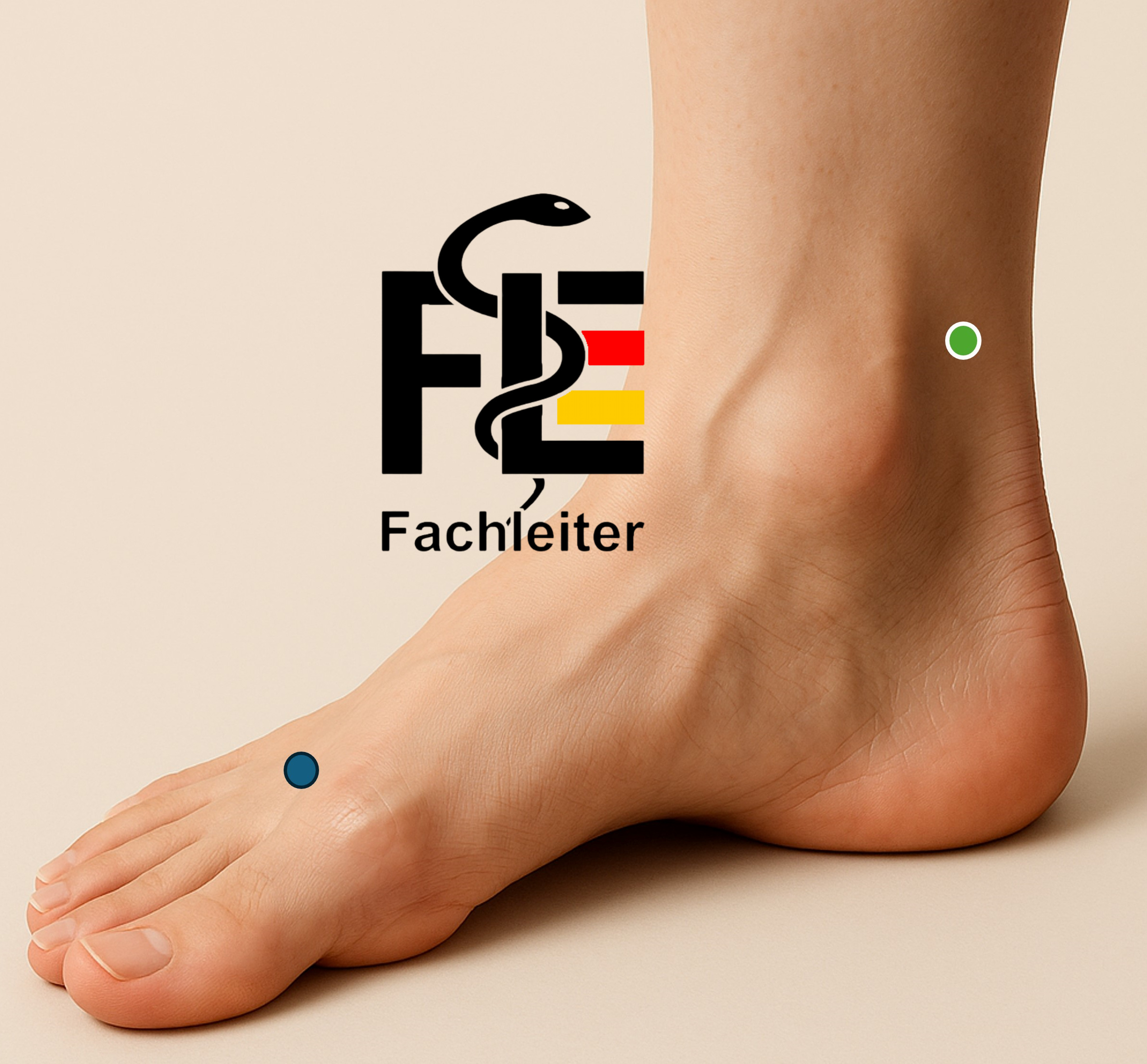
In addition, sensation and motor function of the affected region should be assessed. If edema is present, check whether it is pitting. Auscultation over the vessels may reveal pathological flow sounds (e.g. over the femoral artery).
In known diabetes mellitus, a diabetic foot exam and fundoscopy should be performed additionally.
For further evaluation when PAD is suspected, functional tests such as the Ratschow’s manoeuvre and measurement of the Ankle-Brachial Index (ABI) are obligatory.
|
Fontaine classification |
|||
|
Stage |
Designation |
Description |
|
|
I |
Asymptomatic |
No complaints despite detectable circulatory disorder |
|
|
II |
a |
Pain-free walking distance > 200 m |
Intermittent claudication, but with longer walking distance |
|
b |
Pain-free walking distance < 200 m |
Intermittent claudication with short walking distance |
|
|
III |
Rest pain / nocturnal pain |
Pain at rest, usually when lying down (e.g., at night) |
|
|
IV |
Necrosis / gangrene |
Tissue death, ulcers, black discoloration, possibly infection |
|
Laboratory tests
For further clarification, a small complete blood count, CRP, ESR, D-dimers, fasting blood sugar (FBS), HbA1c, a lipid profile (total cholesterol, LDL, HDL, triglycerides), renal parameters (creatinine, urea, GFR) and a proteinuria test should be performed.
ECG
Color duplex sonography (routine)
Color duplex sonography is a noninvasive ultrasound method that displays vascular structures and blood flow in color. This allows reliable detection of vascular narrowings, occlusions, and thromboses. At the same time, the direction and velocity of blood flow can be assessed: red indicates flow toward the probe, blue indicates flow away from it. Light colors represent fast flow, dark colors slow flow. Turbulent blood flow, for example in the area of a stenosis, produces mixed multicolors. The principle is based on the Doppler effect, where the reflected ultrasound frequency changes depending on the movement direction of the blood cells.
At the beginning, a special contact gel is applied to the skin to improve the transmission of sound waves. Then the ultrasound probe is moved over the affected vascular segments. The examination is painless and usually takes about 20 minutes.
Angiography
Angiography is a minimally invasive imaging procedure used for diagnosis and, if necessary, interventional treatment of vascular diseases.
In PAD, under local anesthesia a thin catheter is advanced via the femoral artery to the stenosed vascular region. Then an iodine-containing contrast agent is injected, which is made visible using X-rays (digital subtraction angiography) or magnetic fields (MR angiography).
The examination takes between 30 minutes and 2 hours depending on findings and any therapeutic intervention (e.g., balloon dilatation, stent implantation).
Before angiography the patient should be fasting, any possible contrast allergy as well as renal function (e.g., GFR) must be checked. In diabetics a pause of metformin should be considered.
Possible complications are local hematomas, bleeding at the puncture site, contrast allergies, transient renal dysfunction and – very rarely – vascular complications such as embolisms.
Conventional contrast angiography remains the gold standard,
but duplex sonography, CT angiography (CTA) and MR angiography (MRA) have largely replaced catheter angiography for anatomical assessment prior to revascularization.
Indications for a CT– or MR angiography in PAD exist in case of unclear findings on duplex sonography – for example in obese patients or deep-seated vessels – as well as for preoperative planning before a planned revascularization.
Consultations
Vascular surgery, radiology / interventional radiology, anesthesiology, internal medicine / cardiology, diabetology / endocrinology
Treatment:
Measures to reduce cardiovascular risk factors in PAD:
• Weight reduction in overweight patients
• Regular physical activity (walking training, at least 3×/week)
• Smoking cessation (if necessary nicotine replacement therapy or behavioral therapy)
• Diabetes mellitus:
FBS < 130 mg/dl
HbA1c < 7 %
• Arterial hypertension:
Target value: < 130/80 mmHg or < 120/80 mmHg
• Hypercholesterolemia:
LDL target < 70 mg/dl in high cardiovascular risk
• Consistent foot care:
Daily inspection, avoidance of pressure points and infections
Patients with irreversible limb ischemia should no longer undergo angiography but should be scheduled directly for amputation.
The most common causes of acute limb ischemia are thrombosis or embolism.
All other patients with acute ischemia whose limb still appears viable should undergo emergency angiography to identify the cause and, if possible, treat it endovascularly.
Pharmacological therapy
• Antiplatelet therapy
Aspirin: 75–325 mg/day
Clopidogrel: 75 mg/day (if ASA is not tolerated)
• Cilostazol (phosphodiesterase-III inhibitor):
50–100 mg twice daily
improves maximal walking distance in claudication
Complications:
Rest pain, ulcers, necroses, chronic wound healing disorders, gangrene/necrosis, infections, amputation
Extra
Names:
Renate Wirthmann, Paul Breitner, Stephan Baum, Edeltraut Böhm, Richard Wagner, Ferdinand Sauerbruch, Reiner Obermaier, Annemarie Spiegelberg, Mrs. Lessing, Sophia Mayer, Susanne Krämer, Waltraud Böhm, Anna Füffler, Leopold Henkel, Alfons Böhmermann, Rosa Bier, Petra Henkelmann, Martin Löffler
Details:
Insomnia in the form of difficulty falling asleep (due to stress after his wife’s death).
Additionally, the patient reports previous seizure episodes for which she took magnesium.
He worked as an assistant cook.
Pub manager
Florist
Animal keeper
in the butcher’s shop
Past medical history:
Atrial fibrillation
Pilonidal sinus 20 years ago
Asthma bronchiale at age 49!!!
Perforated appendicitis
Celiac disease since age 20.
Scaphoid fracture
In childhood she underwent tonsillectomy and 13 years ago a cesarean section.
Dog bite three years ago on the left leg.
Family history:
My mother died from a ruptured vessel in the brain.
Her son committed suicide three years ago.
The grandson suffers from a congenital anemia, possible diagnosis: thalassemia or hereditary spherocytosis. The father has renal insufficiency. The mother died 40 years ago from an aortic dissection.
The father died of myocardial infarction.
Father died of laryngeal carcinoma
Medications:
Hexal 20 mg
Statin in the morning!!!!
Candesartan
Allergy:
Crustacean allergy (pruritus in the mouth, hypoesthesia of the tongue, abdominal pain)
Lactose intolerance with diarrhea and abdominal pain.
Questions
1. Do I really have to stay in the hospital? I need to take care of my wife.
I understand that you want to get home quickly and care for your wife. We just want to ensure that nothing serious is overlooked – there is suspicion of a coagulopathy, and we should clarify that more thoroughly as a precaution.
2. What does trophic disturbances mean?
Trophic disturbances are changes in the skin, nails, or hair that result from impaired blood flow or nerve damage. These include dry, thin skin, poorly healing wounds, ulcers, brittle nails, and hair loss in the affected areas.
3. Does my leg have to be amputated?
At the moment we cannot say that for sure. We are doing everything to improve blood flow – but we need further tests for that.
4. My neighbor has diabetes and uses insulin. My GP did not prescribe that to me – is that normal?
That is quite normal. Not every diabetic needs insulin. For you, treatment with tablets is currently sufficient because your pancreas still produces enough insulin. We monitor regularly whether this changes.
5. My mother died from a ruptured vessel in the brain – is my condition comparable?
I’m sorry to hear that. A ruptured vessel in the brain – i.e., a brain hemorrhage – is usually a different condition than what you currently have. From what we know so far, your situation does not appear similar. We will examine everything thoroughly to be sure.
6. What are the symptoms of a brain hemorrhage?
Typical symptoms of a brain hemorrhage are sudden severe headache, nausea, vomiting, visual disturbances, speech disorders, paralysis, or changes in consciousness. In some cases seizures may also occur.
7. What is the term for paralysis on only one side of the body? What is it called when both legs are paralyzed? Is there a technical term for paralysis of all four limbs?
Hemiparesis:
→ Hemiparesis (incomplete paralysis)
→ Hemiplegia (complete paralysis of one side of the body)
Paralysis of both lower limbs:
→ Paraparesis (incomplete)
→ Paraplegia (complete)
Paralysis of all four limbs:
→ Tetraparesis (incomplete)
→ Tetraplegia (complete)
8. What are typical symptoms of benign prostatic hyperplasia?
Typical symptoms of benign prostatic enlargement (benign prostatic hyperplasia) are: weakened urinary stream, difficulty initiating urination, dribbling, feeling of incomplete bladder emptying, frequent urination (especially at night) and sudden urge to urinate
9. What is the difference between pollakiuria, oliguria and anuria?
Pollakiuria means frequent urination in small amounts.
Oliguria is a significantly reduced urine volume, i.e., less than 500 ml per day.
Anuria denotes an almost complete retention of urine – less than 100 ml per day.
10. Why do pains in PAD improve with dependent positioning and in DVT with elevation?
In PAD dependent positioning improves blood flow due to gravity. In DVT elevation reduces venous congestion and thus swelling and pain.
11. Which medications are suitable for diabetics at risk of hypoglycemia?
Drugs with a low risk of hypoglycaemia include e.g. metformin, DPP-4 inhibitors, GLP-1 analogues and SGLT2 inhibitors. Sulfonylureas and insulin increase the risk.
12. What is the difference between a confectioner and a baker?
A baker primarily makes bread, rolls and other dough-based baked goods.
A confectioner, on the other hand, specialises in sweets – e.g. cakes, pastries, pralines, desserts and fine baked goods.
13. What are vegetables and why do they improve digestion
Vegetables are edible parts of plants such as leaves, roots or fruits. They contain a lot of fibre, which stimulates the bowel, promotes digestion and prevents constipation.
14. What do you call a vascular outpouching when the vessel has not ruptured?
An aneurysm is a circumscribed dilatation or outpouching of a blood vessel – usually an artery – without a direct tear of the vessel wall.
15. Which complications of diabetes are classified as micro- and which as macroangiopathic lesions?
Microangiopathies include diabetic retinopathy (eye), nephropathy (kidney) and neuropathy (nerves).
Macroangiopathies affect large vessels and manifest, for example, as CAD, PAD or stroke.
16. For which diseases is excessive alcohol consumption a risk factor?
Excessive alcohol consumption increases the risk of liver diseases (e.g. fatty liver, cirrhosis), hypertension, cardiac arrhythmias, certain cancers (e.g. mouth, oesophagus, liver), pancreatitis as well as psychiatric disorders and addiction.
17. briefly about hyperthyroidism
Notes
BMI
Term and calculation
The body mass index (BMI) is a measure to estimate body weight in relation to height. It is calculated as body weight in kilograms divided by the square of height in meters.
lower leg
Anatomical term
The lower leg (crus) denotes the segment of the leg between the knee joint and the ankle joint.
Location and clinical relevance
Clinically the term refers to the bony and muscular structures of this segment as well as the superficial and deep soft tissues. Pain or complaints in this area can originate from muscle, tendons, skin or vessels and should be examined accordingly.
calf
Region and structure
The calf (regio suralis) refers to the posterior surface of the lower leg. It mainly comprises the calf musculature, especially the gastrocnemius and soleus muscles.
this morning
Timing and warning note
If an existing peripheral arterial occlusive disease (pAVK) suddenly worsens — for example after onset of symptoms this morning — this can indicate an acute arterial event such as embolism or thrombosis.
pause
Pause (with exertion-related claudication)
In peripheral arterial occlusive disease stage II, exertion-related leg pain occurs that allows walking only short distances. Affected individuals therefore have to stop repeatedly to let the symptoms subside; this behavior has given the disease the colloquial name “window-shopping disease.”
The medical term for this presentation is claudicatio intermittens.
none
No inflammatory or mechanical cause (pAVK)
In pAVK, exertion-related leg pain is usually due to reduced arterial perfusion of the leg and not primarily due to inflammatory or degenerative musculoskeletal diseases such as osteoarthritis or pure muscle complaints. Therefore, therapies primarily targeting inflammatory or mechanical causes often have little effect on ischemic claudication symptoms.
cool
Cool (poikilothermia)
Poikilothermia describes the symptom that an extremity takes on the ambient temperature and feels cool. With pronounced arterial hypoperfusion, the affected skin is often pale and cold, often also dry and scaly — findings that match this description.
malleolus
Malleolus (ankle)
The malleolus refers to the bony ankle region of the ankle joint; clinically this area serves as an orientation and examination site. A description such as “above the malleolus” therefore refers to the immediately proximal skin and tissue area on the lower leg or over the ankle.
effluvium
Effluvium — hair loss
Effluvium refers to increased hair shedding, which can occur diffusely or locally. Clinically this results in a visible reduction in hair density or increased hair when combing and washing. Localizations can vary; in medical description an effluvium can also be found on the lower legs above the malleolus.
Onychorrhexis
Onychorrhexis — nail brittleness
Onychorrhexis refers to increased brittleness and splitting of the nail plate, often with longitudinal ridging and fraying. Single or multiple nails may be affected; clinically the altered nail structure and increased fragility are noticeable. The exact cause can only be determined through further investigation.
Hallux
Hallux — big toe
The term hallux denotes the first toe of the foot, i.e. the big toe. Anatomically it is important for the roll-off movement and load distribution of the forefoot. In clinical documentation the term is used for precise localization of findings on the big toe.
Paresthesias
Paresthesias
Definition: Abnormal sensations such as tingling, numbness, burning or pins-and-needles that occur without corresponding external stimuli.
Causes: Such sensory disturbances can result from damage to peripheral nerves or central nerve pathways. Possible causes include, among others, metabolic polyneuropathies (e.g. in diabetes), nerve compressions, toxic or inflammatory nerve injuries.
Hypotension
Hypotension
Definition: A blood pressure that is clinically relevantly low for the affected person; this also includes the orthostatic form with blood pressure drop on standing up.
Causes and risk factors: Common triggers are volume loss (e.g. due to dehydration), reduced cardiac output, medications or disorders of the autonomic nervous system. Older age increases susceptibility to symptomatic blood pressure drops, but is more of a risk factor than a direct cause.
Pyrexia
Pyrexia
Definition: Elevated body temperature as a clinical sign, usually due to an increase of the set point in the temperature regulation center.
Significance: Fever is a nonspecific symptom that can occur with infections, inflammatory processes or less commonly with drug reactions and other systemic diseases.
Cyanosis
Cyanosis
Definition: Bluish to purplish discoloration of the skin and/or mucous membranes due to an increased proportion of reduced hemoglobin or impaired peripheral circulation.
Causes: Cyanosis can be caused by central or peripheral hypoxia, severe respiratory or cardiovascular disorders as well as by local perfusion disturbances.
Edema
Edema
Edema are visible or palpable swellings caused by accumulation of fluid in the interstitium. They can be localized or generalized. Common causes are disturbances of venous or lymphatic return, increased capillary permeability as well as systemic diseases such as heart, liver or kidney failure. Clinically asymmetries between extremities, tenderness to pressure and pitting depressions (in certain forms) are noticeable. The significance of an edema depends on distribution, onset and accompanying symptoms.
Tachycardia
Tachycardia
Tachycardia denotes an increase in heart rate above the age-appropriate range. It can be a normal physiological response (e.g. during physical exertion or stress) or an expression of a pathological rhythm disturbance. Differentially, sinus tachycardia, supraventricular or ventricular tachycardias should be distinguished; accompanying symptoms can include palpitations, dizziness or syncope. Clinical relevance depends on rhythm, frequency and hemodynamic stability.
Tachypnea
Tachypnea
Tachypnea is an increased respiratory rate compared with the age-appropriate normal range and indicates increased ventilatory activity. In adults it often refers to an acceleration of breathing that can have various causes, such as pulmonary diseases, metabolic disorders, pain, fever or anxiety. Clinical assessment is based on breathing pattern, accompanying symptoms and the patient’s overall condition.
DVT
Deep vein thrombosis (DVT)
Deep vein thrombosis denotes the formation of a blood clot in the deep veins of the leg. Typical clinical clues are unilateral swelling, unilateral increase in circumference of the affected limb, pain or tenderness to pressure, less commonly redness and increased warmth. A difference in circumference between the legs can be an indication of DVT, but is not specific and requires further diagnostic evaluation.
Radiculopathy
Definition:
Radiculopathy denotes impairment of function of a spinal nerve root due to compression or inflammation.
Clinical presentation:
Typical are burning or shooting pains that radiate from the spine into the corresponding segmental area of the arm or leg; in addition, sensory disturbances, muscle weakness or reduced reflexes may occur.
Causes and diagnostics:
Triggers include, among others, herniated disc, foraminal stenosis or inflammatory processes; evaluation is performed by neurological examination and imaging techniques.
Spinal canal stenosis
Brief description:
Spinal canal stenosis denotes narrowing of the vertebral canal with loss of space for the spinal cord or nerve roots.
Clinical characteristics:
In lumbar manifestation, burden-dependent leg pain or neurogenic claudication often occurs, which improves with forward flexion and can increase with prolonged walking or standing.
Causes and diagnostics:
Degenerative changes of the intervertebral discs, facet joints or connective tissue are common causes; diagnostic confirmation is clinical and by imaging.
Polyphagia
Term explanation:
Polyphagia denotes a persistently increased feeling of hunger and increased food intake.
Pathophysiological connection (example in insulin deficiency):
With insufficient insulin action, glucose cannot adequately enter body cells, so despite elevated blood glucose levels a cellular energy deficiency occurs; this state can increase the sensation of hunger and thus lead to polyphagia.
Associated findings:
Uncontrolled glucose metabolism can simultaneously promote weight loss and increased excretion of glucose in the urine.
Constipation
Definition:
Constipation describes persistent difficulties with bowel movements, for example infrequent or hard stools as well as a feeling of incomplete evacuation.
Possible secondary problems:
Chronic constipation can lead to complications such as anal fissures and hemorrhoids as well as other local changes.
Insomnia
Insomnia — sleep disorder
Definition: Insomnia denotes impaired sleep quality or duration that leads to daytime impairments. Typical forms are difficulties falling asleep, sleep maintenance problems and early morning awakening.
Type 2 diabetes mellitus
Type 2 diabetes mellitus — chronic metabolic disease
Definition and pathophysiology: In type 2 diabetes there is generally reduced sensitivity of peripheral tissues to insulin (insulin resistance) and an impaired insulin secretory response of the beta cells, which leads to persistent hyperglycemia.
Clinical picture and complications: Longstanding poorly controlled type 2 diabetes increases the risk for micro- and macrovascular complications; diabetic polyneuropathy is a common complication.
Hypercholesterolemia
Hypercholesterolemia — elevated cholesterol level
Definition: Hypercholesterolemia denotes an increased concentration of cholesterol in the blood, with an increase in LDL cholesterol being of primary clinical relevance.
Significance and risks: A persistently elevated cholesterol level promotes the development of atherosclerosis and increases the risk for cardiovascular events.
Clinical relevance: In known hypercholesterolemia regular monitoring and risk assessments are important to detect and monitor complications.
Back pain
Chronic low back pain
Definition: Persistent or recurrent pain in the lumbar spine region that can last for months.
Causes and differential diagnoses: Common causes are degenerative changes of the spine and muscular weakness. In acute onset with radiation, sensory disturbances or neurological deficits a herniated disc is possible. Load-dependent, gradually increasing pain and radiological signs of wear speak more for spondylarthrosis. Inflammatory diseases such as axial spondyloarthritis (Bechterew disease) typically present with pain and improvement with movement as well as progressive stiffening.
Diagnostics: Clinical examination is primary; with suspicion of structural causes or neurological findings complementary imaging (e.g. MRI) and, if necessary, specific laboratory tests. Detection of HLA‑B27 can be helpful when axial spondyloarthritis is suspected.
Therapeutic principles: Exercise therapy, targeted muscle strengthening, physiotherapy and multimodal pain therapy are central measures. Weight reduction in overweight can reduce the load. Surgical or interventional procedures are indicated for specific structural findings.
COPD
Chronic obstructive pulmonary disease (COPD)
Core aspect: COPD is a progressive disease with persistent airflow limitation that mainly impairs exhalation.
Etiology and symptoms: The main cause is tobacco smoke; occupational exposure to pollutants (e.g. fine dust, powders, chemical fumes) also contribute. Clinically there is exertional dyspnea, chronic cough and increased mucus production.
Diagnosis and course: The disease is assessed by spirometry. Acute deteriorations (exacerbations) are frequently triggered by respiratory infections; in the present context such episodes are rare.
Icandra
Icandra is a combination medication for the treatment of type 2 diabetes and contains the active ingredients vildagliptin and metformin. It improves blood glucose control when diet and exercise alone are insufficient. Vildagliptin enhances insulin release, while metformin reduces glucose production in the liver. Possible side effects include nausea, diarrhea, headache and dizziness. In rare cases, liver dysfunction or lactic acidosis may occur.
Metoprolol
Metoprolol
Drug class and mechanism: Metoprolol belongs to the class of selective beta-1 adrenergic blockers. It reduces cardiac workload and myocardial oxygen demand by lowering heart rate and contractility.
Indications: Used for arterial hypertension, certain cardiac arrhythmias, and for stabilization in ischemic heart conditions or as secondary prophylaxis in appropriate clinical situations.
Important risks and warnings: Common accompanying effects are fatigue, dizziness and bradycardia. Metoprolol is contraindicated or should be used with great caution in marked bradycardia, cardiogenic shock or clinically relevant decompensation of cardiac output. Special caution is required in asthma, diabetes and peripheral circulatory disorders, since beta‑blockers can exacerbate adverse effects or mask symptoms. Specific dosing information is not provided.
Lisinopril
Group: ACE inhibitor (angiotensin-converting enzyme inhibitor).
Mechanism of action: Inhibits the enzyme that converts angiotensin I to angiotensin II, thereby reducing formation of the vasoconstrictive hormone and causing vasodilation.
Use: Indicated for hypertension and to support heart failure treatment by reducing afterload and decreasing cardiac strain.
Important risks and side effects: May cause dizziness and headache; many patients develop a dry persistent cough. Elevated blood potassium levels are possible. In rare cases, life-threatening swelling of the face or airways (angioedema) can occur.
Atorvastatin
Group: Statins (HMG‑CoA reductase inhibitors).
Mechanism of action: Inhibits the key enzyme of hepatic cholesterol biosynthesis, leading to reduced endogenous cholesterol production and particularly lowering LDL cholesterol.
Use: Used to lower elevated cholesterol levels and reduce cardiovascular risk as part of risk-reduction therapy.
Important risks and side effects: Muscle pain up to muscle-damaging conditions may occur; some patients show elevated liver enzymes, requiring monitoring.
Tamsulosin
Group: Selective alpha‑1 adrenergic blockers.
Mechanism of action: Blocks alpha‑1 receptors in the smooth muscle of the prostate and urethra, causing relaxation of these muscle cells and facilitating urinary flow.
Use: Indicated for benign prostatic enlargement (benign prostatic hyperplasia) to relieve bothersome lower urinary tract symptoms such as weak stream or difficulty initiating urination.
Important risks and side effects: May cause dizziness and headache; postural blood pressure drops can occur. Ejaculatory disturbances, such as reduced or absent semen emission, have been reported.
Symbicort
Symbicort — combination therapy
Group: Inhaled combination product of an inhaled corticosteroid and a long-acting beta-2 agonist.
Effect: Budesonide acts as an anti-inflammatory in the airways; formoterol dilates the bronchi via beta-2 receptor stimulation and thereby improves airflow.
Use: For maintenance therapy in bronchial asthma and for symptomatic treatment in COPD; regular inhalation to control inflammation and bronchoconstriction.
Important risks and side effects: Common effects are hoarseness, throat irritation, local oral fungal infections (oral candidiasis) and headache. Systemic effects of inhaled corticosteroids are less pronounced with correct use but can occur.
Salbutamol
Salbutamol — short-acting bronchodilator
Group: Short-acting beta-2 sympathomimetic (SABA).
Effect: Rapidly relaxes bronchial smooth muscle by stimulating beta-2 receptors, resulting in bronchodilation.
Use: Acute symptom relief for bronchospastic complaints such as asthma attacks and for short-term relief of COPD-related dyspnea; used as needed for rapid bronchodilation.
Important risks and side effects: Typical adverse effects are tremor, accelerated heartbeat (tachycardia), internal restlessness and occasionally headache. The effect usually begins within a few minutes.
Nitrolingual
Nitrolingual — acute nitrate preparation
Group: Organic nitrate (glyceryl trinitrate) as a vasodilatory agent.
Effect: Produces venous and arterial vasodilation, thereby reducing preload and improving myocardial perfusion; rapid effect after sublingual administration.
Use: Used for acute treatment of angina pectoris attacks and for short-term prevention of such attacks in association with predictable exertion.
Important risks and side effects: Common effects are headache, dizziness, blood pressure drop with possible syncope and facial flushing. Caution when combined with certain other vasodilators and in pronounced hypotension.
Pack years
Term and calculation:
Pack years are a measure of cumulative tobacco exposure. To determine them, divide the average number of cigarettes smoked per day by 20 and multiply the result by the years of smoking.
Context example:
With a previous average consumption of 12.5 cigarettes per day over 20 years, the result is (12.5/20) × 20 = 12.5 pack years.
Dementia
Brief description:
Dementias are progressive disorders that increasingly impair memory, thinking, orientation and activities of daily living. Alzheimer’s disease is the most common form.
Therapeutic note:
There is currently no complete cure; however, pharmacological and non-pharmacological measures are available to control symptoms and delay progression. Medication options include acetylcholinesterase inhibitors (e.g. donepezil) and NMDA receptor antagonists (e.g. memantine), which can be used in certain types of dementia.
Nursing home
Definition and purpose:
A nursing home is an inpatient facility for people who need permanent assistance with daily care, nursing interventions or medical supervision. It provides help with personal hygiene, mobility, medication administration and social care.
Apoplexy
Term explanation:
Apoplexy, in modern usage usually called stroke, is a sudden neurological deficit due to disturbed cerebral circulation. The main distinctions are ischemic strokes (circulatory interruption due to thrombosis or embolism) and hemorrhagic strokes.
Distinction of bleeding types:
Hemorrhagic strokes include intracerebral hemorrhages and subarachnoid hemorrhages. Subdural and epidural hematomas are often trauma-related and are usually not classified as “apoplexy” in the strict sense.
Blood pressure
Blood pressure measurement
Device overview: For manual blood pressure measurement, a suitably sized cuff, a hand inflation device (rubber bulb) and a manometer plus a stethoscope are required. Alternatively, automated oscillometric devices are used that operate without a stethoscope.
Important notes: The cuff size must match the arm circumference, as an inappropriate cuff leads to erroneous readings. In the auscultatory method, Korotkoff sounds are assessed with the stethoscope while the manometer simultaneously displays the pressure.
Respiratory rate
Respiratory rate
Definition and measurement: The respiratory rate is the number of breaths per minute and is counted at rest by observing chest or abdominal movements (e.g. over 60 seconds or 30 seconds multiplied by two).
Clinical classification: A respiratory rate over 20/min is considered tachypnea, a rate below 12/min is called bradypnea. Changes in respiratory rate are an early visible parameter for respiratory or systemic disorders and should be evaluated in the context of other vital signs.
Oxygen saturation
Oxygen saturation (SpO2)
Measurement principle and use: Peripheral oxygen saturation is measured noninvasively with a pulse oximeter; the device measures the percentage saturation of hemoglobin with oxygen at peripheral sites such as the finger, toe or earlobe.
Temperature
Body temperature — measurement sites and differences
Principle: Measured body temperature varies by site. Rectal measurement is considered closest to core body temperature.
Axillary: add +0.5 °C,
Oral: add +0.3–0.5 °C
Rectal: considered the reference value
Ratschow elevation test
Purpose
The Ratschow elevation test is a clinical functional test for further assessment of arterial circulatory disorders of the lower extremity.
Procedure
The patient lies flat on their back. The legs are raised (approximately at a right angle to the body axis) and activated for about two minutes by repeated movements at the ankle joint (e.g., circular or dorsiflexion/plantarflexion movements). Afterwards the patient sits up and lets the legs hang freely over the edge of the couch.
Assessment
After elevation, skin color and the time until visible venous refill are assessed. Persistent pallor on elevation and delayed venous filling or a delayed appearance of reactive redness indicate arterial hypoperfusion of the examined limb.
Ankle-Brachial Index (ABI)
Purpose
The ankle-brachial index (ABI) is used for objective estimation of arterial perfusion of the legs and supports the diagnosis of peripheral arterial occlusive disease.
Procedure
The patient lies quietly in the supine position for at least five minutes. Systolic pressure is measured on both upper arms and at the ankles (usually the posterior tibial and/or dorsalis pedis artery) using a blood pressure cuff and Doppler probe.
Calculation and Interpretation
The ABI is calculated as the ratio of the higher systolic ankle value to the higher systolic arm value. Values of approximately 0.9 to 1.3 are considered normal. An ABI < 0.9 indicates peripheral arterial occlusive disease; an ABI > 1.3 may indicate non-compressible, calcified vessels and limit interpretability.
Blood Count
Purpose
The complete blood count primarily serves to detect or exclude anemia and additionally provides information on leukocyte and platelet counts.
CRP
Purpose
C-reactive protein (CRP) is a nonspecific inflammatory marker that rises in acute events.
Origin and Use
CRP is mainly produced in the liver and increases with inflammatory processes and infections. CRP laboratory values are used to detect and monitor inflammatory reactions but are not specific for the cause.
ESR
Name and Measurement
Erythrocyte sedimentation rate (ESR) denotes the distance fallen by erythrocytes in one hour in blood anticoagulated with an anticoagulant; the result is usually given in millimeters per hour (mm/h).
PatientSalutation: Mr./Ms. Senior Physician ……….., I would like to introduce Mr. Alfons Ziegler to you. |
Date14/07/2025 |
| Age 69 years | Weight 89 kg | Height 173 cm |
Allergies (keywords)
Latex (vesicular, weeping exanthem)
Grass and birch pollen (rhinoconjunctivitis)
Substance use / Drugs (keywords)
Former smoker (12.5 pack-years), abstinent for 5 years
2–3×/week wine spritzer
Drug use: denied
Social history (keywords)
Pensioner, formerly head chef
lives with paraplegic wife
1 son, 1 daughter, 4 grandchildren
Family history (keywords)
Father: 93 years, dementia, nursing home
Mother: stroke at age 63 (died 25 years ago)
Medications (keywords)
Icandra 1-0-1
Metoprolol 50 mg in the morning
Lisinopril 10 mg once daily
Atorvastatin 40 mg in the evening
Ibuprofen 400 mg as needed
Caps. Tamsulosin
Aspirin 81 mg
Symbicort spray
Salbutamol spray as needed
Nitrolingual spray
Betaisodona ointment
History (full sentences)
The patient presented today due to approximately four weeks of progressive, exertion-related, pulling pain in the area of the right lower leg, particularly the dorsal calf.
According to him, the complaints have significantly intensified since this morning. The pain radiates from the lower leg distally into the foot.
Pain intensity is almost twice as strong with exertion as at rest.
He reported that after about 100 meters of walking or after climbing one flight of stairs he usually needs to take a break of several minutes. Today this exercise limit was already reached after about 50 meters.
The patient reported that the complaints improved when he sat in a chair and let his legs hang down.
The patient stated that ibuprofen 400 mg had no effect.
The skin is pale and cool, the surface dry and scaly. Above the malleolus there is an effluvium. There is also onychorrhexis, especially of the hallux.
In the interdigital space between digits I and II, walking barefoot in the garden led to the development of a poorly healing ulcer.
He also reported paresthesias in both feet and orthostatic hypotension.
The following symptoms were denied: fever, cyanosis, edema, tachycardia, tachypnea, traumatic events
Due to long waiting times, the patient presented directly to us.
In the autonomic history there is polyphagia, slight weight fluctuations, chronic constipation, and insomnia due to caregiving burden.
Regarding pre-existing conditions there is poorly controlled type 2 diabetes mellitus with polyneuropathy, arterial hypertension, hypercholesterolemia, angina pectoris (stent right), COPD (rarely exacerbating), and chronic back pain without prior evaluation.
Suspected diagnosis – Differential diagnosis (full sentences)
The clinical picture most likely indicates PAD, supported by the location, character of pain, and risk factors.
DVT appears unlikely, as there is no difference in circumference or typical trigger.
Chronic venous insufficiency is also unlikely, as there is no feeling of heaviness or postural improvement. However, the patient has risk factors such as lack of exercise, overweight, and older age.
Fontaine stage: IIb-III
Further management – Therapy (full sentences)
The patient will be admitted for further evaluation and therapy with performance of an ABI and a color duplex sonography to exclude acute ischemia. A vascular surgery consult will be arranged. Diabetes control should be optimized and a foot care education conducted. Laboratory tests will include inflammatory parameters (CRP, ESR), complete blood count, D-dimer, renal values, HbA1c, and lipid profile. Wound care is to be continued, if necessary with a swab taken. Optimization of pain therapy will be sought.
Signature
First name Last name
Kind regards
1. Age
2. Main complaint
1. Usually over 50 years
2. for a few weeks
progressive (increasing) pain
exertion-dependent
(aching) character
Location: lower leg (unilateral or bilateral)
Focus: dorsal calf
3. Tolerance / course
Pain intensity on exertion ≈ twice as strong as at rest
after approx. 200 m walking or 1 flight of stairs: pause required (several minutes)
currently: exertional limit already after a shorter distance
4. Associated symptoms
4.
Skin: pale, cool
Skin surface: dry, scaly
above the malleolus: effluvium (hair loss)
Nails: onychorrhexis (brittle nails), esp. at the hallux
5. Risk factors
6. Possible
Complications
5. Obesity
Lack of exercise
Smoking
Diabetes mellitus
arterial hypertension
Hypercholesterolemia
6. Angina pectoris, stroke, retinopathy, nephropathy, ulcer (e.g., cruris)
7. Therapy resistance
8. Physical Examination
7. common analgesics without sufficient effect
8. always compare sides
acute arterial occlusion (inpatient):
• pale, cool skin
• absent peripheral pulses
• cyanosis
• paresthesias
• motor deficits
9. Physical Examination
9. weight fluctuations
Skin changes: pallor, cyanosis, swelling
trophic disorders
Ulcers: location, size, edges, exudate, odor
Signs of mycosis: e.g., interdigital mycosis
Sensation, motor function
10. Peripheral pulses
A. femoralis: groin, midway between the anterior superior iliac spine and the symphysis
A. poplitea: popliteal fossa, with the knee slightly flexed, difficult to palpate
A. tibialis posterior: behind the medial malleolus (inner ankle)
A. dorsalis pedis: dorsum of the foot, lateral to the tendon of M. extensor hallucis longus, best palpable with dorsiflexion of the great toe
11. Capillary refill time
Procedure:
Compress a fingernail or toe pad briefly (≈ 5 seconds)
then release pressure
Observation: time until capillaries refill (return of color)
Assessment:
normal: < 2 seconds
prolonged: > 2 seconds → indication of impaired peripheral perfusion
12. Ratschow elevation test
Patient supine
Raise the legs about 45° for 1–2 minutes → observe for pallor
then let the legs hang down
Assessment:
normal reperfusion time < 10 seconds
pathological: delayed refilling, reactive hyperemia
13. Ankle-Brachial Index (ABI)
Measure systolic blood pressure at the arm and ankle (A. brachialis / A. dorsalis pedis / A. tibialis posterior)
Calculation: ABI = ankle pressure / arm pressure
Interpretation:
normal: 0.9 – 1.3
pathological: < 0.9 → PAD
> 1.3: indication of medial calcification (e.g., in diabetes)
14. Fontaine classification
Stage I: no complaints
Stage II: intermittent claudication
IIa: walking distance > 200 m
IIb: Walking distance < 200 m
Stage III:
Rest pain (especially at night, in a horizontal position)
Stage IV:
trophic disorders
15. Differential diagnosis
DVT (deep vein thrombosis): no difference in circumference, no triggering factor
chronic venous insufficiency (CVI): typical symptom: heaviness after prolonged standing, no known varicose veins, hyperpigmentation, varicosities
Cellulitis / superficial phlebitis: redness, acute course
spinal stenosis / disc herniation: no back pain, radicular symptoms, neurological deficits
16. Color duplex sonography
I
noninvasive ultrasound method
Display: vascular structures + blood flow color-coded
Detection: stenoses, occlusions, thromboses
Assessment: direction and velocity of blood flow
Red: flow toward the probe
Blue: flow away from the probe
bright colors: faster flow
dark colors: slower flow
mixed colors: turbulent flow (e.g., at a stenosis)
16. Color duplex sonography
II
Principle: Doppler effect (frequency change due to movement of blood cells)
Procedure:
Apply contact gel
Move the probe over the affected vessels
Duration: approx. 20 minutes
Characteristics: painless, reliable
17. Therapy
cardiovascular risk factors
Reduction of cardiovascular risk factors:
Weight reduction, regular physical activity, smoking cessation
Diabetes: FBS < 130 mg/dl, HbA1c < 7 %
Hypertension: target value < 130/80 mmHg
Hypercholesterolemia: LDL < 70 mg/dl
consistent foot care (daily inspection, avoid pressure points)
17. Therapy
Acute limb ischemia
Acute limb ischemia:
most common causes: thrombosis, embolism
irreversible limb ischemia: no angiography anymore → direct amputation planning
limb appearing viable:
emergency angiography
Goal: identification of the cause
if necessary, endovascular therapy (e.g., thrombectomy, lysis, stent)
17. Therapy
Cilostazol
Cilostazol (phosphodiesterase-III inhibitor):
50–100 mg twice daily
improves maximal walking distance in claudication
Side effects: headache, dizziness, palpitations / tachycardia, diarrhea, abdominal pain, nausea
edema (especially in the legs)
rare: bleeding, thrombocytopenia
Contraindication: heart failure
18. Complications
Rest pain, ulcers, necroses, chronic wound healing disorders, gangrene / necrosis, infections, amputation
19. How would you typically present a patient with PAD?
I
The patient presented today to our department due to approximately four weeks of progressive, exertion-dependent, dragging pain in the area of the right lower leg, particularly the dorsal calf. According to his report, the symptoms have significantly worsened since this morning. The pain radiates from the lower leg distally into the foot.
Pain intensity on exertion is almost twice as strong as at rest.
19. How would you typically present a patient with PAD?
II
He reported that after about 100 meters of walking or after climbing one flight of stairs he usually needs to pause for several minutes. Today this walking limit was already reached after about 50 meters.
The patient reported that the symptoms improved when he sat in a chair and let his legs hang down.
1. arterial calcification
2. vascular narrowing
3. vascular occlusion
4. intermittent claudication
5. the ulcer
6. tissue death
7. the amputation
8. the artery
9. high blood pressure
1. atherosclerosis
2. stenosis
3. occlusion
4. intermittent claudication
5. the ulcer
6. gangrene
7. amputation
8. the artery
9. hypertension
10. the vein
11. the fungal infection
12. the toe
13. the lower leg
14. the inner ankle
15. the outer ankle
16. the interdigital space
17. diabetes
18. angiography
10. the vein
11. mycosis
12. the digit
13. the crus
14. the medial malleolus
15. the lateral malleolus
16. the interdigital space
17. diabetes mellitus
18. angiography
fachleiterinfo@gmail.com
instagram.com/fachleiterinfo
fachleiterinfo@gmail.com
instagram.com/fachleiterinfo
To run an AI simulation, download the PDF with the prompt, then upload it to an AI application such as ChatGPT.
Page 1 · 1–20 / 101
DOCTOR: Hello,
My name is Doctor Breitner.
I am working today as the junior doctor on the ward.
I would like to conduct an anamnesis interview with you.
If you do not understand something or have questions, please let me know.
PATIENT: Yes, sure, no problem.
DOCTOR: Great. First I need some personal information, then we can continue.
What is your name?
PATIENT: My name is Alfons Ziegler.
DOCTOR: Could you please spell your first and last name slowly?
PATIENT: Of course,
my first name: A, L, F, O, N, S
and my last name: Z, I, E, G, L, E, R
DOCTOR: Thank you. First I would like to know whether you can tolerate the pain or discomfort reasonably well.
PATIENT: At the moment it’s not too bad – when I rest, it’s bearable.
DOCTOR: Understood. I will immediately determine which treatment is best for you.
How old are you, Mr. Winter?
PATIENT: I am sixty-nine years old.
DOCTOR: When exactly were you born?
PATIENT: My birthday is tomorrow.
DOCTOR: Oh, so that means you were born on February 10, 1957?
PATIENT: Yes, exactly.
DOCTOR: How tall are you?
PATIENT: I am one seventy-three.
DOCTOR: How much do you weigh?
PATIENT: I weigh approximately eighty-nine kilograms.
DOCTOR: All right, what is the name of your general practitioner?
PATIENT: My GP is Doctor Karla Scholz.
DOCTOR: What brings you to us today, Mr. Ziegler?
PATIENT: For some time now I’ve had pain in my right lower leg.
DOCTOR: Hmm, okay. Exactly where does it hurt?
PATIENT: Mainly at the back of the calf, about in the middle of the lower leg.
DOCTOR: Since when exactly have the pains been present?
PATIENT: For about four weeks now. At first it was mild, then it gradually got worse.
DOCTOR: I understand. Have you noticed anything in the last few days, any perceptible changes?
PATIENT: Yes, especially since this morning — it has become noticeably worse.
DOCTOR: Aha, are the pains constant or do they occur in episodes?
PATIENT: The pains occur mainly when walking. At rest they are only mild and don’t cause me major problems.
DOCTOR: How severe is the pain on a scale from 1 to 10 — once at rest and once under exertion?
PATIENT: At rest I would rate the pain as 4.
Under exertion, i.e. when walking or climbing stairs, more like 8.
DOCTOR: Oh, how far can you walk approximately without needing to take a break? And what about stairs?
PATIENT: Hm, the pain gets worse after about 100 meters, so I have to take a break — usually for a few minutes. Today it was already after 50 meters.
When climbing stairs it’s even worse. Usually I already have to stop after one flight or a few steps because the pain increases markedly.
DOCTOR: How would you describe the pain?
Is it more dull, pulling, burning or cramp-like?
PATIENT: Like a pulling or tension sensation — the leg becomes heavy.
DOCTOR: Does the pain radiate anywhere?
PATIENT: Yes, the pain runs from the lower leg down into the foot.
DOCTOR: Is there a particular position or movement that relieves the pain?
PATIENT: If I sit in the armchair and let my legs hang down, it gets better.
DOCTOR: What were you doing when the pain started?
PATIENT: I was at the supermarket to get a few things for my birthday party. After shopping the pain began after a few meters — I had the groceries (about 5 kg) in my hand — and had to stop briefly.
Page 2 · 21–40 / 101
DOCTOR: I see, did you try anything for it? For example a painkiller?
PATIENT: Yes, I took Ibuprofen 400, but it didn’t help much.
DOCTOR: Have you noticed whether the affected leg sometimes looks paler than the other?
PATIENT: Yes, I feel it is indeed paler than the other.
DOCTOR: Have you noticed whether the leg sometimes has a bluish discoloration?
PATIENT: No, I haven’t noticed that so far.
DOCTOR: Do you have the impression that the affected leg is sometimes colder than the other?
PATIENT: Yes, I’ve noticed that more often — it feels colder than the healthy leg.
DOCTOR: Have you noticed any skin changes like dry and scaly skin or hair loss?
PATIENT: Yes, especially in the area of the right lower leg — more precisely front and lateral, just above the ankle. The skin is very dry and scaly there, and hardly any hair grows.
DOCTOR: Have you noticed anything about the toenails — for example that they are brittle or split longitudinally?
PATIENT: Yes, I actually noticed that — especially on the big toe. The nail is cracked, has fine longitudinal ridges and splinters easily when I try to cut it. It also grows more slowly than on the left side.
DOCTOR: Do you currently have any wound or injury on the foot?
PATIENT: Yes, between the big toe and the second toe I have a sore spot — it happened when walking barefoot in the garden chasing my dog. It just doesn’t heal properly.
DOCTOR: Since when have you had the wound?
PATIENT: It happened about three weeks ago — specifically on a Sunday when I was barefoot in the garden.
DOCTOR: What treatments have been carried out so far?
PATIENT: My GP took it seriously and then admitted me to the hospital because of my health condition. Some examinations were done there, the wound was treated, regularly dressed and I was given medications.
DOCTOR: Which medications did you receive? And do you remember the dosage?
PATIENT: I was given an antibiotic — Amoxicillin 1000 milligrams, three times daily. Also a painkiller, Ibuprofen 400, as needed. For the wound I was supposed to apply an ointment, Betaisodona, twice a day.
DOCTOR: Have you noticed any swelling?
PATIENT: No, I haven’t noticed anything like that.
DOCTOR: Do you have additional tingling, numbness, weakness or movement restrictions?
PATIENT: Yes, sometimes I have a tingling in the foot, like ants crawling. My GP said that could be from my diabetes.
DOCTOR: Okay, do you have the impression that one of the legs is thicker than the other?
PATIENT: No, I haven’t noticed that — they actually look the same.
DOCTOR: Do you have known coagulation disorders?
PATIENT: No, I have not been diagnosed with any coagulation problems so far.
DOCTOR: Do you also experience shortness of breath?
PATIENT: Not currently, but about five years ago I often had nighttime cough with sputum. That’s why I saw a pulmonologist then. After some tests, including a lung function test, he said it was due to smoking.
DOCTOR: Do you currently smoke?
PATIENT: No, I quit five years ago.
DOCTOR: And how long and how much did you smoke in the past?
PATIENT: I smoked for about 20 years – mostly around 10 to 15 cigarettes a day.
DOCTOR: How often do your cough or shortness of breath get worse?
PATIENT: Hardly ever – actually only when I have a cold or am very congested.
DOCTOR: What treatments are you currently receiving for it?
PATIENT: I have a blue rescue inhaler that I use as needed. I also regularly use another inhaler – it’s called Symbicort.
DOCTOR: Do you rinse your mouth after using the inhaler?
PATIENT: Yes, I usually do that right afterward.
Page 3 · 41–60 / 101
DOCTOR: Have you noticed anything unusual in your mouth – for example redness, coatings or a strange sensation?
PATIENT: No, I haven’t noticed anything so far.
DOCTOR: Do you also have chest pain?
PATIENT: No, not at the moment. But about four years ago I did have chest pain – especially with physical exertion or after eating. Back then they widened the narrowed blood vessel with a balloon and placed a stent.
DOCTOR: Do you know which coronary artery was affected?
PATIENT: I think it was the right one – but I’m not entirely sure anymore.
DOCTOR: Do you know if a heart attack was diagnosed at that time?
PATIENT: No, a heart attack wasn’t diagnosed – it was apparently treated in time.
DOCTOR: What medications were you given after the procedure?
PATIENT: Since I had already been taking aspirin, they also prescribed clopidogrel – I was supposed to take that for a year. After that I continued only with aspirin.
DOCTOR: Have you noticed that you get more breathless when lying flat?
Do you need to prop your upper body up to breathe better?
PATIENT: No, I haven’t noticed that. I can lie flat normally.
DOCTOR: Have you had fainting spells or the feeling that things go black for you?
PATIENT: No, I didn’t actually faint, but I did feel dizzy.
DOCTOR: When does the dizziness occur for you in particular?
PATIENT: The dizziness happens mainly when I get up suddenly – for example, when the doorbell rings and I quickly get up from the sofa, I see black spots.
DOCTOR: Have you felt racing heart, palpitations or irregular heartbeats?
PATIENT: No, nothing – I haven’t noticed that.
DOCTOR: Do you feel that your leg is sometimes weak or gives way?
PATIENT: No, I haven’t experienced that.
DOCTOR: Do you have back pain or tension in your lower back?
PATIENT: My wife had a stroke a year ago. We do get support at home, but I also help a lot. And yes, sometimes I have back pain – but only when I put myself under heavy physical strain. The pain usually comes after such exertion, not out of the blue.
DOCTOR: Does she have paralysis on one side of the body or in the legs or arms?
PATIENT: Yes, she is paralyzed in both legs. She now depends on a wheelchair.
DOCTOR: I understand. We’ll keep the back pain in mind. If it becomes more frequent or worse, we should take a closer look.
Do you sometimes feel that your legs are heavy or tired – especially in the evenings or after standing for a long time?
PATIENT: No, I don’t really have that.
DOCTOR: Have you noticed visible veins on your legs?
PATIENT: No, I haven’t noticed anything.
DOCTOR: Has there been any recent accident or injury to the leg or foot?
PATIENT: No, nothing – I can’t recall any accident or injury.
DOCTOR: Have you noticed your skin or mucous membranes appearing paler than usual?
PATIENT: No, I haven’t noticed that.
DOCTOR: Have you noticed breathing pauses during sleep or has anyone told you that you snore?
PATIENT: No, I’m not aware of that.
DOCTOR: Why haven’t you sought medical help in the last six weeks?
PATIENT: I wanted to wait and see if it would get better. You know, it’s not easy to get an appointment – that’s why I came straight to you.
DOCTOR: Who did you come with and how did you get here today?
PATIENT: My neighbor drove me here by car.
DOCTOR: Do you have fever, night sweats or chills?
PATIENT: None
Page 4 · 61–80 / 101
DOCTOR: Have you noticed nausea or vomiting?
PATIENT: No.
DOCTOR: How is your appetite?
PATIENT: I eat more than before – I’m hungrier more often, especially for sweets.
DOCTOR: Do you measure regularly at home? Are your blood sugar levels under control?
PATIENT: The blood sugar levels fluctuate a bit. In the mornings I sometimes have around 130 mg/dl, but sometimes over 160. After meals it sometimes rises to 200.
But my blood pressure is well controlled – usually around 130 over 80.
DOCTOR: Do you know what might be causing that?
PATIENT: To be honest, I forget to take my medication.
Unfortunately that happens to me quite often.
DOCTOR: I understand, it’s important that you take your medications regularly to prevent long-term damage.
A phone reminder or a medication checklist can help you with that.
How and when were the blood sugar and blood pressure diagnosed?
PATIENT: During a preventive check-up, about 15 years ago.
DOCTOR: Have you unintentionally lost or gained weight recently?
PATIENT: Well, my weight hasn’t been really stable. In the last six months I first lost some weight and then regained about three kilos in three months.
DOCTOR: Do you have trouble falling asleep or staying asleep?
PATIENT: Yes, I do. I’m under a lot of stress – as I already said, my wife had a stroke, and I have to take care of her. It often occupies my mind, even at night.
DOCTOR: What do you do about your sleep problems?
PATIENT: Sometimes I drink a wine spritzer in the evening – that helps me to relax a bit.
DOCTOR: How often do you do that in a week?
PATIENT: About two to three times a week, depending on how stressful the day was.
DOCTOR: Although alcohol initially has a calming effect, it is not an appropriate option because it is harmful to health and has a high potential for dependence.
We can discuss this in more detail in a conversation – I’m available to you at any time.
PATIENT: Thank you very much, doctor.
DOCTOR: Do you have difficulty with bowel movements or urination?
PATIENT: Yes, I’ve had constipation for about four years.
And regarding urination: three years ago I had to get up regularly at night to go to the toilet. That’s why I went to the urologist back then.
The urologist said my prostate was enlarged.
He suggested two options – either medication or surgery. Since I’m afraid of surgery, I’ve been taking capsules ever since.
DOCTOR: A diet rich in fiber with plenty of fruits, vegetables and whole grains is recommended. In addition, adequate fluid intake (about 6–8 glasses daily) should be ensured. Any regular physical activity can further promote bowel activity.
What are the capsules called?
PATIENT: They’re called Tamsulosin.
DOCTOR: Do you also take Finasteride or Dutasteride?
PATIENT: No, I don’t take those.
DOCTOR: How effective was the treatment?
PATIENT: To be honest, I’m very satisfied with it.
DOCTOR: What do you take for constipation?
PATIENT: Nothing
DOCTOR: Do you drink enough water and also eat fiber-rich foods like fruits and vegetables?
PATIENT: I try, but sometimes I don’t manage it that regularly.
DOCTOR: Have you noticed blood or pain during bowel movements?
PATIENT: No, not that – no particular complaints.
DOCTOR: What do you take for your blood sugar and blood pressure?
PATIENT: For blood sugar I take Icandra – those are tablets. And for blood pressure I take Metoprolol and Lisinopril.
DOCTOR: How often do you take them and in what dosage?
PATIENT: I take Icandra one tablet in the morning and one in the evening, Metoprolol 50 milligrams in the morning and Lisinopril 10 milligrams once daily.
DOCTOR: How and when were the diagnoses made?
PATIENT: About 15 years ago – back then my GP diagnosed it during a preventive check-up.
DOCTOR: Are there complications such as kidney problems or visual disturbances?
PATIENT: No, as far as I know I don’t have such complaints or secondary diseases.
Page 5 · 81–100 / 101
DOCTOR: Have you ever been hospitalized because of too high or too low blood pressure or blood sugar values?
PATIENT: No, so far I haven’t needed inpatient treatment for that.
DOCTOR: When was the last time you saw an ophthalmologist?
PATIENT: I visited an ophthalmologist 2 years ago.
ARZT: Are there any other pre-existing conditions you are aware of?
PATIENT: Yes, I have had elevated blood lipid levels for 15 years – so I take Atorvastatin 40 milligrams in the evening.
ARZT: Have you already undergone any surgeries or medical procedures?
PATIENT: No, I have never had surgery.
ARZT: Do you take any other medications?
PATIENT: I have Nitrolingual-Spray, which I use as needed.
ARZT: Don’t you have a prescription for a stomach-protective medication, for example famotidine or pantoprazole?
PATIENT: No, nothing like that has been prescribed to me so far.
ARZT: Do you have a prescription for your medications?
PATIENT: Yes, I do.
ARZT: Are you fully vaccinated, that is, have you received all vaccinations since childhood?
PATIENT: Oh… I honestly can’t say for sure – it’s been ages. But I am vaccinated against COVID.
ARZT: Do you have any known allergies, for example to foods, medications, animals or other substances?
PATIENT: Yes, latex causes problems for me – it gives me a rash with small blisters that sometimes weep. I also have a pollen allergy – specifically to grass and birch pollen.
My eyes itch, my nose runs, and I have to sneeze often.
ARZT: Have you ever had symptoms of intoxication due to excessive alcohol consumption?
PATIENT: No, that has never happened.
ARZT: May I ask whether you have ever used drugs?
PATIENT: Never
ARZT: Do you exercise regularly?
What type and how often?
PATIENT: To be honest: almost nothing.
ARZT: What is your occupation?
PATIENT: I am retired now, but I used to be head chef in a large Italian kitchen in the old town of Nuremberg.
ARZT: Who do you live with?
Where do you live?
PATIENT: I live with my wife in an apartment.
ARZT: On which floor do you live?
Is there an elevator in your building?
PATIENT: I live on the first floor, and there is an elevator.
My son lives one floor above me – so on the second floor.
ARZT: How many children do you have and are they sons or daughters?
PATIENT: I have two children, a son and a daughter, and four grandchildren.
ARZT: Are they healthy?
PATIENT: They are healthy.
ARZT: Are there any significant illnesses in your family, for example in your parents, siblings or other close relatives?
PATIENT: My father is 93 and has dementia – he lives in a nursing home.
My mother died of a cerebral hemorrhage about 25 years ago at the age of 63.
ARZT: My sincere condolences.
Have you traveled recently?
PATIENT: No, I haven’t traveled recently.
ARZT: Do you have pets?
PATIENT: I don’t have any pets.
Page 6 · 101–101 / 101
ARZT: We are finished with the medical history.
Do you have any other questions?
PATIENT: Do I need surgery?
ARZT: Don’t worry, first we will perform a thorough physical examination, then possibly a vascular ultrasound or another imaging study.
In many cases a good medication regimen and lifestyle changes are entirely sufficient – surgery is only necessary if other measures are not enough.