
Table Of Contents
History
An 84-year-old woman presents to your practice with about 10 hours of pressing pain in the epigastrium. The complaints are present both at rest and on exertion and have not subsided since onset. She also reports mild dyspnea.
Important negatives
The patient denies:
- Retrosternal pain
- Radiation to the left arm, the back or the lower jaw
- Nausea or vomiting
- Cold sweats
- Fever or chills
- Cough or sputum
- Syncope
- Palpitations
- Haematemesis or melena
Past medical history
- Coronary artery disease
- Status post coronary angioplasty (PCI)
- Arterial hypertension
- Hyperlipidemia
Chronic medications
- ASA 100 mg 1-0-0
- Ramipril 5 mg 1-0-0
- Bisoprolol 2,5 mg 1-0-0
- Atorvastatin 40 mg 0-0-1
- Pantoprazol 40 mg 1-0-0
Physical examination
General condition
- Alert and fully oriented
- Slightly reduced general condition
Vital signs
- Blood pressure: 145/85 mmHg
- Heart rate: 150/min, regular
- Respiratory rate: 20/min
- SpO₂: 95 % on room air
- Temperature: 36,8 °C
Heart
- Regular tachycardia
- No heart murmurs
Lungs
- Vesicular breath sounds bilaterally
- No crackles
- No wheeze
Abdomen
- Soft
- Mild tenderness in the epigastrium
- No guarding
- No rebound tenderness
- Normal bowel sounds
Extremities
- No leg edema
- No clinical signs of deep vein thrombosis
ECGs
EKGs
Aufnahme
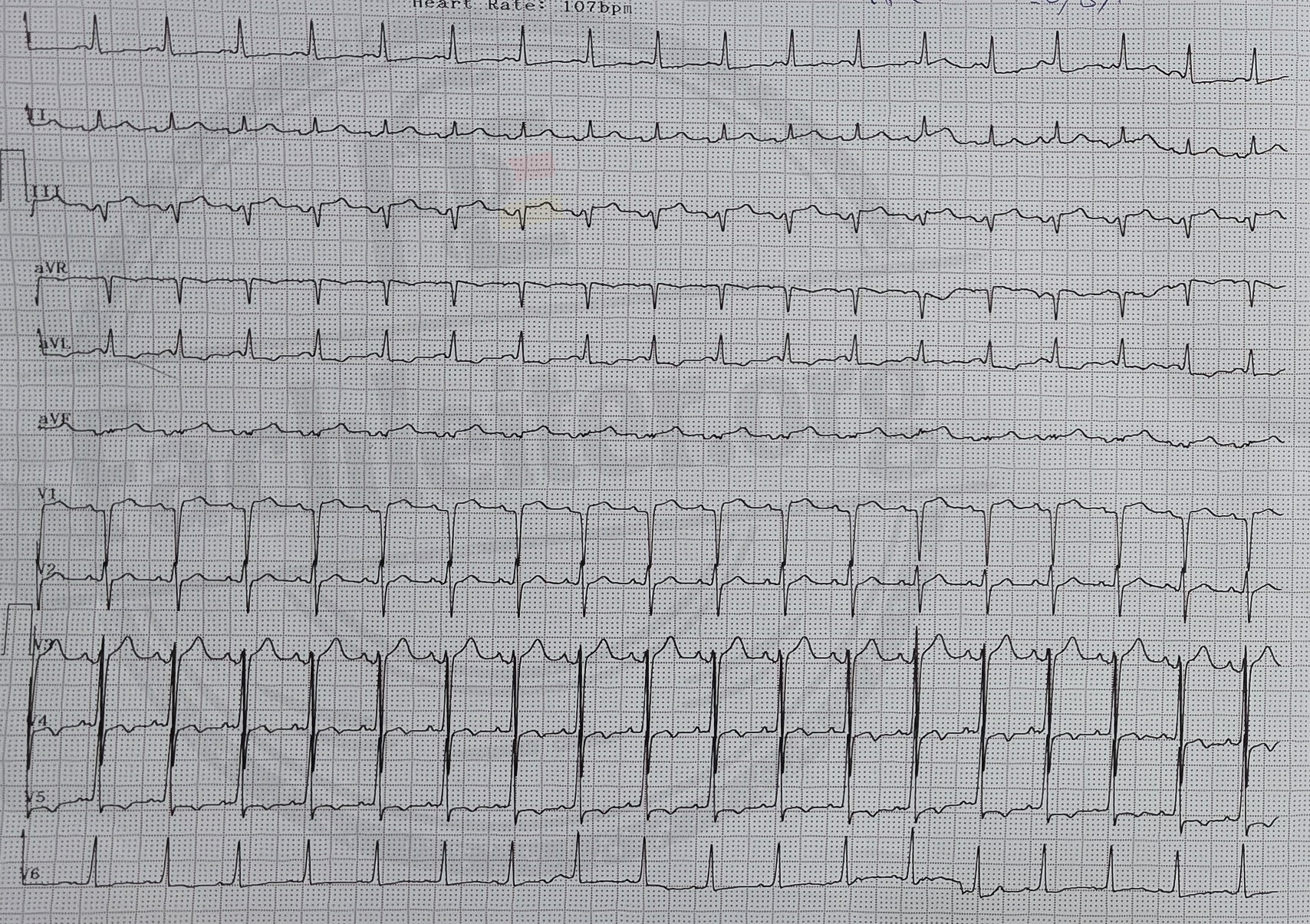
+ 45 Min
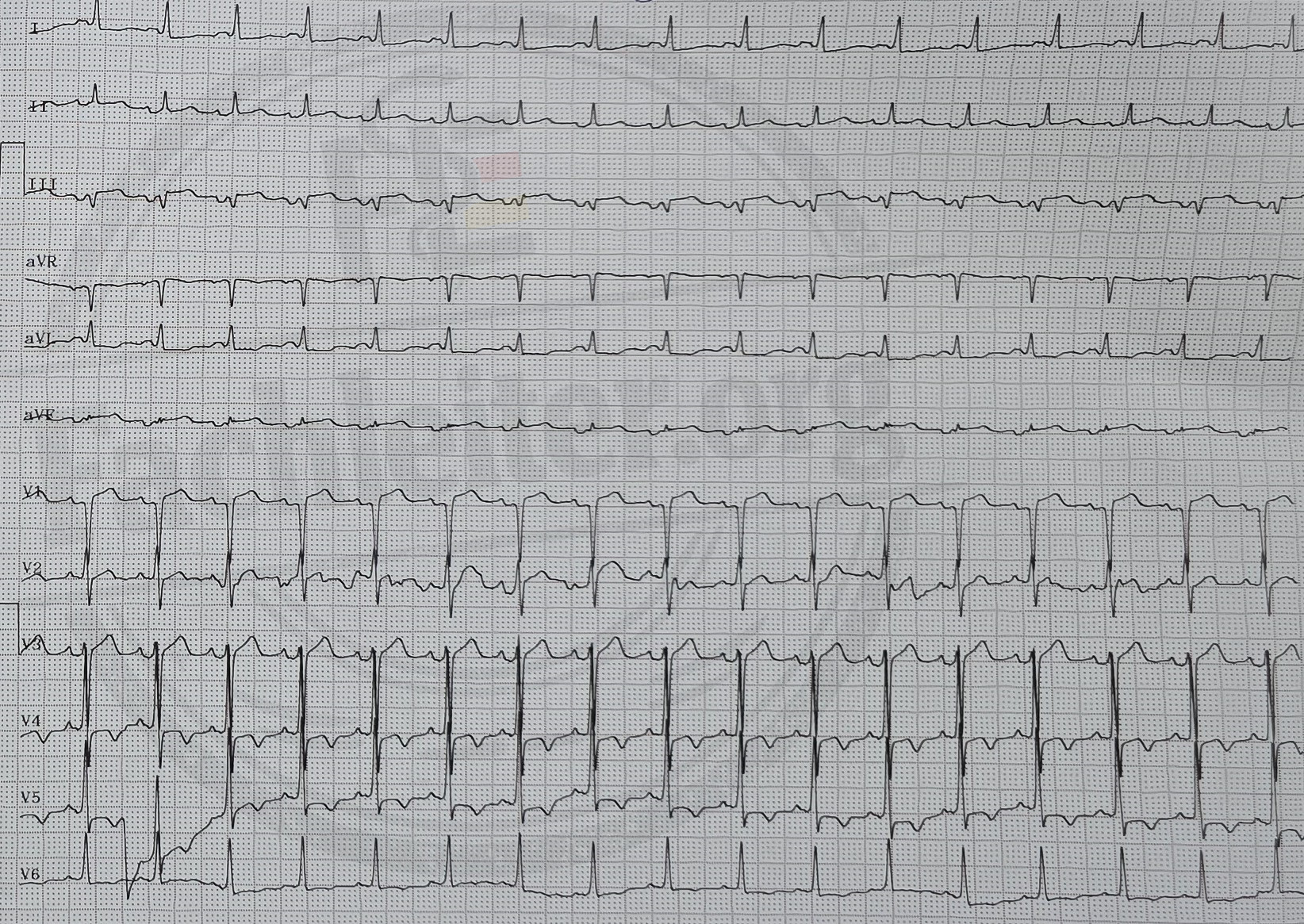
❓ Quiz
You work in a facility where only a 12-lead ECG is available.
How would you proceed?
- Which suspected diagnosis is foremost for you?
- Which differential diagnoses must you not overlook despite the tachycardia?
- Would you initially treat the tachycardia or refer the patient to a hospital immediately?
- Which further investigations are urgently required?
- Will you initiate acute therapy before transport?