
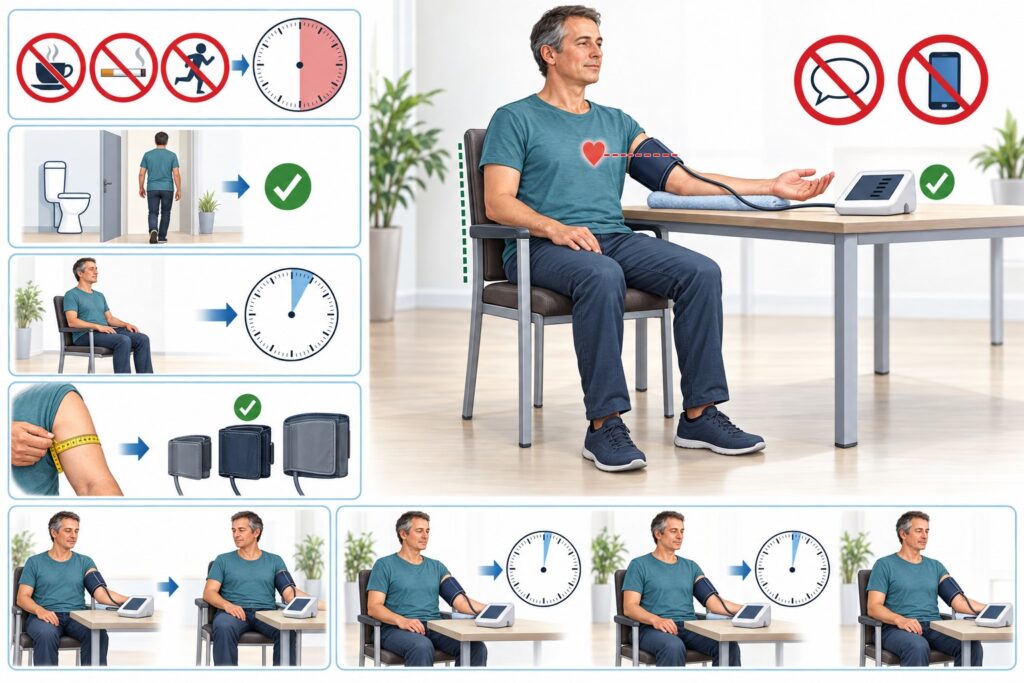
Task: Describe the image using the following keywords. What must be observed during a standardized blood pressure measurement?
- Preparation: Smoking, coffee, physical exertion, bladder, resting period
- Sitting position: Back, feet, legs
- Arm position: Support, palm, heart level
- Device and cuff: Validation, cuff size, clothing, distance to antecubital fossa
- During the measurement: Talking, movement, mobile phone use
- Measurement procedure: Both arms, selection of the measuring arm, number of measurements, time intervals, mean value and documentation
Blood pressure classification according to ACC/AHA
The American thresholds apply to adults. All values in mmHg.
Sources: American Heart Association – Blood Pressure Categories and ACC/AHA Guideline on Hypertension, 2025.
| Measurement or category | Systolic | Link | Diastolic |
|---|---|---|---|
| Normal office blood pressure | < 120 | and | < 80 |
| Elevated office blood pressure | 120–129 | and | < 80 |
| Hypertension Stage 1 – office | 130–139 | and/or | 80–89 |
| Hypertension Stage 2 – office | ≥ 140 | and/or | ≥ 90 |
| Hypertension on home measurement – average | ≥ 130 | and/or | ≥ 80 |
| Hypertension on 24-hour average | ≥ 125 | and/or | ≥ 75 |
| Hypertension on daytime average | ≥ 130 | and/or | ≥ 80 |
| Hypertension on nighttime average | ≥ 110 | and/or | ≥ 65 |
The thresholds for home and ambulatory measurements here correspond to the American hypertension cut-off of 130/80 mmHg in the office. They therefore differ from the European diagnostic thresholds. The basis is the ACC/AHA guideline on hypertension.
Hypotension: A commonly used reference value is a blood pressure below 90/60 mmHg. This is not an additional category of the above hypertension classification; accompanying symptoms are particularly decisive.
Important: The diagnosis is based on repeated, correctly performed measurements or averages – not on a single elevated value.
Cases
- Primary hypertension1
- Primary hypertension 2
- with obstructive sleep apnea syndrome
- renovascular hypertension
- Medication- and substance-induced hypertension
My name is Fred Hoch. I am 54 and actually only came for a health check. A colleague recommended it to me. I currently have no complaints. I am not dizzy, I have no headaches and I can breathe well. At home I do not measure my blood pressure, only when I am at the doctor’s.
I work in an office and sit almost all day. There is little time for sport. At lunch I often eat something ready-made, and in the evening it may well be something salty. I hardly cook and only eat fruit like apples or clementines two or three times a week. At 1.78 meters I weigh 98 kilos. My father has been taking tablets for high blood pressure for a long time, my sister since she was 52. My father also had a temporary stroke at 57, however without permanent consequences.
My wife does not say that I snore heavily or stop breathing at night. I am also not particularly tired during the day. I have had no kidney problems so far. My urine looks normal, and I do not have swollen legs. I also do not know of sudden palpitations with heavy sweating. I do not take medication regularly, only occasionally as needed, for example for a cold or for headaches.
I have smoked about half a pack of cigarettes daily for 20 years and drink a glass of beer two to three times a week.
My name is Ana Merkel. I am 63 and here because of a gallbladder inflammation. I had severe pain in the upper right abdomen radiating to the back and right shoulder. This was accompanied by nausea, vomiting and fever. The pain began after a fatty meal and lasted several hours. I did not notice yellow eyes, dark urine or pale stools. Previously I occasionally had similar but milder complaints after eating.
Fortunately the gallbladder was removed by a keyhole operation, and so far there are no complications. However, the nursing staff say that my blood pressure is still too high, usually around 160 over 95.
At the general practitioner, blood pressure was also sometimes elevated earlier. I always thought this was due to nervousness. It has not been further investigated so far.
I currently have no complaints. I am not dizzy, I have no headaches and I can breathe well.
I am slightly overweight, weigh 85 kg and am 1.65 meters tall and move little. My mother also had high blood pressure as well as diabetes and elevated blood lipids. She died of a heart disease.
My husband has not noticed breathing pauses during sleep. I have had no kidney problems so far. Because of knee joint wear I take Naproxen about three times a week, especially when I exert myself physically.
I am a non-smoker and drink hardly any alcohol.
My name is Cristoph Koch. I am 49 and have been constantly tired for months. I usually sleep seven or eight hours but feel exhausted in the mornings. I often have a headache immediately after getting up. During the day I have poor concentration and sometimes nod off while watching TV. Coffee makes me feel somewhat better.
My wife says that I snore very loudly. Sometimes I stop breathing for a while and then suddenly gasp for air. So far these breathing pauses have not woken me up.
I weigh 117 kilograms at 1.80 meters. In recent years I have gained a lot of weight because I eat unhealthily. Specifically, I often eat large portions, a lot of fast food and sweets in between. In the evenings I often eat late in front of the TV.
For my blood pressure I take two different tablets, including one that makes me pass more water. The first is called Amlodipin and has a strength of 5 mg, the other is called Hydrochlorothiazid and has a strength of 12.5 mg. I take one tablet of each every morning. Nevertheless, the blood pressure is often 160 over 95.
I also suffer from migraine. Because I had attacks more frequently, three months ago I was prescribed Propranolol I take 40 mg of that twice daily. Currently I have a mild attack about every two months. I rarely exercise.
My urine has not changed. I do not have sudden palpitations with heavy sweating. My vision is normal and I have neither swollen legs nor skin changes on my legs.
I am a non-smoker. In the evenings I drink a glass of wine.
I also smoke cannabis, which increases my appetite.
My name is Walter Berger. I am 71 and have had high blood pressure for many years. For that I take every morning one tablet Amlodipin 5 mg and one tablet Hydrochlorothiazid 12.5 mg. With that my blood pressure was actually always well controlled. But for a few months the values have been rising, sometimes to 180 over 100. I take the medications every day exactly as prescribed. There has been no significant change in my diet or other habits.
My heart vessels are narrowed. A stent was placed some years ago for that reason. When walking I also get pain in my calves after about 200 meters. If I stop briefly, the pain subsides. I smoked about a pack of cigarettes a day for over 40 years, but quit five years ago.
Recently my doctor additionally prescribed me Ramipril 2.5 mg. I also take one tablet of that every morning. About two weeks later my blood was checked. He found that my kidney values had worsened significantly. My blood pressure remained too high despite the additional tablet. Previously my kidney values had been largely unremarkable.
I had neither diarrhea nor vomiting and have been drinking the same amount as usual. I do not take painkillers like ibuprofen or diclofenac. I have not taken any other new medications or supplements.
I have not noticed blood or conspicuous foam in my urine. Urination does not burn, and I have no pain in the kidney area. My legs are not swollen. I currently have no chest pain, shortness of breath, visual disturbances or severe headaches.
My weight has remained stable recently. My belly has not become larger, and I have not noticed any facial changes. I do not have wide reddish-purple stretch marks on the skin or an unusually large number of bruises. I have not noticed any new muscle weakness when standing up from a chair or climbing stairs.
I have not lost weight unintentionally. I do not have tremulous hands, unusually heavy sweating, particular heat sensitivity or frequent diarrhea. I also do not feel noticeably nervous or internally restless.
I do not know of attacks with suddenly occurring headaches, palpitations and heavy sweating. I have not noticed sudden pallor or a strong feeling of anxiety in that context.
My wife says that I do not snore loudly. She has not noticed breathing pauses or nocturnal gasping for air. In the mornings I usually feel rested and do not nod off involuntarily during the day.
I weigh 84 kilograms and am 1.76 meters tall. I smoked about a pack of cigarettes a day for over 15 years but quit 3 years ago. I drink alcohol occasionally, usually a glass of beer at the weekend.
My name is Sabine Hoffmann. I am 58. My parents have a blood pressure monitor at home. I measured my blood pressure several times with it. It averaged 160 over 95. Sometimes my head feels slightly pressured. I do not have chest pain, shortness of breath or vision problems.
Because of my knee pain I have been taking ibuprofen almost every day for about six weeks, usually one tablet of 600 milligrams in the morning and evening. At first I did not consider this a regular medication.
I also eat a lot of licorice; for a few months I’ve had a larger bag almost every day. In addition, I take a herbal dietary supplement containing a mixture of eight herbs.
I have had no previous kidney problems. My urine looks unchanged. My husband has not noticed pauses in breathing during sleep. I have no sudden palpitations or heavy sweating. In my family, high blood pressure only appeared at an older age.
I weigh 72 kilograms and am 1.67 meters tall. I do not smoke and occasionally have a glass of wine on weekends.
- Primary hypertension1
- Primary hypertension 2
- in obstructive sleep apnea syndrome
- renovascular hypertension
- Medication- and substance-induced hypertension
History
Mr. Fred Hoch, 54 years old, presents for a health examination on the recommendation of a colleague. He is currently asymptomatic. Dizziness, headaches and dyspnea are denied. Home blood pressure measurements are not performed. Specific previous blood pressure values are not available by history.
The patient performs a predominantly sedentary office job and reports little physical activity. His diet often consists of convenience foods and salt-rich foods with low fruit consumption. At a height of 1.78 m and a weight of 98 kg the BMI is 30.9 kg/m², corresponding to obesity grade I.
The family history is positive for arterial hypertension: the father has been receiving antihypertensive therapy for a long time, the sister since her 52nd year of life. The father experienced a transient cerebrovascular event at age 57 without lasting deficits; the exact diagnosis is unclear.
There is no history of pronounced snoring, observed nocturnal breathing pauses or increased daytime sleepiness. Known kidney disease, visible urine changes and leg edema are denied. There are also no paroxysmal palpitations with pronounced sweating.
No regular medication is taken. Occasional as-needed medications are taken for colds or headaches.
There is nicotine consumption of about half a pack daily for 20 years, corresponding to approximately 10 pack-years. Alcohol consumption is two to three times weekly one glass of beer.
Suspected diagnosis
If repeatedly elevated blood pressure values are detected: suspicion of primary arterial hypertension.
Family burden, obesity, physical inactivity and presumably increased salt intake support this classification. Without documented blood pressure measurements, hypertension cannot be established so far.
Differential diagnoses
-
White coat hypertension: If elevated clinic values are found, it should be checked whether normotensive values occur outside the clinic.
-
Secondary hypertension in primary hyperaldosteronism: To be clarified especially in pronounced hypertension, hypokalemia or insufficient blood pressure control. Normal potassium values do not exclude the disease.
Physical examination
- Standardized blood pressure measurement after at least five minutes of rest with an appropriately sized upper arm cuff; initial measurement on both arms.
- Determination of heart rate and pulse rhythm.
- Recording of BMI and waist circumference.
- Auscultation of heart and lungs as well as the abdomen for bruits: usually unremarkable unless there are accompanying or consequential diseases.
- Examination of peripheral pulses and for edema: usually unremarkable. With existing cardiac arrhythmias the pulse may be irregular.
- Orienting neurological examination: usually unremarkable unless neurological deficits are present.
- Examination of the retina by fundoscopy.
Further procedure
Blood pressure diagnostics: At the first clinic measurement blood pressure is 162/98 mmHg. After five minutes rest it is 158/96 mmHg and on a further measurement 156/94 mmHg. The subsequent 24-hour blood pressure measurement shows a 24-hour mean of 143/87 mmHg, a daytime mean of 148/91 mmHg and a night mean of 133/79 mmHg.
Laboratory and urine in confirmed hypertension: Complete blood count, sodium, potassium, creatinine with eGFR, TSH, lipid profile and fasting plasma glucose, if applicable HbA1c. Additionally urine dipstick and albumin-creatinine ratio to detect possible renal involvement.
ECG: 12-lead resting ECG to look for signs of left ventricular hypertrophy, arrhythmias or coronary artery disease.
Imaging: Echocardiography for abnormal ECG, heart murmurs or suspicion of structural heart disease. Renal ultrasound for abnormal kidney values, pathological urine findings or other indications of a renal cause.
Chest x-ray: currently not indicated
History
Ms. Ana Merkel, 63 years old, is in inpatient care after laparoscopic cholecystectomy for acute cholecystitis. Preoperatively there were several hours of right-sided upper abdominal pain radiating to the back and right shoulder, accompanied by nausea, vomiting and fever. The complaints occurred after a fatty meal. Similar but less pronounced postprandial complaints had existed previously. Jaundice, dark urine and acholic stool are denied. The postoperative course has been uneventful so far according to the patient.
During the inpatient stay repeated blood pressure values around 160/95 mmHg are noticeable. Previously occasional elevated values were found in general practice examinations, which the patient attributed to agitation. Further hypertension diagnostics have not been carried out so far.
She is currently asymptomatic. Dizziness, headaches and dyspnea are denied.
At a weight of 85 kg and a height of 1.65 m the BMI is 31.2 kg/m², corresponding to obesity grade I. There is physical inactivity.
The family history is positive for arterial hypertension, diabetes mellitus and dyslipidemia in the mother, who died of a heart disease.
Observed nocturnal breathing pauses and known kidney disease are denied. Because of gonarthrosis the patient takes naproxen about three times weekly, especially with physical exertion. The dosage is yet to be queried.
The patient is a non-smoker and reports low alcohol consumption.
Suspected diagnosis
Previously unrecognized primary arterial hypertension, possibly exacerbated by regular NSAID use.
Arguments for a preexisting hypertension are previously elevated office readings, the family history, obesity and lack of exercise. The diagnosis must be confirmed outside the acute perioperative situation.
Differential diagnoses
-
Situational or postoperative blood pressure elevation: for example due to pain, stress or changes in volume status.
-
Drug-induced hypertension from naproxen: as an independent cause or as an amplifier of preexisting hypertension.
Physical examination
The following examinations are to be performed; specific findings are not yet available:
-
Blood pressure and pulse: standardized repeated resting measurements with an appropriate cuff, initially on both arms; record heart rate and pulse rhythm.
-
General condition: determine temperature, oxygen saturation and current pain intensity.
-
Heart and lungs: auscultation for heart murmurs, rhythm irregularities and pulmonary congestion signs.
-
Volume status: examine for peripheral edema and signs of dehydration or fluid overload.
-
Abdomen: postoperative examination including wound inspection; auscultation for bowel sounds if clinically indicated.
-
Vascular status and neurology: peripheral pulses and a screening neurological status.
- Examination of the retina by fundoscopy (ophthalmoscopic fundus examination).
Further management
After repeatedly elevated blood pressure values on standardized resting measurements, a 24-hour ambulatory blood pressure monitoring is performed on the third day of admission, after clinical stabilization and with adequate analgesia. This shows a 24-hour mean of 148/89 mmHg, a daytime mean of 153/93 mmHg and a nighttime mean of 138/81 mmHg. Thus, elevated blood pressure values are present outside individual resting measurements as well, consistent with sustained arterial hypertension.
Laboratory and urine: consider available inpatient results. Complete blood count, sodium, potassium, creatinine with eGFR, TSH, lipid profile and fasting plasma glucose, possibly HbA1c. Additionally urine dipstick and albumin-to-creatinine ratio. Postoperative abnormalities to be monitored during the course if indicated.
ECG: 12-lead resting ECG to detect possible cardiac sequelae and comorbidities.
Imaging: Echocardiography for abnormal ECG, heart murmur or suspected heart failure. Renal ultrasound for abnormal renal function, pathological urine findings or other hints of a renal cause. A chest x-ray is not routinely required solely because of elevated blood pressure values.
Medication history: record naproxen dose and duration as well as other blood pressure–raising agents. Review analgesic therapy for a suitable alternative; also consider perioperative medications and fluid administration.
History
Mr. Cristoph Koch, 49 years old, presents with several months of pronounced daytime sleepiness, concentration problems and morning headaches. Despite sleeping seven to eight hours, the sleep is not restorative. He falls asleep unintentionally while watching TV. Coffee consumption leads to a temporary improvement.
Reported by his wife, there is marked snoring, repeated nocturnal breathing pauses and subsequent gasping. The patient himself does not perceive these nocturnal arousals.
With a height of 1.80 m and a weight of 117 kg, the BMI is 36.1 kg/m², corresponding to obesity grade II. In recent years there has been substantial weight gain with calorically rich diet, large portions, frequent snacks and low physical activity.
An arterial hypertension is known. Despite reported regular intake of Amlodipine 5 mg in the morning and hydrochlorothiazide 12.5 mg in the morning, blood pressure values are often around 160/95 mmHg.
Additionally there is migraine, which for three months has been prophylactically treated with Propranolol 40 mg twice daily. Currently mild migraine attacks occur about every two months.
Urine changes, paroxysmal palpitations with diaphoresis, visual disturbances, leg edema and skin changes on the legs are denied.
The patient is a non-smoker for tobacco. He reports daily consumption of one glass of wine and cannabis use with subjective appetite increase. Frequency, amount and form of cannabis consumption are yet to be queried.
Suspected diagnosis
Obstructive sleep apnea syndrome as a cofactor of inadequately controlled arterial hypertension.
This is supported by marked snoring, externally observed breathing pauses, non-restorative sleep, daytime sleepiness and obesity.
A therapy-resistant hypertension is not yet established, as an exhausted guideline-compliant triple antihypertensive therapy is lacking. In addition, the previously untreated obstructive sleep apnea syndrome is a significant blood pressure–raising factor.
Physical examination
The following examinations are planned; specific examination findings are not yet available:
-
Vital parameters: standardized blood pressure measurement, initially on both arms, heart rate, pulse rhythm and oxygen saturation while awake.
-
Body measurements: BMI, waist circumference and neck circumference.
-
Upper airway: inspection of the oral cavity and oropharynx for enlarged tonsils, large tongue base or other anatomical narrowings; assessment of nasal breathing.
-
Heart and lungs: auscultation for rhythm irregularities, heart murmurs and pulmonary abnormalities.
-
Volume status: examine for peripheral edema and other signs of heart failure.
-
Thyroid: inspection and palpation if thyroid disease is suspected.
- Examination of the retina by fundoscopy (ophthalmoscopic fundus examination).
Further management
Blood pressure diagnostics
- At the first standardized office measurement the blood pressure is 154/98 mmHg. Further resting measurements yield 160/96 mmHg and 158/94 mmHg.
Sleep medicine diagnostics
- Supplement a structured sleep history including propensity to fall asleep while driving. (Use of the Epworth Sleepiness Scale to assess daytime sleepiness and possibly the STOP-Bang questionnaire for risk assessment.)
- With high clinical probability an outpatient cardiorespiratory polygraphy is performed. With unclear or negative findings despite persistent suspicion and with relevant comorbidities a polysomnography in a sleep laboratory is indicated.
- The polysomnography shows an apnea–hypopnea index of 34 events per hour with predominantly obstructive events and repeated oxygen desaturations. This corresponds to severe obstructive sleep apnea syndrome.
Laboratory and urine
- Complete blood count, sodium, potassium, creatinine with eGFR, TSH, lipid profile and fasting plasma glucose, possibly HbA1c. Additionally urine dipstick and albumin-to-creatinine ratio. Further investigations for secondary causes of hypertension depend on the findings.
ECG and imaging
- 12-lead resting ECG to assess heart rate, rhythm and possible hypertensive heart damage. Echocardiography for abnormal ECG, heart murmur or suspected structural heart disease. A routine chest x-ray is not required.
Medication and substance history
- Check intake, tolerability and dosing of medications. Clarify the temporal relationship between fatigue onset and the start of propranolol therapy. Record cannabis and alcohol consumption regarding their contribution to fatigue and sleep quality.
Therapy
- After confirmation of severe obstructive sleep apnea syndrome, nocturnal CPAP therapy was initiated and individually adjusted for Mr. Koch in the sleep laboratory. Additionally counseling on weight reduction, regular exercise and avoidance of evening alcohol and cannabis use was provided. The antihypertensive therapy was reviewed and adjusted. A sleep medicine follow-up and repeated blood pressure checks were arranged.
History
Mr. Walter Berger, 71 years old, presents with several months of increasingly insufficiently controlled arterial hypertension. Under Amlodipine 5 mg in the morning and hydrochlorothiazide 12.5 mg in the morning there was previously, according to the patient, good blood pressure control. Meanwhile values up to about 180/100 mmHg are measured. The patient reports regular, prescription-compliant medication intake. Diet and lifestyle are unchanged.
After additional prescription of Ramipril 2.5 mg in the morning, a marked creatinine increase was detected about two weeks later. Specific baseline and follow-up values are not yet available. Blood pressure control remained inadequate.
Vascular preexisting conditions include coronary artery disease with history of stent implantation. Exertional calf pain after about 200 meters of walking with improvement after a short rest additionally suggests peripheral arterial occlusive disease with claudication intermittens.
Gastrointestinal fluid losses and reduced fluid intake are denied. There is no history of NSAID intake or other newly started medications or dietary supplements.
Macroscopic hematuria, noticeably foamy urine, dysuria, flank pain and leg edema are denied. There are currently no chest pains, dyspnea, visual disturbances or pronounced headaches.
Anamnestically there are no typical indications of hypercortisolism, hyperthyroidism, pheochromocytoma or obstructive sleep apnea syndrome. However, these causes cannot be excluded by absence of symptoms alone.
With a body weight of 84 kg and a height of 1.76 m the BMI is 27.1 kg/m², corresponding to overweight. According to the smoking history given, there is a former nicotine consumption of approximately 15 pack-years, stopped three years ago. Alcohol consumption is low.
Suspected diagnosis
Renovascular hypertension suspected due to atherosclerotic renal artery stenosis with possible hemodynamically induced deterioration of renal function after initiation of ACE inhibitor therapy.
The worsening of previously stable hypertension, the vascular comorbidities and the creatinine increase after starting ramipril give rise to the suspicion. In particular, a bilateral relevant stenosis or a stenosis in a functionally solitary kidney should be considered.
With a unilateral stenosis and a healthy contralateral kidney the filtration performance of the affected kidney can also decrease. However, the other kidney often compensates so that serum creatinine rises little.
Two differential diagnoses
-
Renoparenchymal hypertension: for example in previously unrecognized chronic kidney disease including hypertensive or atherosclerotic renal damage.
-
Insufficiently treated primary hypertension with additional hemodynamic renal function worsening under Ramipril: The previous antihypertensive therapy has not been exhausted. A creatinine increase under ACE inhibition alone does not prove renal artery stenosis.
Physical examination
The following examinations are planned; no specific findings are available to date:
-
Vital parameters: repeated standardized blood pressure measurements, initially in both arms, heart rate and pulse rhythm.
-
Volume status: examination for dehydration, peripheral edema and jugular venous distension.
-
Heart and lungs: auscultation for heart murmurs, rhythm disturbances and pulmonary congestion signs.
-
Abdomen: auscultation for systolic bruits over the renal arteries. The absence of a bruit does not exclude a stenosis.
-
Peripheral vascular status: bilateral palpation of the femoral, popliteal and foot pulses; assessment of skin temperature, skin color, trophic changes and wounds.
-
Neurology: orienting examination for focal deficits.
- Examination of the retina by fundoscopy (examination of the back of the eye).
Further procedure
Urgency and renal function
- Timely monitoring of creatinine and potassium and retrieval of prior findings. The extent and dynamics of the creatinine rise determine actions. In case of rapid deterioration, relevant hyperkalemia, oliguria or signs of cardiac decompensation, urgent inpatient evaluation is required.
Medication review
- Ramipril in case of significant acute renal function deterioration initially have a physician review and possibly pause. At the same time assess volume status, diuretic therapy and possible interactions. Do not increase the dose uncritically before clarifying the renal function deterioration.
Laboratory and urine
- Creatinine, urea, sodium, potassium and if applicable bicarbonate or venous blood gas analysis. With rapidly changing creatinine the calculated eGFR is of limited informative value.
- Additionally complete blood count, TSH, lipid profile and fasting plasma glucose, possibly HbA1c. Urinalysis, albumin-to-creatinine ratio and if abnormal a urine sediment to search for a renoparenchymal cause.
Renal and vascular imaging
- Initially renal ultrasound including duplex sonography of the renal arteries. Assessed are kidney size, side difference, parenchyma, urinary drainage and indications of hemodynamically relevant stenoses.
- With unclear findings and persistent suspicion a CT or MR angiography follows after individualized weighing of renal function, contrast risks and diagnostic benefit. A catheter angiography is considered especially when an intervention is planned.
ECG and further cardiovascular diagnostics
- 12-lead resting ECG to assess rhythm, possible electrolyte consequences and cardiac comorbidities. Echocardiography with clinical or electrocardiographic abnormalities or suspicion of heart failure.
- To clarify claudication determine the ankle-brachial index, possibly supplemented by arterial duplex sonography of the legs. A chest X-ray is performed only with corresponding clinical indication, for example suspicion of pulmonary congestion.
Therapy
- Further vascular diagnostics confirmed a hemodynamically relevant bilateral renal artery stenosis. Due to progressive renal function deterioration and insufficient blood pressure control, interdisciplinary consultation established the indication for revascularization. This was followed by percutaneous transluminal angioplasty with stent implantation. Antihypertensive therapy was adjusted; renal function, potassium and blood pressure were closely monitored.
Medical history
Mrs. Sabine Hoffmann, 58 years old, presents because of repeatedly elevated home blood pressure readings. Multiple measurements with her parents’ device showed an average of about 160/95 mmHg. Validation of the device, cuff size and measurement technique have not yet been checked.
Occasionally there is a mild cephalic pressure sensation. Chest pain, dyspnea and visual disturbances are denied.
Because of knee pain the patient has been taking ibuprofen 600 mg almost daily in the morning and evening for about six weeks, corresponding to 1,200 mg daily. She did not initially classify this intake as regular medication.
In addition she reports pronounced licorice consumption for several months, almost daily a large bag. The exact amount and glycyrrhizin content are unknown. She also takes a herbal dietary supplement containing eight herbs; composition, dosage and duration of intake must still be clarified.
Known kidney disease and visible urine changes are denied. According to external history there are no observed nocturnal breathing pauses. Paroxysmal palpitations or pronounced sweating episodes are not reported. Family history is positive for hypertension appearing only at older ages.
With a body weight of 72 kg and a height of 1.67 m the BMI is 25.8 kg/m², corresponding to slight overweight. The patient is a non-smoker and occasionally drinks a glass of wine on weekends.
Suspected diagnosis
Suspected medication- and substance-induced arterial hypertension due to regular NSAID intake and pronounced licorice consumption.
Ibuprofen can promote sodium and water retention via renal prostaglandin inhibition. Glycyrrhizin from licorice can cause a pseudo-hyperaldosteronism. This can lead to hypertension, hypokalemia and metabolic alkalosis; renin and aldosterone are typically suppressed.
An additional contribution of the herbal preparation can only be assessed after review of its ingredients.
Differential diagnoses
-
Primary arterial hypertension: A preexisting or newly developed primary hypertension can exist independently of the mentioned triggers and be exacerbated by them.
-
Primary hyperaldosteronism: To be considered especially if hypokalemia is documented. In contrast to licorice-induced pseudo-hyperaldosteronism there is an inappropriately high aldosterone secretion with suppressed renin.
Physical examination
The following examinations should be performed; specific findings are not yet available:
-
Blood pressure and pulse: standardized repeated resting measurements with appropriate cuff, initially on both arms; heart rate and pulse rhythm.
-
Volume status: examination for peripheral edema and other signs of fluid retention.
-
Heart and lungs: auscultation for rhythm irregularities, heart murmurs and pulmonary congestion signs.
-
Musculature: testing for muscle weakness as a possible indication of relevant hypokalemia.
-
Vascular status and neurology: peripheral pulses and an orienting neurological examination.
- Examination of the retina by fundoscopy.
Further procedure
Blood pressure diagnostics
- Check of device, cuff and measurement technique. Repeated standardized office measurements and preferably a 24-hour blood pressure measurement to confirm hypertension. Removal of potential triggers need not be delayed for this.
Detailed medication and substance history
- Record exact ibuprofen intake including other analgesics. Ask about licorice amount and product. The patient should bring the packaging or ingredient list of the herbal preparation. Pay particular attention to liquorice or glycyrrhizin and other potentially blood pressure–raising components.
Laboratory
- Complete blood count, sodium, potassium, creatinine with eGFR, TSH, lipid profile and fasting plasma glucose, if necessary HbA1c. With hypokalemia additionally magnesium and bicarbonate or a venous blood gas analysis to check for metabolic alkalosis.
Urine
- Urinalysis and albumin-to-creatinine ratio to detect possible renal involvement. If hypokalemia is detected, possibly determine renal potassium excretion.
ECG
- 12‑lead resting ECG to assess rhythm and possible cardiac sequelae. With hypokalemia pay special attention to repolarization changes and U waves.
Imaging
- Echocardiography with abnormal ECG or clinical signs of structural heart disease.
Therapy
If a patient like in cases 1 and 2 has no relevant comorbidities and monotherapy is initially chosen, the following are possible: ACE inhibitors, ARBs, dihydropyridine calcium channel blockers or thiazide diuretics are options. Commonly used possibilities are an ACE inhibitor such as ramipril or an ARB such as candesartan.
In patients with heart failure with reduced ejection fraction or after a myocardial infarction with impaired left ventricular function — if tolerated — beta blockers and ACE inhibitors or suitable alternatives are also used regardless of hypertension. These primarily serve to unload the heart, reduce adverse remodeling and improve prognosis.
We speak of resistant hypertension when blood pressure remains above target despite regular intake of a triple combination of an ACE inhibitor or ARB, a calcium antagonist and a thiazide or thiazide-like diuretic at the maximum tolerated dose. Elevated values must be confirmed by 24-hour or home blood pressure measurement and measurement errors as well as inadequate medication adherence must be excluded.
In such situations secondary causes are more frequent and should be specifically investigated.
Combination preparations for hypertension
| Active ingredient combination | Product names with example strength |
|---|---|
| Ramipril + amlodipine | Tonotec 5 mg/5 mg · Ramipril/Amlodipin-ratiopharm 5 mg/5 mg · Ramipril HEXAL plus Amlodipin 5 mg/5 mg |
| Candesartan + amlodipine | Caramlo 8 mg/5 mg · CandeAmlo HEXAL 8 mg/5 mg · Camlostar 8 mg/5 mg |
| Amlodipine + valsartan | Exforge 5 mg/80 mg · Dafiro 5 mg/80 mg · Amlodipin/Valsartan-ratiopharm 5 mg/80 mg |
| Candesartan + hydrochlorothiazide | Atacand PLUS 16 mg/12.5 mg · Candesartan-ratiopharm comp. 16 mg/12.5 mg · Candesartan/HCT STADA 16 mg/12.5 mg |
| Perindopril + indapamide | BiPreterax N 5 mg/1.25 mg · Co-Prenessa 10 mg/2.5 mg · Perindopril/Indapamid-ratiopharm 4 mg/1.25 mg |
Follow-up checks after diagnosis of arterial hypertension
| Examination | What to watch for? | When or how often? |
|---|---|---|
| Blood pressure and pulse | Standardized blood pressure measurement, heart rate and pulse rhythm | After therapy initiation or adjustment usually after 2–4 weeks, with stable control usually every 3–6 months |
| Home blood pressure monitoring | Two measurements in the morning and evening each, 1–2 minutes apart; document values | Preferably 7 days before each follow-up appointment |
| Orthostatic testing | Blood pressure and pulse after standing, after about 1 and 3 minutes | With dizziness, falls, older patients, diabetes and after relevant therapy changes |
| Heart and lungs | Auscultation for rhythm irregularities, heart murmurs and pulmonary congestion signs | Based on findings; regularly in heart failure and immediately with new symptoms |
| Volume status and weight | Weight trend, leg edema, possibly jugular venous distension and signs of dehydration | Regularly, especially with diuretics as well as heart or kidney failure |
| Peripheral vascular status | Pulses, skin temperature, skin color, trophic changes and wounds | Risk-oriented, especially with diabetes, PAD or new complaints |
| Neurological status | Orienting check of strength, sensation, speech and gait | With corresponding symptoms or abnormal findings |
| Retina/fundus | Fundoscopy, possibly ophthalmologic: search for hypertensive retinopathy | Particularly with severe hypertension, visual disturbances or suspicion of hypertensive emergency; further checks depending on findings. With diabetes also regular eye screening |
| Medication and lifestyle | Adherence, side effects, over-the-counter medications, physical activity, diet, smoking and alcohol | At every follow-up appointment |
| Laboratory and urine | Creatinine/eGFR, sodium, potassium; depending on situation fasting plasma glucose or HbA1c, lipid profile, complete blood count, TSH, uric acid, magnesium, calcium, urinalysis and albumin-to-creatinine ratio | |
| ECG | 12-lead resting ECG | At first diagnosis; repeat if clinically indicated |
| 24-hour blood pressure monitoring | Daytime, nighttime and overall mean values | In cases of conflicting office and home values, suspected nocturnal hypertension, or insufficient control |
Other antihypertensives and their preferred indications
| Drug class | Examples | Specific indications for use |
|---|---|---|
| Beta blockers | bisoprolol, metoprolol | Hypertension with angina pectoris, stable heart failure with reduced ejection fraction or atrial fibrillation with high ventricular rate |
| Mineralocorticoid receptor antagonists | spironolactone, eplerenone | Resistant hypertension, preferably spironolactone as a fourth agent; primary hyperaldosteronism if surgery is not performed; certain forms of heart failure. Eplerenone is usually not approved in Germany for the treatment of hypertension |
| Loop diuretics | torasemide, furosemide | Salt and water retention, for example leg edema or pulmonary congestion in heart failure; also in advanced renal insufficiency with volume overload. In acute cardiogenic pulmonary edema usually intravenous use |
| Non-dihydropyridine calcium channel blockers | verapamil, diltiazem | Hypertension with atrial fibrillation and increased heart rate with preserved left ventricular systolic function, possibly when beta blockers are unsuitable. Avoid with reduced ejection fraction |
| Alpha-methyldopa | methyldopa | Long-term treatment of hypertension in pregnancy; not for rapid treatment of a hypertensive emergency |
Pathophysiology
Arterial hypertension arises when the heart pumps more blood per minute into the circulation and/or the small arteries present increased resistance to flow. Practically, several mechanisms interact:
- Vasoconstriction: The sympathetic nervous system activates vascular smooth muscle. Small arteries constrict and blood pressure rises. At the same time the heart may beat faster and more forcefully.
- Salt and water retention: If the kidneys excrete too little sodium, more water remains in the body. Blood volume increases, venous return to the heart rises, and the heart initially pumps more blood per minute.
- Hormonal amplification: With reduced renal perfusion, renin is released. Via the renin-angiotensin-aldosterone system angiotensin II is formed, which constricts vessels and promotes aldosterone release. Aldosterone increases renal sodium and water reabsorption.
- Long-term changes: Persistently high pressure leads to thickening of vessel walls and increasing vascular stiffness. This keeps resistance elevated; the heart must work against a higher pressure.
In primary hypertension several of these mechanisms usually act together, favored by predisposition, overweight, lack of exercise, and high salt intake. In secondary hypertension a specific trigger can be identified: for example a renal artery stenosis with activation of the hormonal system or sleep apnea with repeated sympathetic activation.
Laboratory
| Investigation | What is tested? What can it show? | Fasting required? |
|---|---|---|
| Complete blood count | Blood cells, hemoglobin and hematocrit: indications of anemia, increased cell counts or platelet changes. | No |
| Sodium | Electrolyte: disturbances of water and salt balance. | No |
| Potassium | Electrolyte: changes with kidney disease, from medications or hormonal causes. | No |
| Creatinine with eGFR | Creatinine is a muscle metabolism product; it is used to estimate the kidneys’ filtration function. | Usually no |
| TSH | Thyroid-stimulating hormone: indications of over- or underactivity. | No |
| Lipid profile | Total cholesterol, LDL, HDL and triglycerides: lipid metabolism and cardiovascular risk. | Usually no |
| Fasting plasma glucose | Current fasting blood glucose: indications of prediabetes or diabetes. | Yes, at least 8 hours |
| HbA1c | Proportion of “glycated” hemoglobin: average blood glucose over the last 2–3 months. | No |
Result timing: In hospital the results are often available within a few hours, outpatient usually the same or next working day. Exact timing depends on specimen transport and laboratory workflows.
Blood volume: For all of the listed tests together roughly 8–12 ml of blood are usually required, distributed across about three tubes. Multiple values can be determined from one tube. The required amount depends on the laboratory.
Interpretation: Values are assessed in the context of symptoms, preexisting conditions and other findings. A single abnormal value does not yet prove a specific disease.