Inflammatory bowel diseases (IBD) explained: This article provides a practical overview of Crohn’s disease and ulcerative colitis. It covers typical symptoms, important differential diagnoses, diagnostic approach, differences between Crohn’s disease and ulcerative colitis, as well as clinical features that are often asked about in the medical language examination (FSP), knowledge examination (KP), in M3 and in everyday clinical practice.
Inflammatory bowel diseases
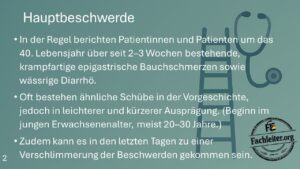
Main complaint
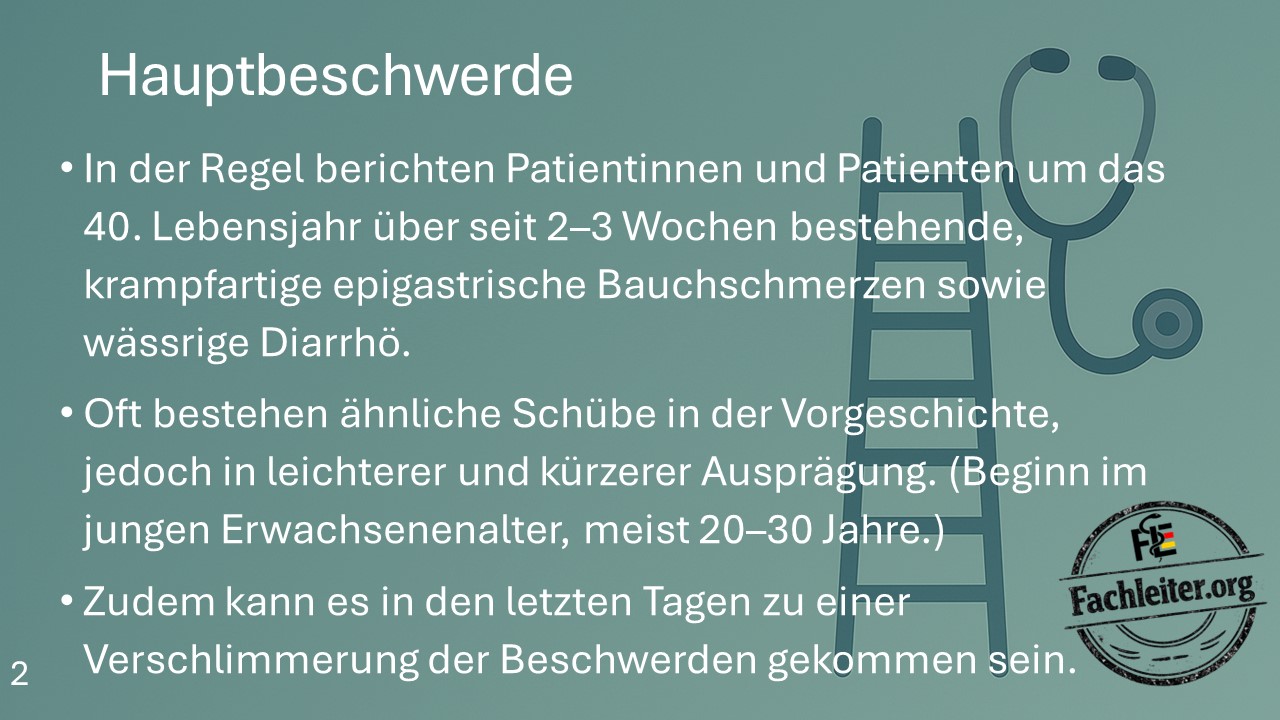
- Patients typically in their 40s report crampy epigastric abdominal pain and watery diarrhea persisting for 2–3 weeks.
- Often there are similar flares in the history, but milder and shorter. Onset is frequently in young adulthood, usually between 20 and 30 years of age.
- Symptoms may have worsened over the past few days.
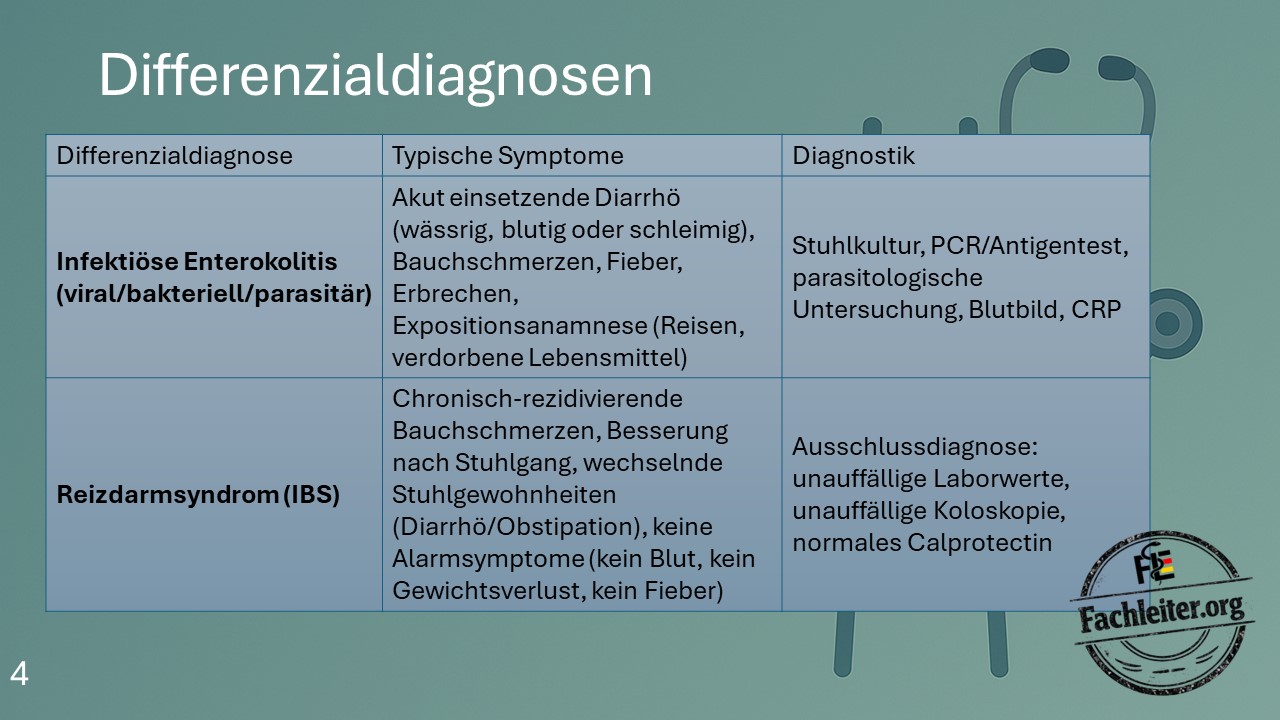
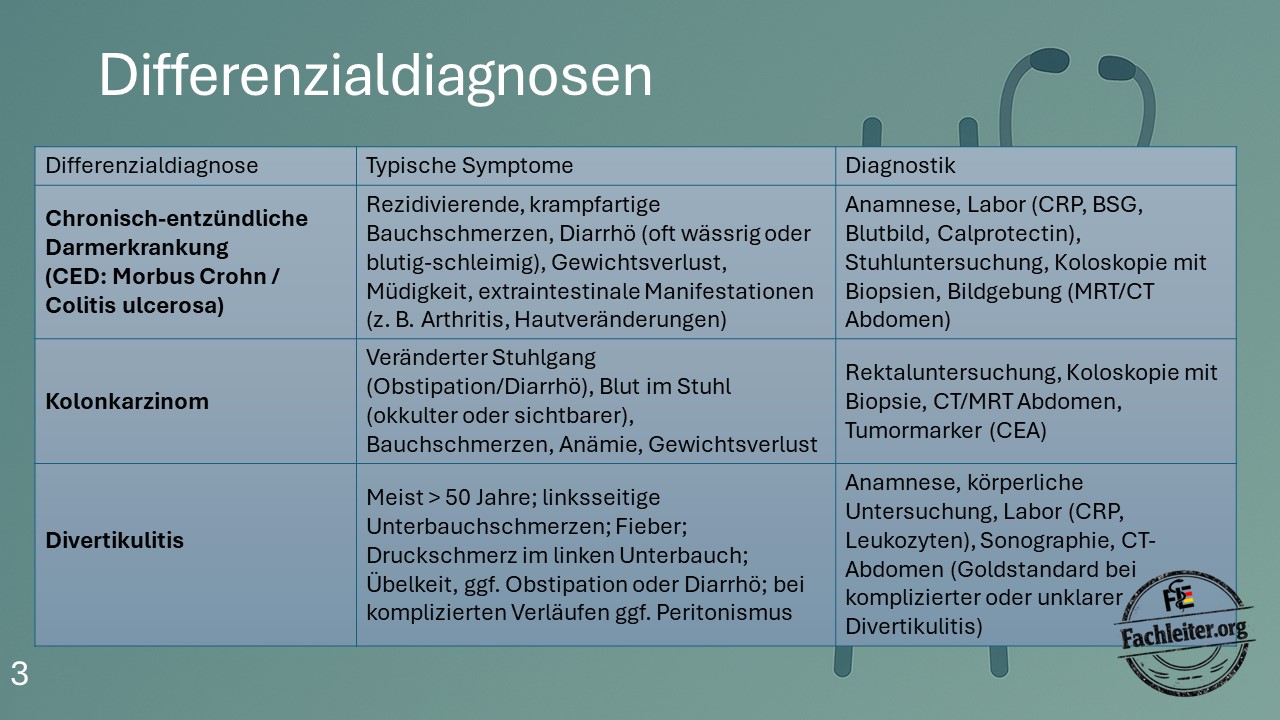
Differential diagnoses
| Differential diagnosis | Typical symptoms | Diagnostics |
|---|---|---|
| Inflammatory bowel disease (IBD: Crohn’s disease / ulcerative colitis) |
Recurrent crampy abdominal pain, diarrhea, often watery or bloody-mucoid, weight loss, fatigue, extraintestinal manifestations, e.g. arthritis or skin changes. | History, laboratory (CRP, ESR, blood count, Calprotectin), stool testing, colonoscopy with biopsies, imaging (MRI/CT abdomen). |
| Colon carcinoma | Change in bowel habits, constipation or diarrhea, blood in stool, occult or visible, abdominal pain, anemia, weight loss. | Rectal examination, colonoscopy with biopsy, CT/MRI abdomen, tumor marker (CEA). |
| Diverticulitis | Usually > 50 years; left-sided lower abdominal pain, fever, tenderness in the left lower abdomen, nausea, possibly constipation or diarrhea; in complicated cases possibly peritonism. | History, physical exam, laboratory (CRP, leukocytes), sonography, CT abdomen as gold standard for complicated or unclear diverticulitis. |
| Infectious enterocolitis (viral / bacterial / parasitic) |
Acutely onset diarrhea, watery, bloody or mucoid, abdominal pain, fever, vomiting, exposure history, e.g. travel or spoiled food. | Stool culture, PCR/antigen test, parasitological examination, blood count, CRP. |
| Irritable bowel syndrome (IBS) |
Chronic-recurrent abdominal pain, improvement after bowel movement, alternating bowel habits, diarrhea or constipation, no alarm features such as blood, weight loss or fever. | Diagnosis of exclusion: normal laboratory values, normal colonoscopy, normal Calprotectin. |
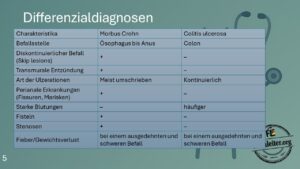
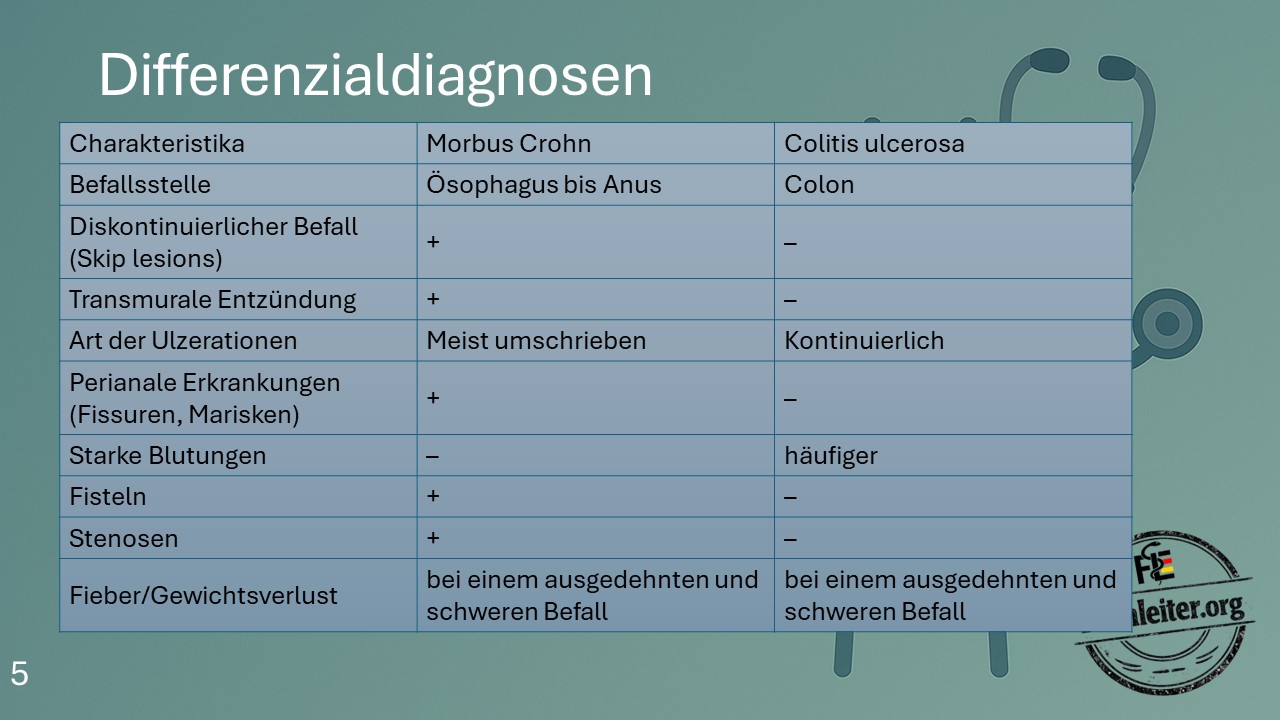
Crohn’s disease vs. ulcerative colitis
| Characteristics | Crohn’s disease | Ulcerative colitis |
|---|---|---|
| Location of involvement | Esophagus to anus | Colon |
| Discontinuous involvement (skip lesions) |
+ | − |
| Transmural inflammation | + | − |
| Type of ulcerations | Usually localized | Continuous |
| Perianal disease (fissures, skin tags) |
+ | − |
| Heavy bleeding | − | More common |
| Fistulas | + | − |
| Strictures | + | − |
| Fever / weight loss | In extensive and severe disease | In extensive and severe disease |
Notes
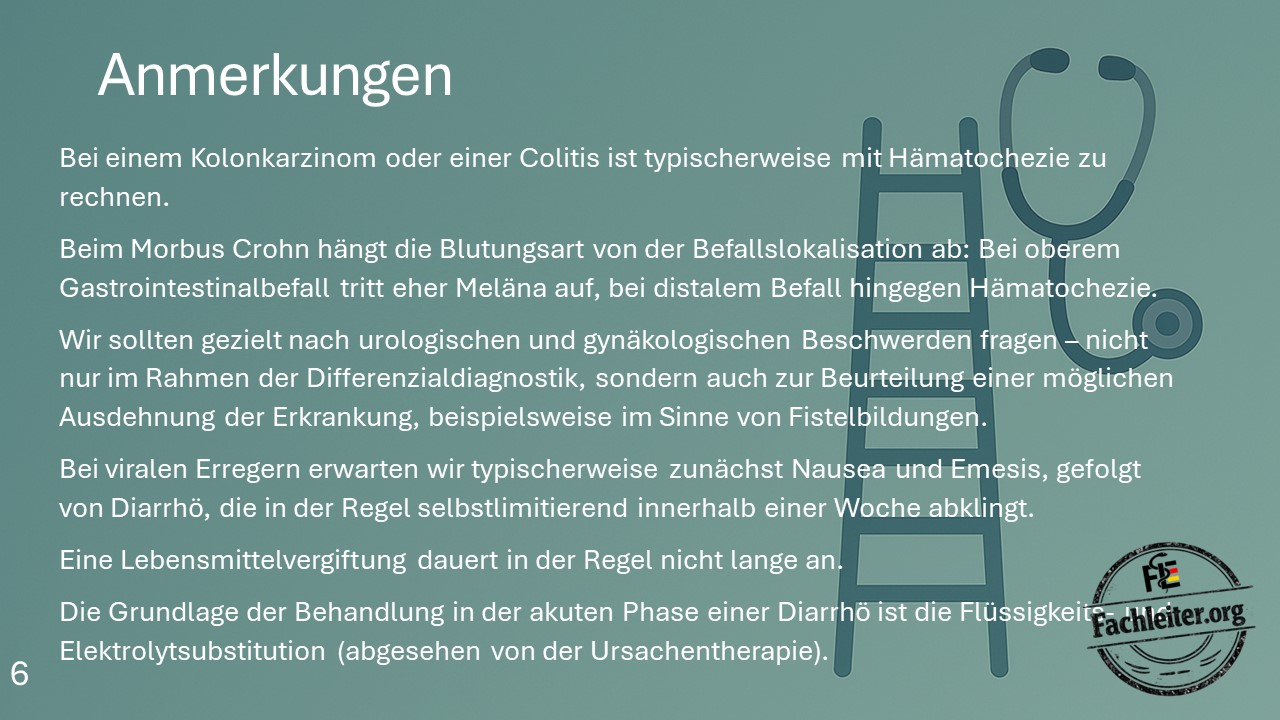
With a colon carcinoma or colitis, hematochezia is typically to be expected.
In Crohn’s disease the type of bleeding depends on the site of involvement: upper gastrointestinal involvement more often causes melena, whereas distal disease more often causes hematochezia.
We should specifically ask about urological and gynecological complaints – not only as part of the differential diagnosis but also to assess possible disease extension, for example in terms of fistula formation.
For viral pathogens we typically expect nausea and vomiting first, followed by diarrhea, which usually resolves spontaneously within a week.
Food poisoning usually does not last long.
The basis of treatment in the acute phase of diarrhea is fluid and electrolyte replacement, aside from targeted cause-specific therapy.