Cholecystolithiasis explained in practice: This article covers typical upper abdominal pain from gallstones, important risk factors, differential diagnoses and diagnostic steps. Compared are, among others, gastric ulcer, acute pancreatitis, hepatitis, gastroenteritis and inferior myocardial infarction. Ideal for FSP, knowledge exam, M3 and clinical routine.
Cholecystolithiasis
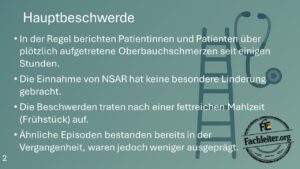
Main complaint
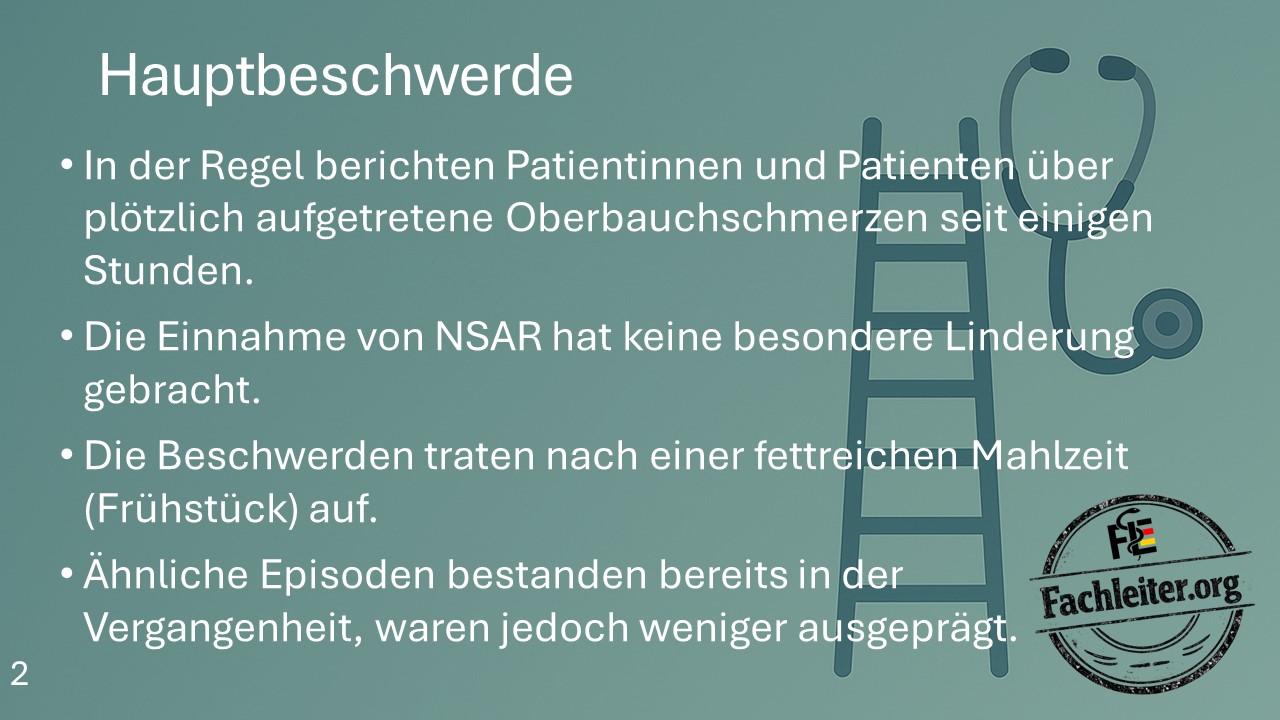
- Patients usually report sudden-onset upper abdominal pain for several hours.
- Taking NSAIDs did not provide significant relief.
- Symptoms occurred after a fatty meal, for example after breakfast.
- Similar episodes occurred in the past but were less severe.
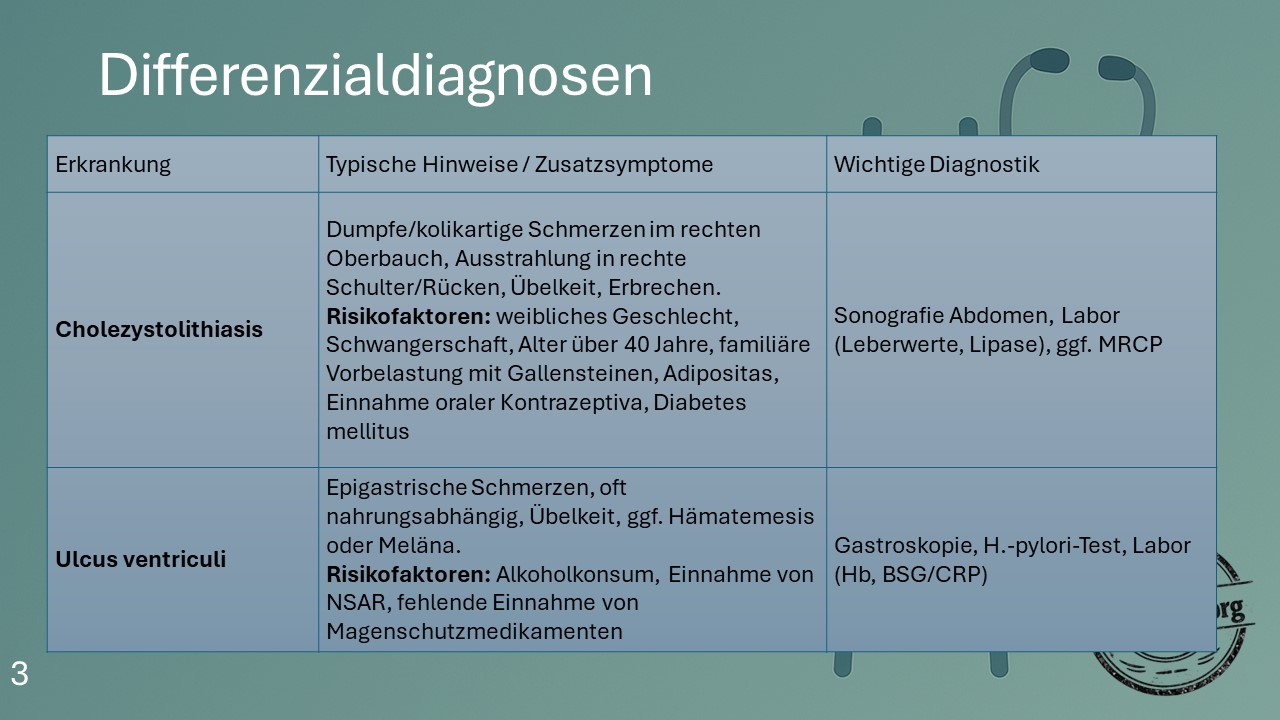
Differential diagnoses
| Condition | Typical clues / additional symptoms | Important diagnostics |
|---|---|---|
| Cholecystolithiasis |
Dull or colicky pain in the right upper abdomen, radiation to the right shoulder or back, nausea, vomiting.
Risk factors: female sex, pregnancy, age over 40 years, family history of gallstones, obesity, use of oral contraceptives, diabetes mellitus. |
Abdominal ultrasound, labs including liver enzymes and lipase, possibly MRCP. |
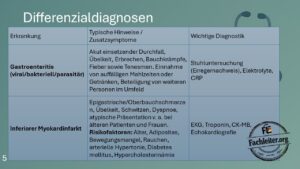
| Gastric ulcer |
Epigastric pain, often food-related, nausea, possibly hematemesis or melena.
Risk factors: alcohol consumption, use of NSAIDs, lack of gastroprotective medication. |
Gastroscopy, H. pylori test, labs including Hb, ESR and CRP. |
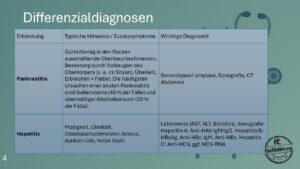
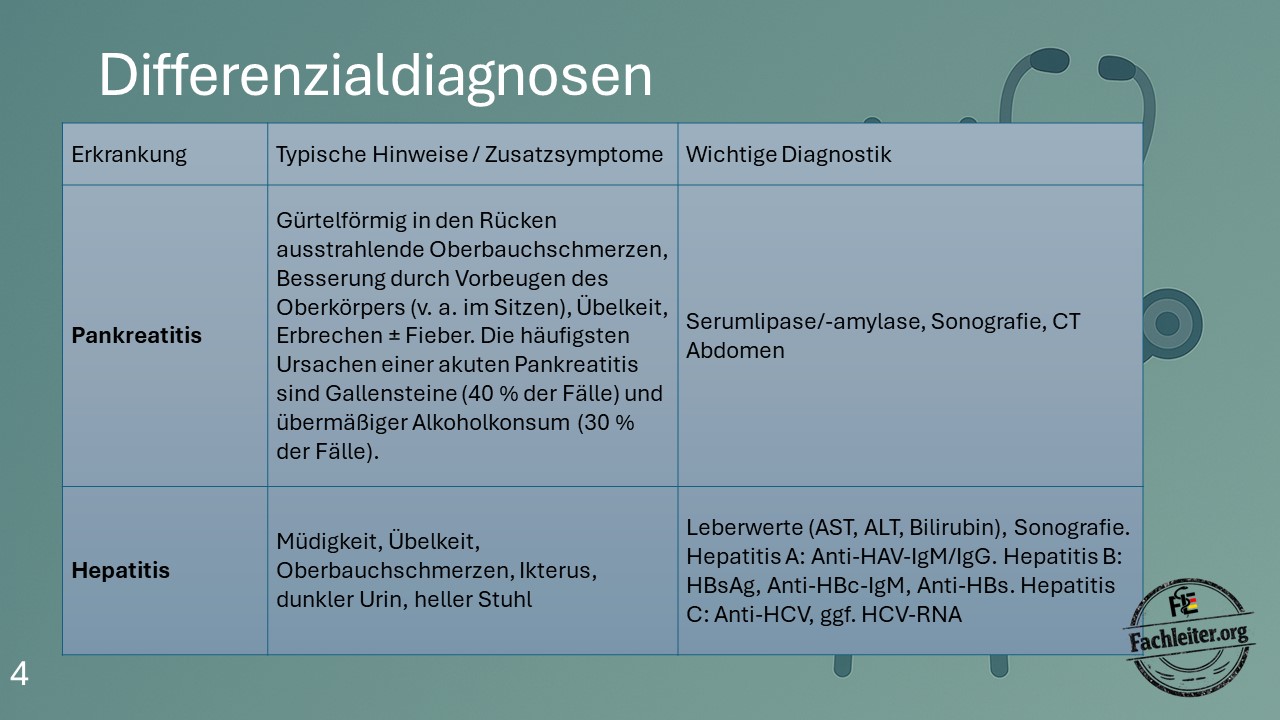
| Pancreatitis | Belt-like upper abdominal pain radiating to the back, relief by leaning the torso forward, especially when sitting, nausea, vomiting, possibly fever. The most common causes of acute pancreatitis are gallstones and excessive alcohol consumption. | Serum lipase, possibly serum amylase, ultrasound, abdominal CT. |
| Hepatitis | Fatigue, nausea, upper abdominal pain, jaundice, dark urine, pale stool. |
Liver enzymes (AST, ALT, bilirubin), ultrasound.
Hepatitis A: anti-HAV IgM/IgG. Hepatitis B: HBsAg, anti-HBc IgM, anti-HBs. Hepatitis C: anti-HCV, possibly HCV-RNA. |
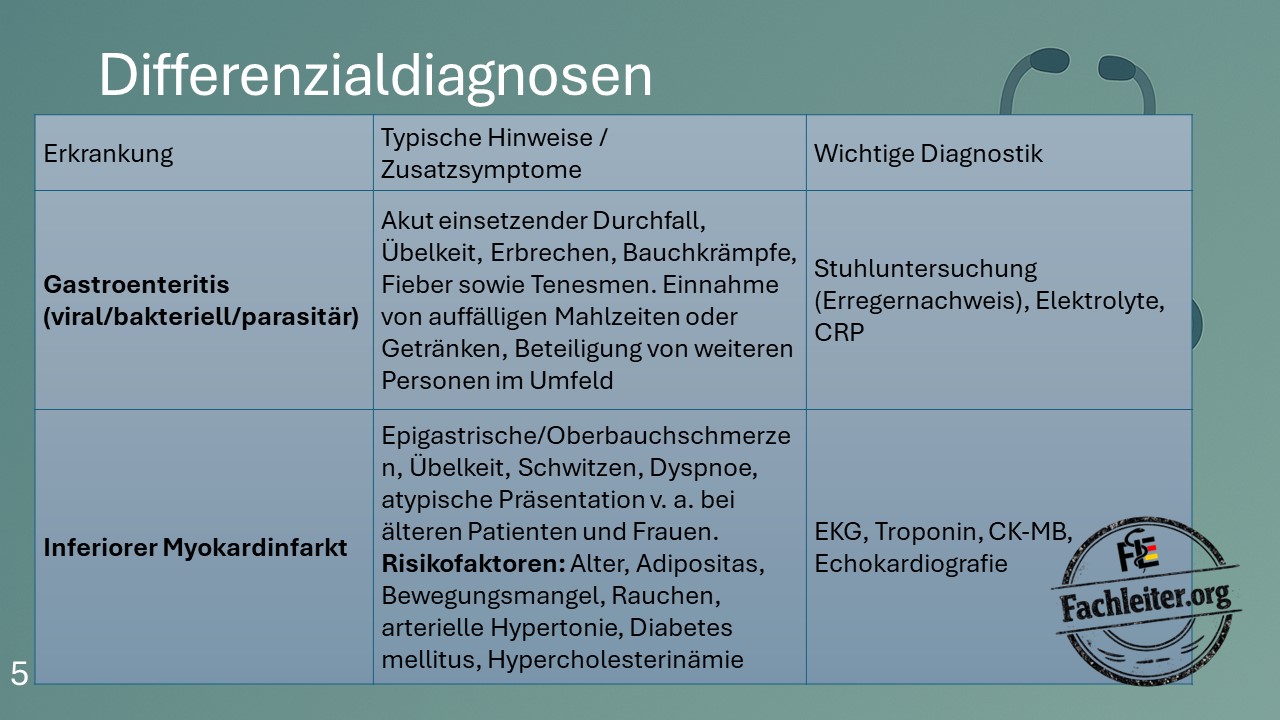
| Gastroenteritis (viral / bacterial / parasitic) |
Acute onset diarrhea, nausea, vomiting, abdominal cramps, fever and tenesmus. Consumption of suspicious meals or drinks, involvement of other persons in the environment. | Stool testing for pathogen detection, electrolytes, CRP. |
| Inferior myocardial infarction |
Epigastric or upper abdominal pain, nausea, sweating, dyspnea; atypical presentation especially in older patients and women.
Risk factors: age, obesity, physical inactivity, smoking, arterial hypertension, diabetes mellitus, hypercholesterolemia. |
ECG, troponin, CK-MB, echocardiography. |
Treatment
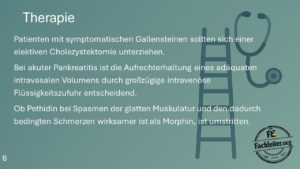
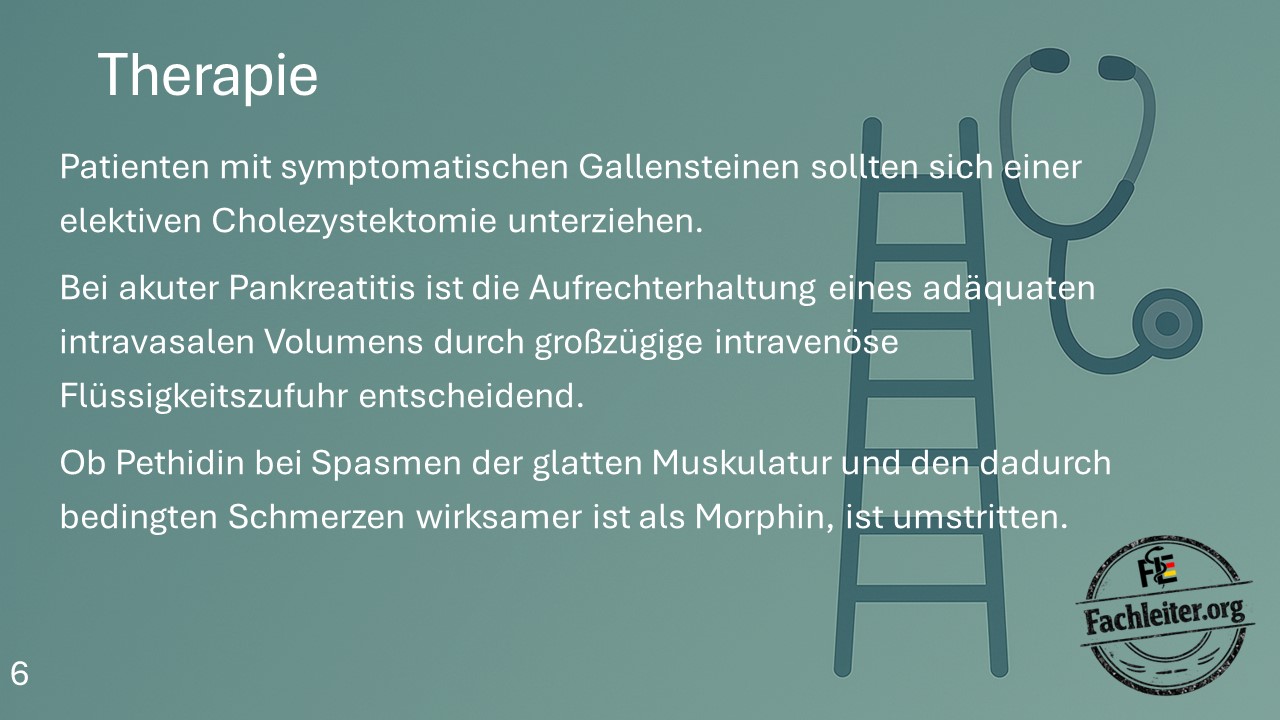
Patients with symptomatic gallstones should undergo elective cholecystectomy.
In acute pancreatitis, maintaining adequate intravascular volume through generous intravenous fluid resuscitation is essential.
Whether pethidine is more effective than morphine for smooth muscle spasms and the resulting pain is controversial.