
History
For about an hour my heart has been pounding so fast and irregularly. It started after I drank a double espresso. I have no chest pain or shortness of breath. I am not dizzy, and I have not fainted. I have never had anything like this before. I am not aware of any preexisting conditions. I take no medications and have not used drugs or energy drinks.
A 47-year-old patient presents with palpitations persisting for approximately one hour. He describes a rapid, irregular heartbeat. The symptoms began after consuming a double espresso. Chest pain, dyspnea, dizziness, and syncope are denied. Comparable episodes have not occurred previously. No preexisting conditions or regular medication use are known. The patient denies use of drugs and energy drinks.
Physical examination
| Parameters | Findings |
|---|---|
| Blood pressure | 120/80 mmHg |
| Pulse | approx. 150/min, absolutely arrhythmic |
| Oxygen saturation | 97 % |
| Respiratory rate | 13/min |
| Body temperature | 36.9 °C, axillary |
- General condition: alert, oriented, hemodynamically stable.
- Heart: tachycardic, absolutely arrhythmic cardiac action; no abnormal heart sounds.
- Lungs: bilateral vesicular breath sounds, no crackles.
- Extremities: no peripheral edema.
- Thyroid: not palpably enlarged.
Further management 1
Despite the rapid, irregular pulse, the patient is currently hemodynamically stable. He remains seated for now. Blood pressure and pulse are rechecked. A 12-lead ECG is then performed in the practice immediately to classify the arrhythmia.
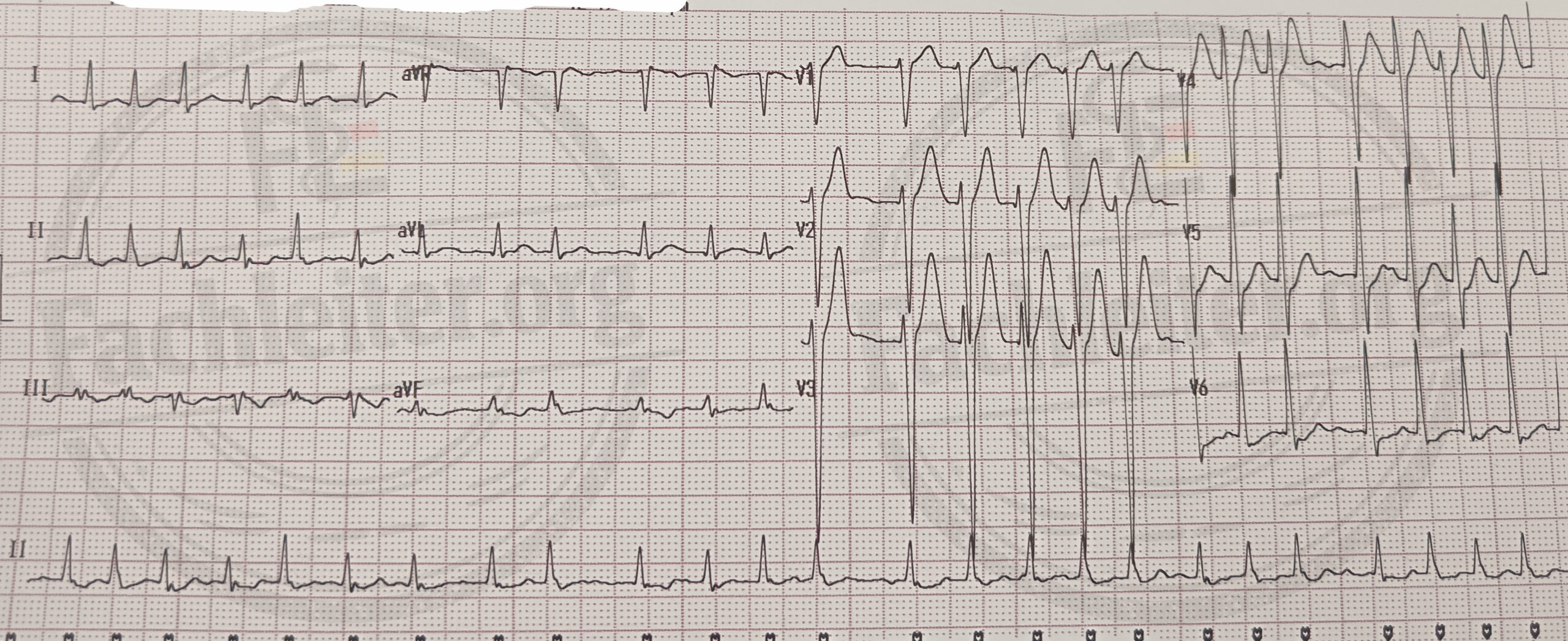
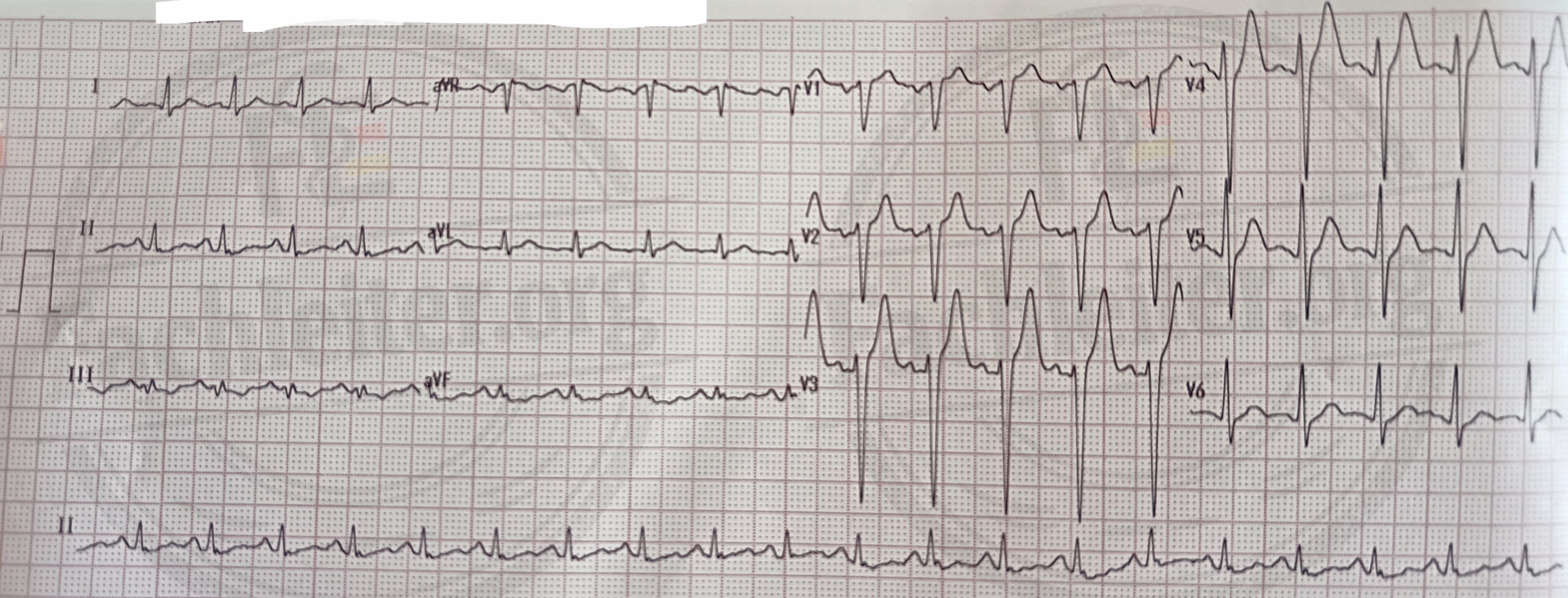
ECG interpretation
1. On admission
- Absolutely irregular RR intervals.
- Tachycardia with narrow QRS complexes at a ventricular rate of about 150/min.
- No clearly identifiable P waves.
Assessment: Atrial fibrillation with rapid ventricular conduction.
2. Four minutes later, without therapeutic measures
With clearly identifiable sinus P waves before each QRS complex and regular RR intervals, a sinus tachycardia of about 150/min is seen.
Conclusion: Spontaneous conversion of atrial fibrillation to sinus rhythm with persistent tachycardia.
Further management 2
Subsequently, after about 30 minutes, the palpitations improve at rest without drug treatment. The heart rate decreases markedly; the follow-up ECG still shows sinus rhythm. The patient remains hemodynamically stable.
On further questioning the patient recalls a similar episode about a year ago. A connection with preceding caffeine intake is possible but not proven.
CHA₂DS₂-VA score
| Parameters | Points if present | Findings in the patient | Points scored |
|---|---|---|---|
| Heart failure | 1 | No evidence | 0 |
| Arterial hypertension | 1 | Not known | 0 |
| Age ≥ 75 years | 2 | 47 years | 0 |
| Diabetes mellitus | 1 | Not known | 0 |
| Previous stroke, TIA or arterial thromboembolism | 2 | Not known from history | 0 |
| Vascular disease, e.g., CAD or PAD | 1 | Not known | 0 |
| Age 65–74 years | 1 | 47 years | 0 |
| CHA₂DS₂-VA total score | 0 |
Cardiology consult
After consultation with cardiology, a timely appointment for further evaluation is arranged. Echocardiography shows normally sized cardiac chambers and preserved left ventricular systolic function with an ejection fraction of about 58%. The left atrium is not enlarged. There are no regional wall motion abnormalities or relevant valvular changes. Right ventricular function is also unremarkable; no pericardial effusion is present. Overall, there is no evidence of structural heart disease.
Recommendations
- Avoid caffeine for now, especially espresso and energy drinks, as a personal connection to the symptoms is possible.
- Ensure adequate fluid intake, regular sleep, and minimal alcohol consumption when possible.
- Attend the agreed primary care and cardiology follow-up appointments.
- If palpitations recur, note onset, duration, pulse and possible triggers and have an ECG recorded during the symptoms promptly.
- If prolonged, severe tachycardia occurs even without other symptoms, present to medical care the same day.
- If chest pain, shortness of breath, fainting, or sudden speech disturbances or paralysis occur, call emergency services (112) immediately.