
74-year-old patient with sudden-onset palpitations
A 74-year-old patient presents to the emergency department. He reports sudden-onset palpitations for about two hours. The symptoms began at rest and have remained unchanged since.
The patient denies chest pain, shortness of breath, dizziness, syncope, nausea, or diaphoresis. Similar episodes have occurred occasionally in the past but resolved spontaneously each time.
Medical history
- Coronary artery disease (CAD)
- Two prior coronary angiograms in the history (no current intervention)
Medications
- No medications reported
Substances
- Non-smoker
- No current alcohol or drug use
Vital signs
- Blood pressure: 132/78 mmHg
- Heart rate: ca. 140/min
- Respiratory rate: 16/min
- SpO₂: 98 % on room air
- Temperature: 36,7 °C
Physical examination
- Alert, oriented, and hemodynamically stable
- Regular tachycardia
- Heart sounds clear, no murmurs
- Lungs clear bilaterally on auscultation
- No peripheral edema
- No signs of acute heart failure
Summary
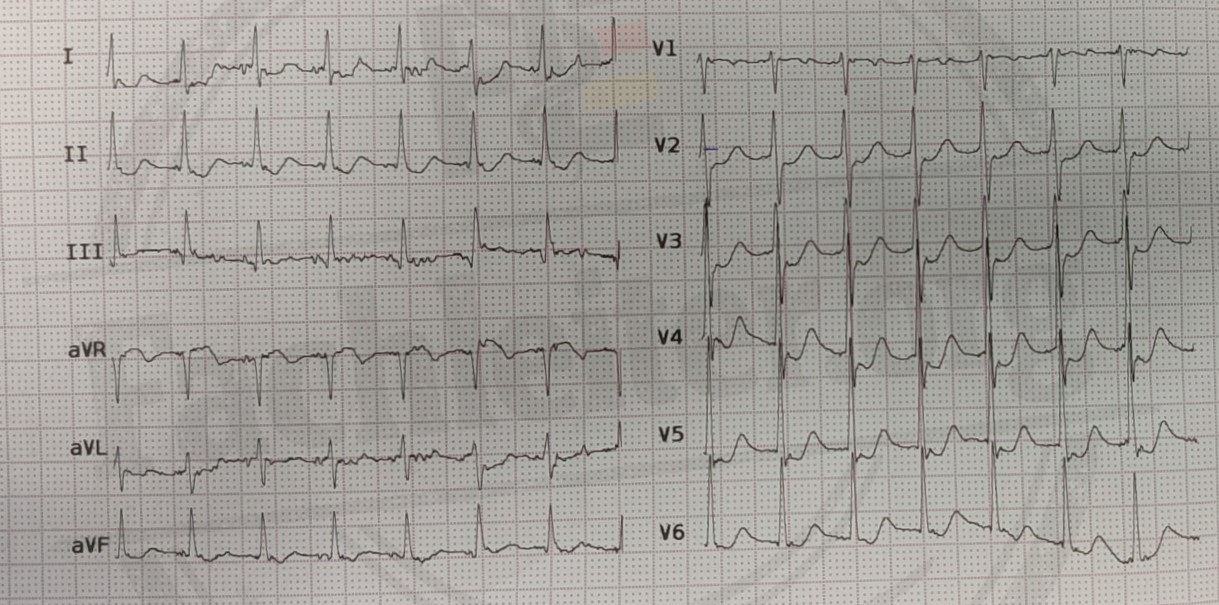
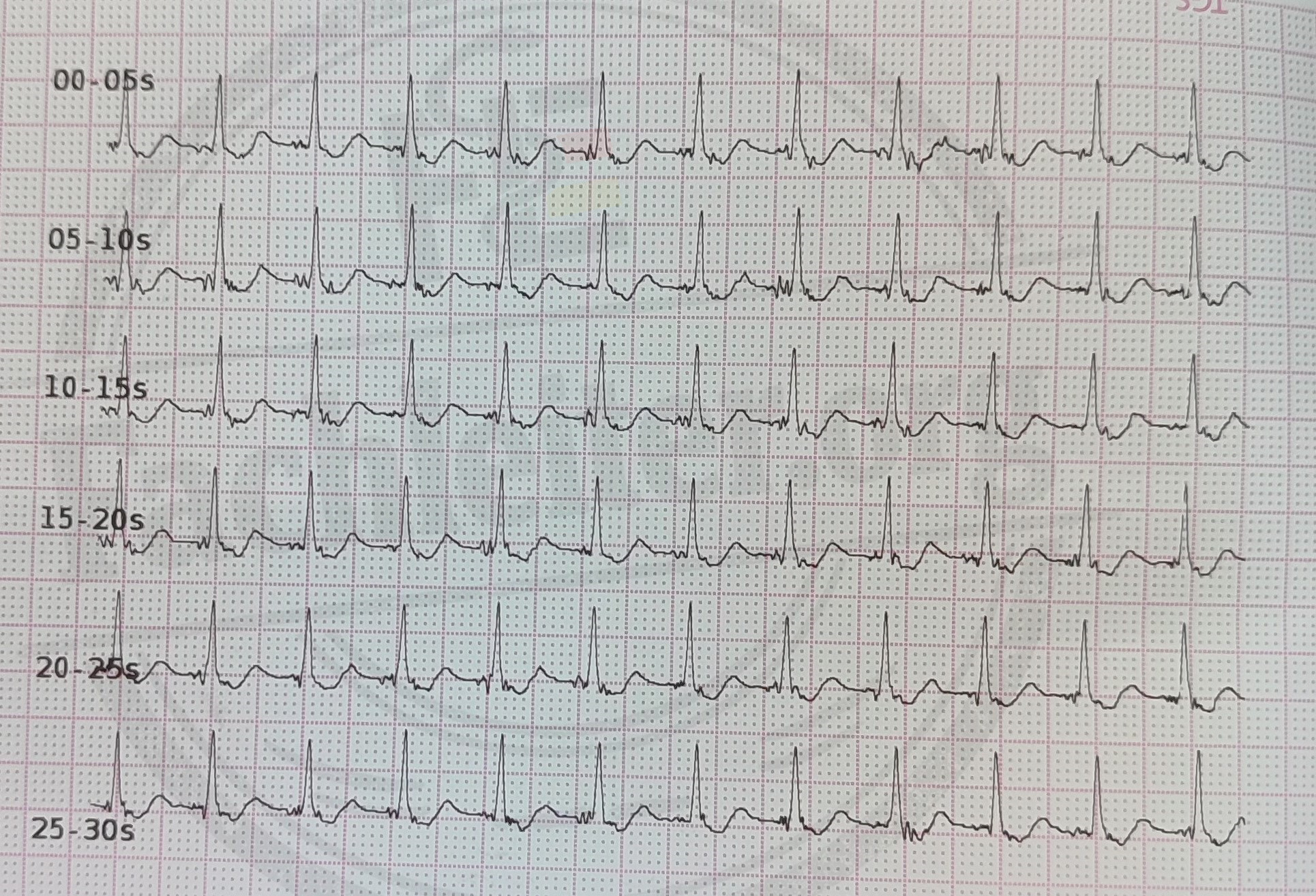
The ECG shows a regular narrow-complex tachycardia with a heart rate of about 150/min. P waves that are not discernible or hidden within the QRS complex suggest an AV nodal reentrant tachycardia (AVNRT). Acute ischemic changes are not visible on the ECG.
Treatment
Because the patient was hemodynamically stable, a vagal maneuver was performed first, but without success.
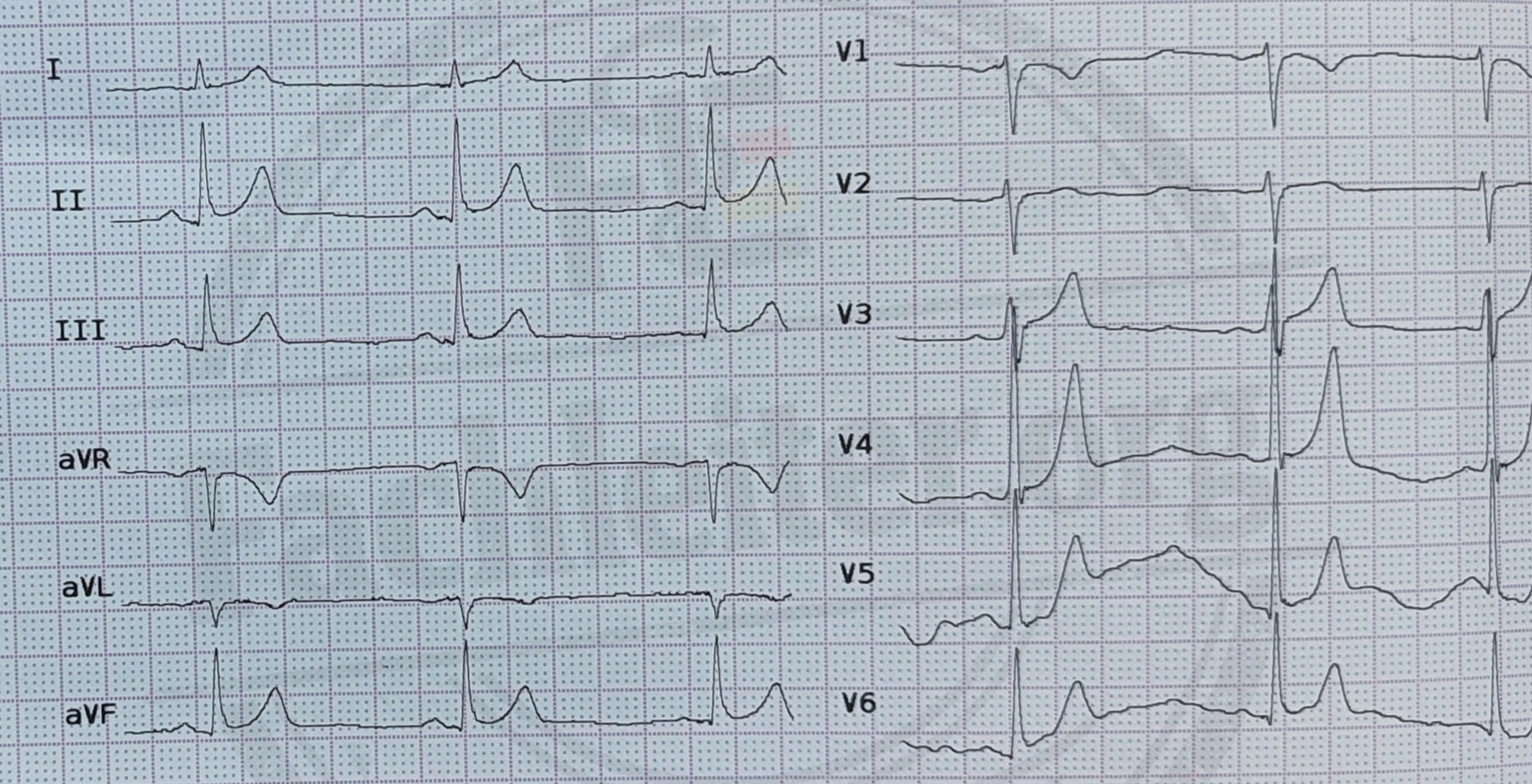
Subsequently, 6 mg adenosine was administered intravenously as a rapid bolus with saline flush.
Further management
- Monitoring on a telemetry unit
- Check electrolytes and cardiac biomarkers
- Cardiology consultation