Exertional dyspnea and fatigue explained practically: This article presents key differential diagnoses for progressive breathlessness and exhaustion, including heart failure, anemia, hypothyroidism, depression, nephrotic syndrome and pulmonary embolism. With typical symptoms, diagnostics and important history-taking cues for FSP, knowledge examination, M3 and clinical practice.
Exertional Dyspnea and Fatigue
Main complaint
- Typically, patients over 50 years report progressive, exertion-related dyspnea and marked fatigue.
-
Multiple risk factors can often be identified in the history, including:
- Positive family history of cardiovascular disease
- Overweight or obesity
- Lack of physical activity
- Current or former smoking
- Hypertension
- Diabetes mellitus
- Hypercholesterolemia
- Established atherosclerotic complications, e.g. retinopathy, neuropathy or nephropathy
Differential diagnoses
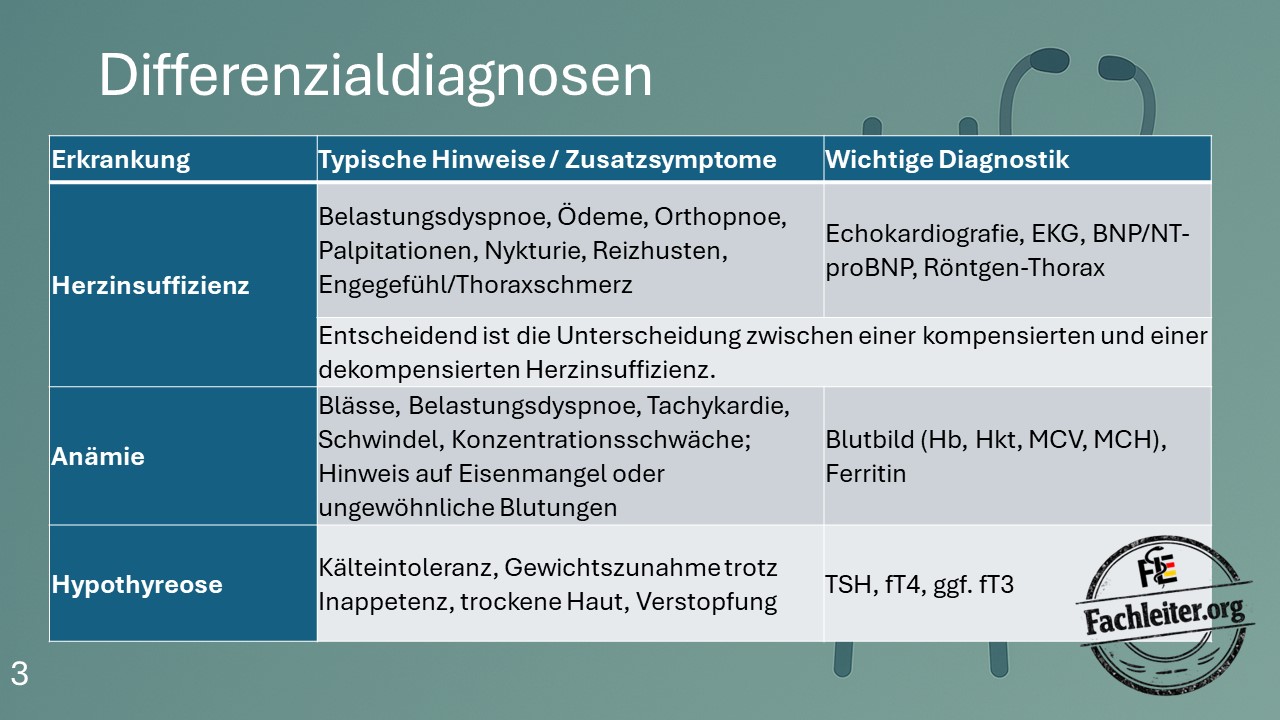
| Condition | Typical clues / additional symptoms | Important diagnostic tests |
|---|---|---|
| Heart failure |
Exertional dyspnea, edema, orthopnea, palpitations, nocturia,
dry cough, a feeling of tightness or chest pain.
Crucial is the distinction between compensated and decompensated heart failure. |
Echocardiography, ECG, BNP/NT-proBNP, chest X-ray. |
| Anemia | Pallor, exertional dyspnea, tachycardia, dizziness, concentration difficulties, indication of iron deficiency or unusual bleeding. | Complete blood count with Hb, Hct, MCV and MCH, ferritin. |
| Hypothyroidism | Cold intolerance, weight gain despite reduced appetite, dry skin, constipation. | TSH, fT4, if applicable fT3. |
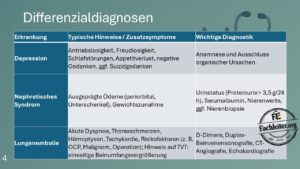
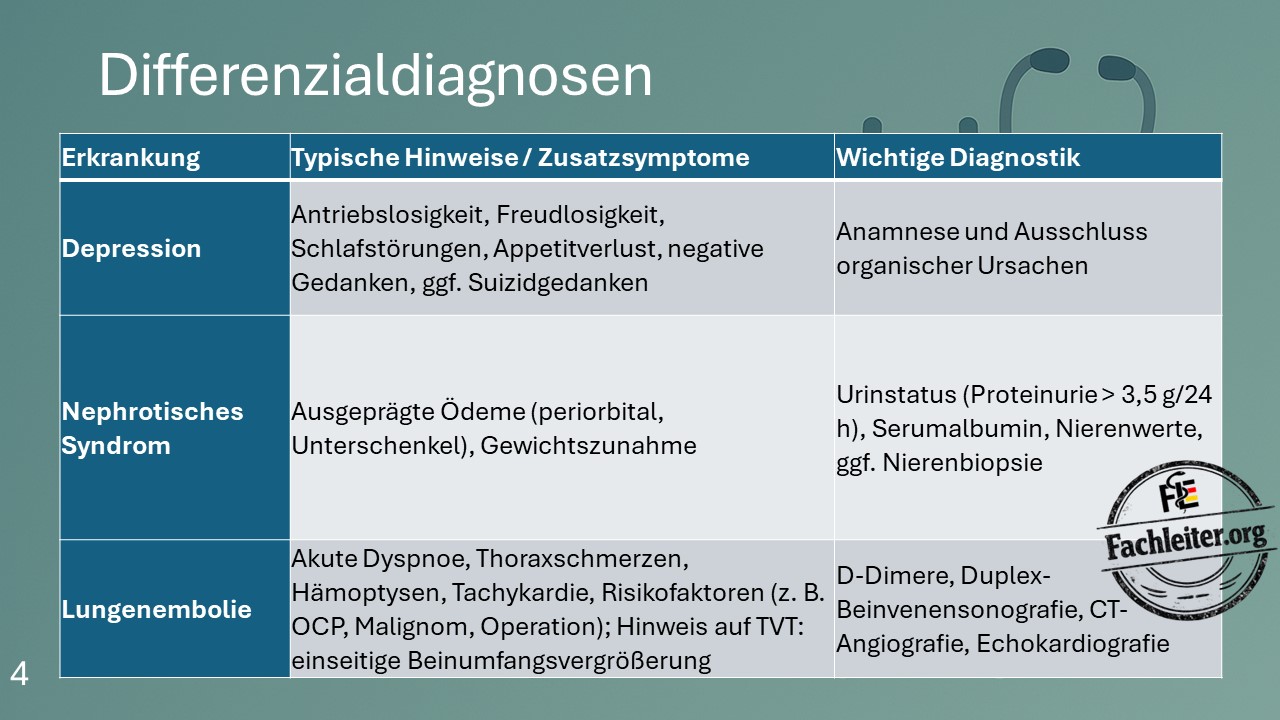
| Depression | Lack of drive, loss of pleasure, sleep disturbances, loss of appetite, negative thoughts, possibly suicidal ideation. | History and exclusion of organic causes. |
| Nephrotic syndrome | Marked edema, e.g. periorbital or in the lower legs, weight gain. | Urinalysis with proteinuria > 3.5 g/24 h, serum albumin, renal function tests, possibly renal biopsy. |
| Pulmonary embolism | Acute dyspnea, chest pain, hemoptysis, tachycardia, risk factors such as oral contraceptives, malignancy or surgery. Clue for DVT: unilateral leg swelling. | D-dimers, duplex venous ultrasound of the legs, CT angiography, echocardiography. |
Notes
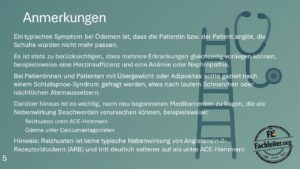
A typical symptom of edema is that the patient reports their shoes no longer fit.
It must always be considered that multiple conditions can coexist, for example heart failure and anemia or nephropathy.
In patients who are overweight or obese, specific questioning for sleep apnea syndrome should be performed, for example about loud snoring or nocturnal breathing pauses.
Furthermore, it is important to ask about newly started medications that may cause symptoms as side effects, for example:
- Dry cough with ACE inhibitors
- Edema with calcium channel blockers
Note: Dry cough is not a typical side effect of angiotensin II receptor blockers (ARBs) and occurs much less frequently than with ACE inhibitors.