Neck pain is one of the most common complaints in primary care and orthopedics. This article shows the key Red Flags, the typical cervical radiculopathy in disc herniations, relevant differential diagnoses, and the neurological mapping of the individual nerve roots. Ideal for preparation for the specialist language exam (FSP), knowledge exam (KP), M3 and clinical practice.
Neck Pain
Main complaints
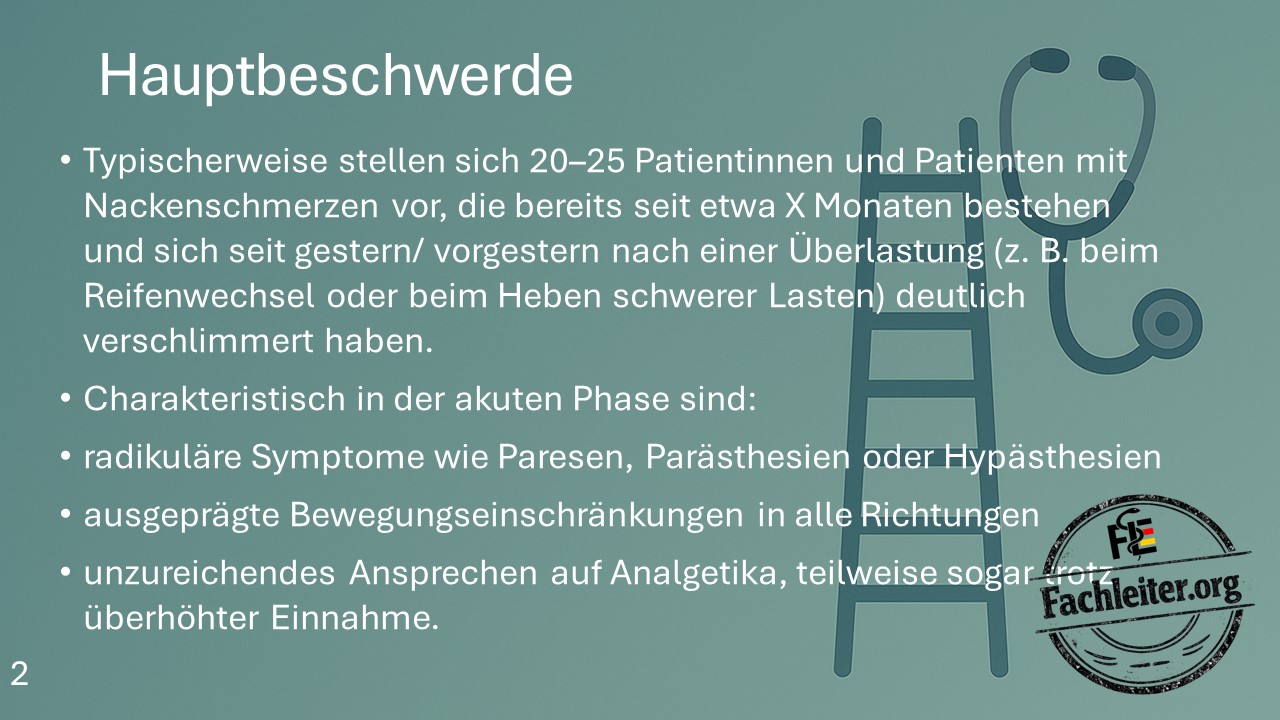
- Typically, 20–25-year-old patients present with neck pain that has already persisted for several months and has markedly worsened since yesterday or the day before after an overload (e.g., changing a tire or lifting heavy loads).
- Characteristic in the acute phase are:
- radicular symptoms such as pareses, paresthesias or hypoesthesias,
- marked restriction of movement in all directions,
- insufficient response to analgesics, sometimes despite increased intake.
Red Flags
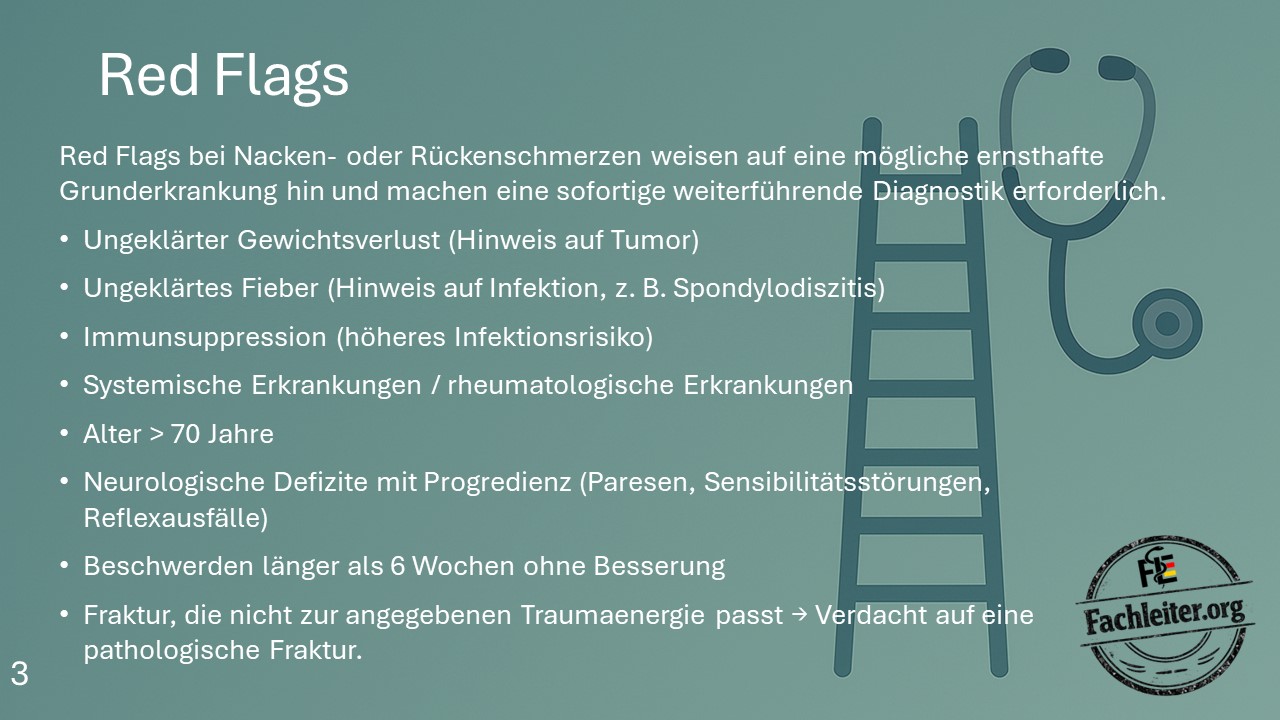
Red Flags in neck or back pain indicate a possible serious underlying condition and require immediate further diagnostics.
- Unexplained weight loss (suspected tumor)
- Unexplained fever (infection, e.g., spondylodiscitis)
- Immunosuppression
- Systemic or rheumatologic diseases
- Age over 70 years
- Progressive neurological deficits (pareses, sensory disturbances, loss of reflexes)
- Symptoms lasting longer than six weeks without improvement
- Fracture not consistent with the reported trauma energy (suspected pathological fracture)
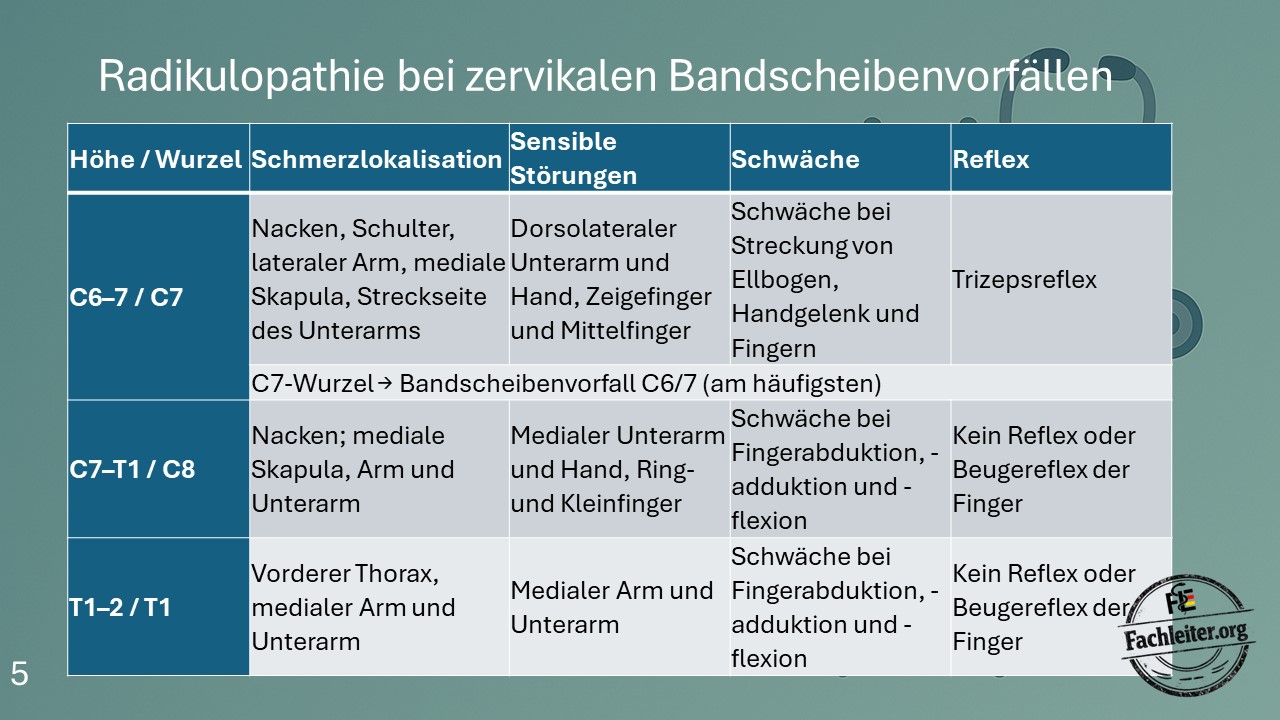
Radiculopathy
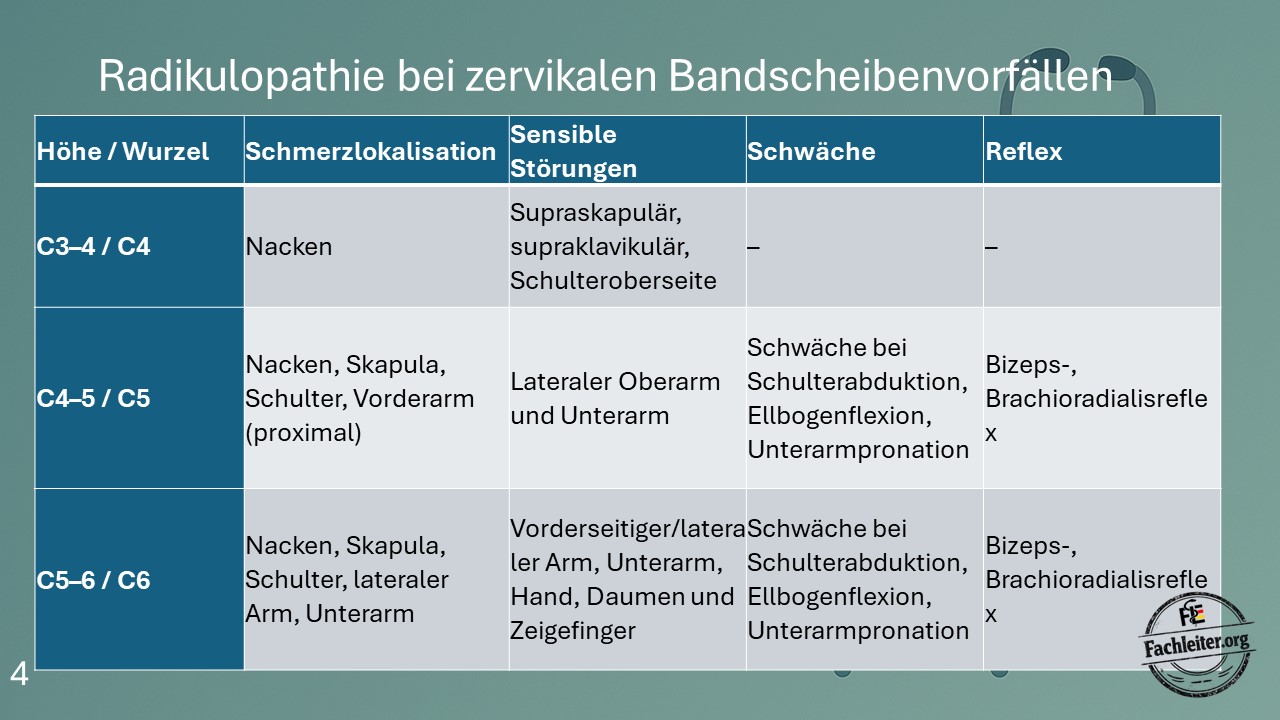
| Root | Pain location | Sensory disturbances | Muscle weakness | Reflex |
|---|---|---|---|---|
| C3/C4 | Neck | Suprascapular, supraclavicular, top of the shoulder | No typical weakness | No characteristic reflex |
| C4/C5 | Neck, scapula, shoulder, proximal forearm | Lateral upper arm and forearm | Shoulder abduction, elbow flexion, forearm pronation | Biceps and brachioradialis reflex |
| C5/C6 | Neck, shoulder, lateral arm and forearm | Thumb and index finger | Shoulder abduction, elbow flexion, forearm pronation | Biceps and brachioradialis reflex |
| C6/C7 | Neck, medial scapula, lateral arm, extensor side of the forearm | Dorsolateral forearm, index and middle finger | Elbow, wrist, and finger extension | Triceps reflex |
| The C7 root is most commonly affected (disc herniation C6/C7). | ||||
| C7/C8 | Neck, medial arm and forearm | Ring and little finger | Finger abduction, finger adduction and finger flexion | Finger flexor reflex or no characteristic reflex |
| T1 | Anterior thorax, medial arm and forearm | Medial arm and forearm | Finger abduction and finger adduction | Finger flexor reflex or no characteristic reflex |
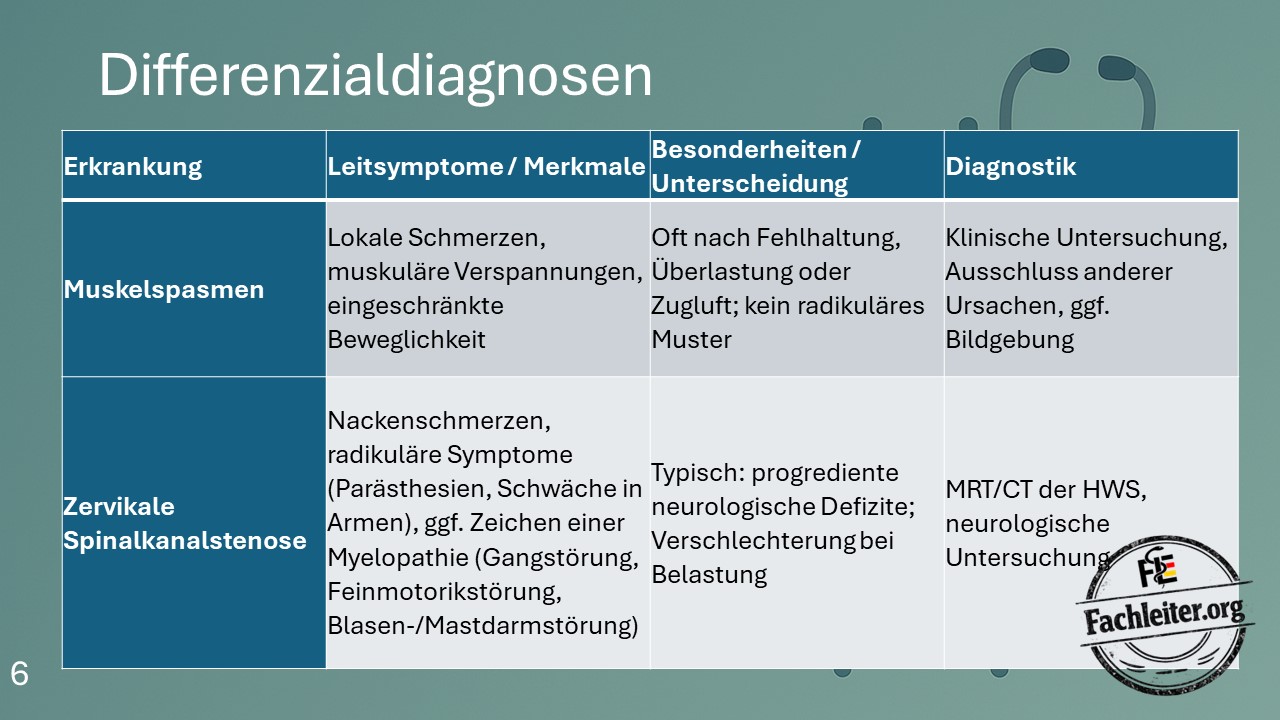
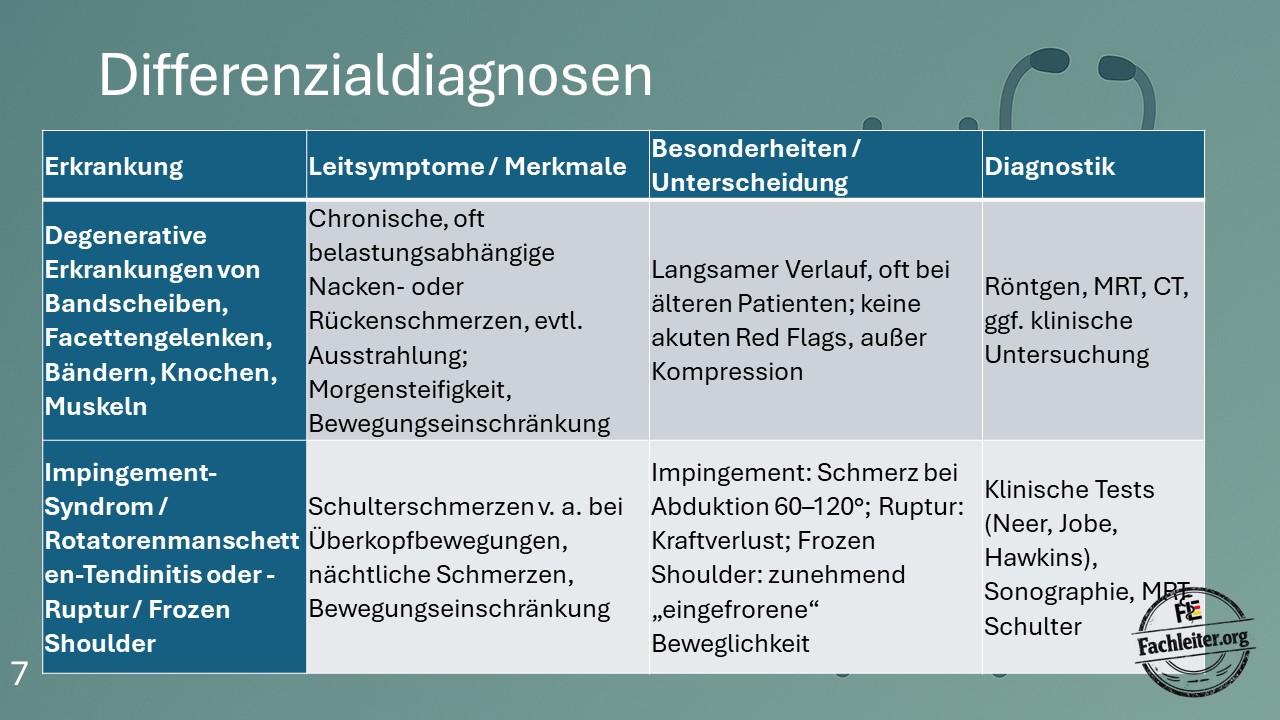
Differential diagnoses
| Condition | Key symptoms | Features | Diagnostics |
|---|---|---|---|
| Muscle tension | Local pain, muscle tightness, limited mobility | After poor posture, overuse or drafts; no radicular symptoms | Clinical examination, if needed exclusion diagnostics |
| Cervical spinal stenosis | Radicular complaints, myelopathy, gait disturbance, fine motor impairment, bladder or bowel dysfunction | Progressive neurological deficits | MRI or CT of the cervical spine |
| Degenerative diseases | Chronic load-dependent neck pain, morning stiffness, restricted movement | Slow course, common in older age | X-ray, MRI or CT |
| Impingement syndrome / rotator cuff lesion / frozen shoulder | Shoulder pain, nocturnal pain, limited range of motion | Pain with abduction 60–120°, loss of strength or increasing shoulder stiffness | Clinical tests (Neer, Hawkins, Jobe), ultrasound or MRI |
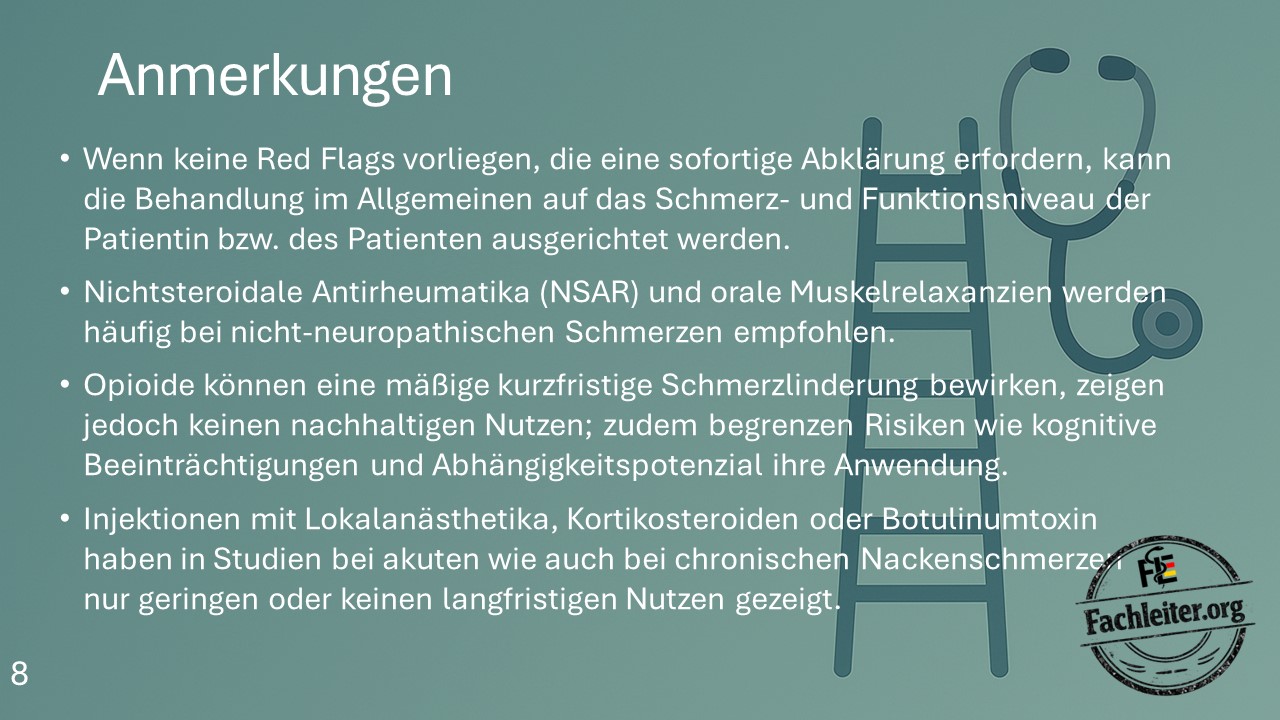
Notes
- If no Red Flags are present, treatment is guided by pain intensity and functional impairment.
- Nonsteroidal anti-inflammatory drugs (NSAIDs) and oral muscle relaxants are often recommended.
- Opioids can help short-term but do not show sustained benefit and carry relevant risks such as dependence and cognitive impairment.
- Injections with local anesthetics, corticosteroids, or botulinum toxin do not show long-term benefit in most patients.