
Greeting
Good day, Mr./Ms. Senior Consultant ………..,
I would now like to present the patient Heinz Möller to you.
He is 78 years old, 1.89 meters tall and weighs approximately 86 kilograms. The body mass index (BMI) is 24 kg/m² and thus within the normal range.
Presenting complaint and history of present illness
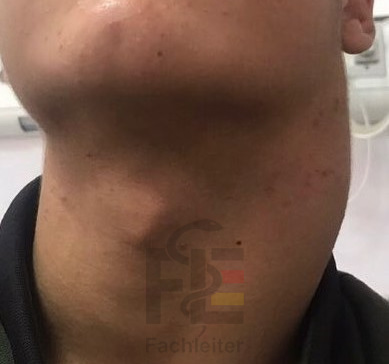
The patient presented to us because of a painless, approximately two-euro-coin-sized, firm, non-mobile right cervical lymphadenopathy that has been present for three months. According to his report the course was slowly progressive, and he can no longer fasten the shirt collar properly.
Accompanying symptoms included a B symptoms with fever up to 39 °C (axillary), nocturnal hyperhidrosis and a weight loss of 3 kg over the last three months due to loss of appetite . Additionally, the patient complained of asthenia as well as alcohol pain.
He also reported recurrent upper respiratory tract infections.
The following symptoms were denied: skin changes, sore throat, pathological findings in the oral cavity, dysphagia, dyspnoea, cough, dysphonia, cold intolerance, increased bleeding tendency, pallor as well as lymphadenopathies at other locations.
So far Mr. Möller has not consulted a physician.
He is unaccompanied.
He stated that recently he had not traveled .
According to the patient, similar complaints are not known in other relatives.
Autonomic history
The autonomic history is unremarkable except for insomnia due to nocturnal hyperhidrosis (difficulty maintaining sleep).
Pre-existing conditions
The following diagnoses are known in the patient:
According to his report, for 8 years he has had hypercholesterolemia, for which therapy with simvastatin was discontinued due to suspected rhabdomyolysis; however, rhabdomyolysis is not documented.
For about 10 days there has been a furuncle in the area of the back, right subscapular. He stated that a surgical procedure is planned the day after tomorrow and that he has been independently treating the affected area antiseptically with bar soap.
The patient reports that he has suffered from chronic back pain for 8 years in the context of a lumbar disc prolapse . Treatment was conservative.
He said he had an acute pyelonephritis 5 years ago, during which he was treated as an inpatient for 3 days.
The patient reported that 4 years ago he sustained a commotio cerebri after a fall on the stairs; he was then monitored as an inpatient for 2 days.
Prior surgeries
———————————————–
Gynecology
———————————————–
Medications
According to his prescription, the patient is currently taking the following medications:
Ibuprofen 400 mg
Pantoprazole 20 mg
Valerian-tablets
He also uses Hylo-eye drops
Simvastatin
Allergies
Regarding allergies, the patient stated that he is allergic to strawberries. After ingestion he develops a perioral exanthem and pruritus.
He also reported recurrent conjunctivitis for about 10 years, with seasonal clustering in spring.
Substances / Drugs
In the context of the exposure history the patient reported being a non-smoker for 20 years. Previously he had smoked about 20 cigarettes daily over a period of 30 years (equivalent to approx. 30 pack-years).
He also reported regular alcohol consumption in the form of a small bottle of Piccolo in the evening.
He denied drug use.
Social history
The patient stated that he has been retired for 25 years, previously Tailor was a professional, single and currently residing in a nursing home residing.
Family history
In the family history the patient stated that his father died at the age of 73 from a laryngeal carcinoma .
His mother had already died during his childhood; the cause of death is unknown.
His sister suffered a hemorrhagic stroke at age 63 with subsequent paraparesis/paraplegia; since then she has been dependent on a wheelchair and lives in a care home.
The patient has no pets.
Suspected and differential diagnosis
The anamnesis, including an indolent, firm, non-mobile cervical lymphadenopathy and B symptoms, most likely suggest a Hodgkin lymphoma . However, prior to histological confirmation, non-Hodgkin lymphomas and leukemic diseases (e.g., CLL) should also be considered.
As a differential diagnosis, tuberculosis is possible; however, the absence of a productive cough as well as travel and exposure history argue against it.
In infectious mononucleosis, the so-called kissing disease, tonsillitis and lymphadenopathy typically occur, which are soft and painful.
Autoimmune diseases such as sarcoidosis or systemic lupus erythematosus can also lead to lymphadenopathies, but this clinical picture does not fit here.
|
Diagnosis |
Similar symptoms |
Distinguishing features |
|
Tuberculosis |
Fever, night sweats and weight loss |
positive travel/exposure history, productive cough |
|
infectious mononucleosis (EBV) |
Lymph node swelling, fever, fatigue |
usually younger patients, sore throat, soft lymph nodes |
|
Non-Hodgkin lymphoma |
very similar symptoms |
more often multifocal lymph nodes, more aggressive course, different histological features |
|
Leukemia |
Fatigue, increased susceptibility to infections, pallor |
often pancytopenia, bone marrow involvement, changes in blood count |
Diagnostic workup:
physical examination
After the history we perform a thorough physical examination. This begins with recording the vital signs, including heart rate, blood pressure, respiratory rate, oxygen saturation and body temperature.
This is followed by a targeted examination starting with inspection. Signs such as cachexia, pallor, scratch marks from pruritus, petechiae, ecchymoses, abnormalities in the oral cavity (e.g., tonsillar enlargement or mucosal coatings) as well as visible lymphadenopathy (with information on number and possible skin changes) may be noted.
Palpation is used to assess lymph nodes for tenderness, mobility (mobile, fixed) and consistency (soft or hard) as well as to detect possible splenomegaly or hepatomegaly.
Percussion is usually unremarkable but can show abnormal findings in splenomegaly or pleural effusion.
Auscultation usually yields no pathological findings.
Laboratory tests
In this context we would determine a differential blood count, CRP, ESR, LDH, ALT (GPT, alanine aminotransferase; liver-specific), AST (GOT, aspartate aminotransferase), gamma-glutamyl transferase (GGT), electrolytes as well as renal and blood lipid values.
In addition, a blood smear must be prepared.
This is done by spreading a drop of blood on a glass slide, air-drying it, staining it (e.g., with May-Grünwald-Giemsa) and then examining it microscopically.
Under the microscope we can, for example, identify atypical blood cells, maturation disorders or signs of possible bone marrow infiltration.
Lymph node biopsy
The diagnosis is confirmed by a lymph node biopsy. Excisional lymph node removal is considered the gold standard because it provides sufficient tissue to reliably detect the rare Reed-Sternberg cells. Other procedures such as fine-needle or core biopsies are often not representative and can miss the diagnosis.
Lymphadenectomy is a surgical procedure in which affected lymph nodes are completely removed under general anesthesia. After disinfection the physician makes an incision in the affected area, removes the lymph nodes and examines the surrounding tissue. The wound is then closed, and you remain hospitalized for observation for a few hours or days.
The patient must be fasting for at least 6 hours before the operation, i.e., no food intake; drinking is also not allowed 2 hours beforehand.
The result is usually available after 3 to 5 working days.
Possible risks are pain, bruising and rare infections.
Classical Hodgkin lymphoma (cHL) is the most common subtype with about 95% of cases.
It is characterized by the presence of mononuclear Hodgkin cells and multinucleated Reed-Sternberg cells, which together are referred to as Hodgkin-Reed-Sternberg (HRS) cells.
Classical Hodgkin lymphoma is histologically divided into four main subtypes that differ in the number of lymphocytes, the proportion of Reed-Sternberg cells and the presence of connective tissue:
• Nodular sclerosing type
• Mixed cellularity type
• Lymphocyte-rich type
• Lymphocyte-depleted type
The nodular sclerosing type occurs predominantly in young adults, while the mixed cellularity type is more common after the age of 50.
Bone marrow puncture
Bone marrow puncture is a diagnostic procedure to obtain bone marrow, usually from the posterior iliac crest, to evaluate blood or cancer diseases. It is performed under local anesthesia using a special needle. Coagulation values are checked beforehand and the patient is informed. Possible risks are pain, bruising and rare infections.
Anatomical diagnosis
Sonography
Sonography (ultrasound examination) is an imaging technique that uses high-frequency sound waves to visualize internal organs and tissues. It is non-invasive, painless and is frequently used to examine the abdomen, thyroid, heart, vessels and lymph nodes. Special preparation is usually not required, and there are generally no risks.
With suspected lymphoma, in particular the liver and spleen can be assessed for possible organ enlargement or infiltration.
Computed tomography (CT) of the chest, abdomen and pelvis
Computed tomography (CT) is an imaging method that creates detailed cross-sectional images of internal organs using X-rays. The patient is moved into a tubular scanner and must lie still during the examination. Sometimes a contrast agent is administered to allow a more precise depiction. The examination is painless and takes only a few minutes. Before the examination with contrast agent it is important that you drink sufficient fluids. Certain medications such as metformin should be paused beforehand. In rare cases an allergic reaction to the contrast agent may occur (but do not worry: we are prepared and have all necessary medications and measures on site).
A CT is performed in Hodgkin lymphoma to assess the extent of the disease, visualize enlarged lymph nodes and organ involvement, and determine the stage precisely.
Positron Emission Tomography
Positron emission tomography (PET) is an imaging technique used to depict metabolic activity in the body. A mildly radioactive substance is administered to the patient. PET is particularly useful for diagnosis, staging and therapy monitoring in cancer. It is often combined with CT (PET/CT) to assess function and anatomy simultaneously. Risks arise from the small radiation exposure.
Preparation for a PET includes fasting for at least 6 hours and blood sugar monitoring in diabetic patients.
Staging
|
Stage I |
Involvement of a single lymph node region or a lymphatic structure such as the spleen, thymus or the Waldeyer’s ring. |
|
Stage II |
Disease with involvement of two or more separate lymph node regions that lie on the same side of the diaphragm. |
|
Stage III |
Disease with involvement of two or more separate lymph node regions or lymphatic structures on both sides of the diaphragm. |
|
Stage IV |
Disseminated involvement: involvement of at least one extranodal organ |
|
Suffix A |
no B symptoms |
|
Suffix B |
at least one B symptom |
Consultations
Oncology, Surgery / Thoracic Surgery, Radiology / Nuclear Medicine, Pathology
Treatment:
Chemotherapy according to the ABVD protocol (Adriamycin, Bleomycin, Vinblastine, Dacarbazine), with or without additional radiotherapy.
Prognosis:
Cure rates of up to 85–90% in patients in early stages and about 75% in patients in stage III/IV are achievable today with adequate initial therapy. Unfavorable prognostic factors include the presence of B symptoms, older age, an advanced disease stage at first diagnosis, male sex, an increased erythrocyte sedimentation rate (ESR) etc.
Extra
Names:
Ms Hermine Bögel, Veronica ?, Max Peters
Current history:
Fever measured rectally between 38.5 and 39.4°C for a few days.
The patient tends to have frequent respiratory infections.
Vegetative history:
Chronic constipation (for 30 years), treated with Movicol-sachets.
Shortness of breath due to a blocked nose + dry mouth (therefore she is supposed to drink a lot of water at night)
Past illnesses / prior operations
Status post distal radius fracture on the right after a fall 2 years ago (she overlooked a cable in the nursing home, tripped and then fell) was treated conservatively with a cast for 6 weeks.
Status post pyelonephritis 5 years ago, treated outpatient with 3 days IV antibiotics then oral up to 12 days of medication
Postoperative hypothyroidism: She underwent thyroid surgery 5 years ago for goiter at age 52. After the thyroidectomy she had hoarseness, therefore she attended speech therapy for 3 months.
Keratitis for 28 years
Medications:
Tamsulosin 0.4
L-thyroxine 125 micrograms
Family history:
Grandfather died of laryngeal carcinoma (throat cancer).
Mother suffered a hemiplegia and arrhythmia, died of asystole Father: died of cholangiocarcinoma (which is why he is also afraid)
Allergies:
House dust mite allergy with cough + rhinitis, was treated with hyposensitization 10 years ago
Social history:
She lives in the nursing home with her sister
She worked as a civil engineer for underground construction, divorced, has a son and a grandchild, lives in a shared apartment
Questions
1. Doctor, can you please explain what disease I have?
Your current symptoms and examination findings suggest a change in the lymphatic system that we take seriously and need to investigate further. To say exactly what it is, we need additional tests such as a tissue biopsy.
2. Is it possible that it is cancer? My mother also had cancer, and that worries me a lot.
I understand your concern very well. Based on your symptoms we cannot make a definitive statement at present. There are various possible causes for your complaints, not all are malignant. To gain clarity we will perform targeted investigations.
3. Do I have to stay in the hospital?
Yes, we recommend an inpatient stay so that we can carry out the necessary investigations promptly and under optimal medical care.
4. What typical symptom can occur in Hodgkin’s disease after alcohol consumption?
Alcohol-induced pain in affected lymph nodes.
This means: affected individuals feel pain in the involved lymph nodes after drinking alcohol, especially in the neck, axilla or groin. This symptom is rare (in less than 10% of patients) but relatively specific for Hodgkin lymphoma.
5. What are such typical, disease-specific signs called?
Such signs are called pathognomonic when they are highly specific for a particular disease. Another example of a pathognomonic sign are Koplik’s spots in measles.
6. Why is it not hypothyroidism?
In hypothyroidism we typically expect symptoms such as cold intolerance, dry skin, constipation, bradycardia, weight gain, depressive mood and fatigue.
Fever and unintentional weight loss, on the other hand, are untypical for hypothyroidism.
7. Would you recommend ibuprofen for a patient of this age?
The use of ibuprofen in elderly patients should be approached with caution because the risk of gastrointestinal bleeding, renal dysfunction and cardiovascular events increases.
8. What do we do if the patient refuses an inpatient stay?
If a patient refuses hospitalization, a detailed informed consent discussion about the medical necessity and possible risks is first conducted. It is checked whether the patient is capable of giving consent. The refusal is carefully documented, ideally with a written statement. If appropriate, outpatient alternatives can be offered.
9. Who decides on curative or palliative treatment?
The decision on curative or palliative treatment is usually made by an interdisciplinary tumor board composed of specialists in oncology, hematology, radiology, pathology and, if applicable, surgery. Of course the patient must ultimately decide about the further course of action.
10. What happens if none of the treatments work?
In such situations quality of life is paramount. We then focus on palliative care — measures to relieve symptoms, control pain and provide psychological support and assistance.
11. What is the treatment strategy called in which one initially waits before initiating therapy?
Watch and wait
12. What is an advance directive?
An advance directive is a written document in which a person specifies which medical measures they want or refuse in the event of incapacity to consent. It is legally binding and serves to uphold the patient’s will.
13. What can older people use to support themselves and prevent falls?
Older people can prevent falls by using walking aids such as rollators or canes, wearing non-slip shoes and installing grab rails in the bathroom or on stairs.
14. Why are lymph nodes usually soft and painful in inflammation, while in carcinoma they are hard and painless?
The difference lies in the underlying cause: in inflammation there is rapid swelling and an immune reaction that leads to capsular tension and release of inflammatory mediators — this makes the lymph nodes soft, mobile and often clearly painful. In carcinoma, tumor cells grow slowly into the lymph node tissue, causing little inflammatory reaction and resulting in a hard, firm consistency without pain, since there is no acute irritation of the nerves.
Notes
BMI
Body Mass Index (BMI)
BMI is a calculated value for a rough assessment of body weight in relation to height. It is determined by dividing body weight in kilograms by the square of height in meters. The index is used to classify into ranges such as underweight, normal weight or overweight, but it has limitations, for example in very muscular individuals or in older people.
/m²
Unit “/m²” (per square meter)
The notation “/m²” means “per square meter” and indicates that a value is related to an area of one square meter.
indolent
Indolent (painless)
The term “indolent” describes the absence of pain in a lesion or finding. In a painless, slowly enlarging lymph node, malignancy is a possible cause but not specific; chronic or granulomatous processes can also present this way. By contrast, painful lymph nodes more often indicate acute inflammatory or infectious causes. Clinical assessment should always include other criteria and the course/diagnostics.
hard, non-mobile
Hard and non-mobile (fixed)
“Hard and non-mobile” describes a finding where a lymph node is firm in consistency and cannot be moved relative to the surrounding tissue. Such characteristics can increase the likelihood of a malignant cause, especially if the enlargement is progressive. Soft, easily mobile lymph nodes are more suggestive of benign or inflammatory processes, although exceptions exist. A definitive assessment requires additional diagnostics and the overall clinical context.
B symptoms
Brief description: B-symptoms denote a set of systemic general symptoms. Criteria: fever over 38 °C, heavy night sweats (night sweats) and unintended weight loss of more than 10% of body weight within six months. Clinical relevance: The presence of these symptoms justifies further diagnostic evaluation, as they can occur in systemic diseases such as certain hematological or inflammatory disorders.
nocturnal hyperhidrosis
Brief description: Nocturnal hyperhidrosis refers to pronounced sweating during sleep. Presentation: Severe sweating that can soak clothing or bedding and disturb sleep. Clinical significance: Can occur in isolation or as an accompanying symptom in infections, endocrine disorders, medication effects or other systemic diseases and should be evaluated if newly onset or burdensome.
Inappetence
Definition: Inappetence is a decrease in appetite or lack of interest in food intake. Consequences: Prolonged inappetence can lead to weight loss and malnutrition. Cause indication: Causes are often multifactorial (e.g., somatic illnesses, psychological causes, side effects of medications); persistent inappetence should be diagnostically evaluated.
Asthenia
Definition: Asthenia describes a nonspecific feeling of weakness, reduced capacity for exertion and persistent fatigue. Characteristics: It is a subjective reduction in performance and rapid fatigability, not always accompanied by objectively measurable loss of strength. Differential diagnosis: Asthenia is a nonspecific symptom with many possible causes, for example chronic diseases, anemia, endocrine disorders such as hypothyroidism, malignant diseases or psychiatric disorders; further evaluation depends on accompanying symptoms and clinical findings.
Alcohol pain
Alcohol pain
Description: The phenomenon referred to as alcohol pain describes the occurrence of pain in affected lymph nodes or tumors shortly after alcohol consumption.
Clinical significance: This symptom is rare but classically associated with Hodgkin disease. The pathophysiology is not fully understood, but its occurrence may justify further diagnostic evaluation.
recurrent
Recurrent
In the right context, it can indicate immunosuppression.
pathological findings in the oral cavity
Pathological findings in the oral cavity
Significance: Noticeable changes in the oral cavity (e.g., ulcers, coatings, swelling) can indicate local infections, inflammatory diseases or systemic or neoplastic processes.
Dysphagia
Dysphagia
Definition: Dysphagia denotes a disorder of the swallowing process with difficulty transporting food or liquids.
Possible causes: Causes can be mechanical obstacles due to masses or extrinsic compression (e.g., by mediastinal lymph nodes) as well as esophageal diseases or neuromuscular disorders.
Dyspnea
Dyspnea
Explanation: Enlarged lymph nodes in the mediastinum can, by direct compression or infiltration, impair the airways or thoracic structures and thus cause dyspnea.
Cough
Possible causes of cough include irritation or mechanical narrowing of the airways, direct infiltration of the bronchial wall by a mass, and infections that occur more frequently in immunosuppression.
Dysphonia
Short definition
Dysphonia is a voice disorder with altered pitch, volume or timbre of the voice.
Important differential diagnoses in existing or persistent dysphonia
– Laryngeal carcinoma: can cause persistent hoarseness or voice changes, especially with relevant risk factors.
– Recurrent laryngeal nerve palsy: paralysis of the N. laryngeus recurrens typically leads to hoarseness due to restricted vocal cord movement.
– Other causes: inflammatory, functional or iatrogenic voice disorders.
Cold intolerance
Cold intolerance — clinical significance
Sensitivity to cold can be an accompanying symptom of hypothyroidism. In the present history, however, cold intolerance is explicitly denied; this makes a typical sign of hypothyroidism less likely, but not definitively excluded. Assessment should therefore be made in the context of other symptoms and findings.
increased tendency to bleed
Indication of thrombocytopenia
Bone marrow involvement
Pallor
Indication of anemia
Anemia of chronic disease, bone marrow involvement
no travel
Travel history — history
The patient reports not having undertaken any travel recently. Accordingly, there are no indications of recent exposure from stays in regions with increased tuberculosis prevalence or other travel-associated infectious risks.
similar complaints
There is no evidence of increased occurrence in the family or an obvious household infection.
Insomnia
Insomnia
Definition and presentation: Persistent difficulty initiating or maintaining sleep with impairment of sleep duration and sleep quality.
Hypercholesterolemia
Hypercholesterolemia
Core feature: Elevated cholesterol values in the blood, typically with an increase in the LDL fraction.
Furuncle
Furuncle
Clinical picture: Localized, painful, purulent inflammation of a hair follicle with surrounding redness, swelling and often central pus collection.
Causes and treatment: A common pathogen is Staphylococcus aureus. Local antiseptic measures can be sufficient; with pronounced abscess formation surgical incision is indicated, and for extensive infection or systemic signs antibiotic treatment should be considered.
Back pain
Back pain (low back pain)
Term: Pain in the region of the lumbar spine, which can vary in duration and severity.
Disc prolapse
Definition
In a disc prolapse, the inner, gel-like portion of an intervertebral disc displaces outward through damage to the outer fibrous cartilage and can press on adjacent nerve roots or the spinal cord.
Clinical signs
Typical are radiating pain along the affected nerve root, sensory disturbances such as tingling or numbness, and in severe cases motor weakness or reflex changes.
Causes and risk factors
Mechanisms include age-related wear, repeated or single mechanical stresses, accidents and other factors such as overweight or lack of physical activity that can weaken disc structure.
conservative
Conservative therapy – clarification of term
Conservative treatment refers to non-surgical measures aimed at pain relief, restoration of function and avoidance of surgery.
Typical measures
These include physiotherapeutic exercises for stabilization and mobilization, pharmacological pain and anti-inflammatory treatment, adaptation of daily activities and aids such as orthoses or support belts. Patient education and rehabilitative measures can complement the treatment concept.
Pyelonephritis
Definition and cause
Pyelonephritis is a bacterial inflammation of the renal pelvis and renal parenchyma, often caused by an ascending urinary tract infection; pathogens are especially Enterobacteriaceae such as Escherichia coli.
Clinical presentation
Patients typically show flank pain, fever with chills, general malaise and often also symptoms of a lower urinary tract infection such as burning on micturition.
Diagnostics and therapy
Urine tests including urine culture are used for evaluation. Treatment is usually with antibiotic therapy; in pronounced or complicated courses inpatient care may be necessary.
Concussion
Definition:
A concussion (commotio cerebri) is a transient disturbance of brain function after a skull injury, not necessarily demonstrating visible structural damage.
Causes:
It often arises from a direct blow to the head or from acceleration/deceleration movements, for example in falls or accidents.
Clinical picture:
Typical complaints are headache, dizziness, nausea, impaired concentration and memory performance as well as balance disorders. In individual cases there is short-term loss of consciousness or sensory disturbances.
Treatment and course:
Management is predominantly symptomatic and includes physical and cognitive rest, close observation and targeted therapy of individual symptoms. Most patients recover completely, although prolonged complaints can occasionally occur.
Pantoprazole
Group:
Proton pump inhibitors (PPI).
Effect:
Suppresses gastric acid production by blocking the H+/K+-ATPases in the parietal cells of the stomach.
Indications:
Used for acid-related disorders such as reflux symptoms and peptic ulcers and to reduce acid secretion in the context of certain treatments.
Side effects and notes:
Common side effects can include gastrointestinal symptoms and headaches; allergic reactions are rare. The medication is usually recommended to be taken before a meal. Long-term use should be medically reviewed.
Valerian
Category:
Herbal medicinal product / phytotherapeutic.
Indications:
Valerian is mainly used for short-term relief of mild difficulties falling asleep and for reduction of nervous restlessness.
Effect and onset of action:
A calming effect is described; the exact mechanism of action is not fully clarified and varies individually in intensity.
Side effects and interactions:
Occasionally, gastrointestinal discomfort, headaches or daytime drowsiness may occur. Caution is advised when taken simultaneously with other sedative agents or alcohol.
Hylo
Hylo eye drops
Group: ocular lubricants (artificial tears).
Active ingredient/effectiveness: Hylo products usually contain hyaluronic acid, which binds water and thereby stabilizes the tear film and moistens the ocular surface.
Indication: Treatment and relief of symptoms in dry eye and for supportive care of irritated ocular surfaces.
Application and tolerability: Applied locally; typically well tolerated. Occasionally transient burning or foreign body sensations may occur; allergic reactions are very rare.
Important: Many products are designed without preservatives, which improves tolerability with frequent use.
Conjunctivitis
Conjunctivitis
Definition: Conjunctivitis is an inflammation of the conjunctiva of the eye.
Causes and presentation: It can be caused by viruses, bacteria, allergens or irritating substances. Typical symptoms are redness, increased tearing or discharge, itching and a foreign body sensation.
Course and importance of history: Recurrent, seasonally clustered complaints in spring often point to an allergic origin and should be considered in further diagnostic evaluation.
When to seek medical evaluation: Persistent or worsening symptoms, pain or visual disturbances require medical examination.
Pack years
Pack years
Definition and calculation: A pack year quantifies tobacco exposure and is calculated as the number of cigarettes smoked per day divided by 20, multiplied by the number of years of smoking.
Piccolo
Piccolo
A piccolo is a single, small-format bottle for sparkling wine or champagne, typically holding about 0.2 liters. It serves as a single-person portion and is often consumed as an evening or celebratory drink. In the history, the term can indicate regular alcohol consumption in this serving size.
Pensioner
Pensioner
A pensioner is a person who is no longer in employment and instead receives a pension. Transition to pensioner status typically occurs due to reaching retirement age or because of permanent disability to work. The term describes social and economic status, not necessarily living arrangements or need for care.
Tailor
Tailor
A tailor is a craftsperson or specialist business that designs, cuts, sews and, if needed, alters or repairs clothing. The scope of work includes bespoke garments, alteration work and the professional handling of fabrics and patterns.
Nursing home
Nursing home
A nursing home is a residential facility for older people who no longer wish or are unable to live fully independently. These institutions offer, depending on need, support with daily activities such as assistance with personal hygiene, nutrition or medication administration, and can provide different care levels and support services.
Laryngeal carcinoma
Short definition:
Laryngeal carcinoma is a malignant tumor of the larynx, most commonly of the squamous cell type.
Risk factors:
Major modifiable causes include long-term tobacco use and high alcohol consumption; other factors may include occupational exposure to harmful substances or HPV infections.
Clinical picture:
Early signs are persistent hoarseness, a foreign body sensation in the throat or swallowing difficulties; in advanced stages, shortness of breath and locoregional complaints may occur.
Diagnosis and therapy:
Definitive diagnosis is made histologically. Treatment depends on tumor stage and includes surgery, radiotherapy and, where appropriate, systemic therapy. When detected early, chances of cure are significantly better than in advanced stages.
hemorrhagic
Definition:
A hemorrhagic stroke denotes a stroke caused by bleeding into the brain tissue or into the brain ventricles.
Causes:
Common triggers are arterial hypertension, ruptured aneurysms as well as coagulation disorders or anticoagulant medication.
Clinical presentation:
Symptoms typically begin suddenly and can include unilateral weakness, speech disturbances, consciousness impairment or severe headache.
Imaging:
In acute CT, a fresh hemorrhage usually appears hyperdense (bright), whereas fresh ischemic infarcts generally show hypodense findings on CT.
Hodgkin lymphoma
Short definition:
Hodgkin lymphoma is a malignant disease of the lymphatic system, characterized by the presence of Reed–Sternberg cells in histological examination.
Clinical features:
Typical findings are painless lymph node swellings, often cervical, as well as so-called B symptoms (e.g., weight loss, night sweats, fever).
Diagnostics and importance:
A suspected diagnosis requires histological confirmation by excisional biopsy; other lymphatic diseases and leukemic processes must be excluded as differential diagnoses.
Non-Hodgkin lymphomas
Brief description:
Non-Hodgkin lymphomas form a heterogeneous group of malignant lymphoid diseases with various histological subtypes and clinical courses.
Distinction:
In contrast to Hodgkin lymphoma, typical Reed–Sternberg cells are absent; diagnosis and classification are made by histological and immunophenotypic investigations.
Clinical presentation and significance:
Presentation can range from localized lymphadenopathy to disseminated symptoms; prognosis and therapy vary greatly depending on the subtype.
leukemic
Leukemia
Definition and pathophysiology: Leukemias are malignant diseases of the hematopoietic system in which dysregulated precursor cells of white blood cells proliferate in the bone marrow and spill into the peripheral blood.
Clinical signs: Common findings include pale skin, increased fatigue and decreased performance due to anemia, increased infections due to leukocyte dysfunction, fever and bleeding tendency due to thrombocytopenia. Lymph node enlargement can occur in certain subtypes.
Diagnostics: Suspected diagnoses are clarified using a differential blood count, bone marrow examination (cytology, cytochemistry, immunophenotyping) and complementary molecular/karyotypic tests.
Tuberculosis
Tuberculosis
Pathogen and transmission: Tuberculosis is predominantly caused by Mycobacterium tuberculosis and is mainly transmitted aerogenically from person to person.
Clinical features: Typical symptoms are persistent cough, often with sputum, unintended weight loss, night sweats, fever and reduced performance.
Diagnostics and therapy: Diagnostic workup includes imaging of the thoracic organs, microbiological procedures (direct detection, PCR, culture) and additional tests. Therapy consists of a multi-month combination of antibacterial agents; common drug classes are combined in guideline-based treatment.
infectious mononucleosis
Infectious mononucleosis (glandular fever)
Pathogen and transmission: The disease is predominantly caused by Epstein–Barr virus (EBV) and is frequently transmitted via saliva contact.
Clinical features: Characteristic findings are fever, pronounced sore throat with tonsillar involvement, painful or tender lymph node enlargement, persistent fatigue and occasionally splenomegaly.
Diagnostics: Clues come from the blood count with reactive or atypical lymphocytes and serological tests for EBV antibodies or specific molecular detection. Treatment is generally symptomatic and supportive.
Sarcoidosis
Sarcoidosis
Definition and findings: Sarcoidosis is a systemic inflammatory disease characterized by non-caseating granulomas in affected organs. Pulmonary involvement with hilar or mediastinal lymph node enlargement is a common pattern.
Clinical presentation and diagnostics: Affected individuals sometimes report nonspecific systemic symptoms such as fatigue and occasional fever; with lung disease there is cough and breathing difficulty. Imaging procedures (chest X-ray/CT) and histological confirmation by biopsy demonstrating non-caseating granulomas are central to the diagnosis.
Clinical relevance: In the workup of lymphadenopathy, sarcoidosis is an important differential diagnosis but must be distinguished from infectious and neoplastic causes.
systemic lupus erythematosus
Systemic lupus erythematosus — lymph node involvement
In systemic lupus erythematosus, lymph node enlargement can occur. This is often generalized, usually only mildly pronounced and typically occurs in the context of additional organ involvement, such as skin, joint or kidney manifestations as well as hematological abnormalities. Lymphadenopathy alone is rarely sufficient for diagnosis and should be evaluated within the overall clinical context.
Blood pressure
Blood pressure — Devices and aids
For manual blood pressure measurement the equipment includes: a blood pressure cuff, an inflation pump (rubber bulb) and a manometer for reading the pressure. A stethoscope is additionally required to auscultate the Korotkoff sounds. Alternatively, automatic oscillometric blood pressure monitors are frequently used today, which operate without auscultation.
Oxygen saturation
Oxygen saturation — Measurement principle
Blood oxygen saturation is determined noninvasively with a pulse oximeter. The device measures peripheral oxygen saturation by light absorption at a measurement site such as the finger or earlobe and thus provides an estimate of arterial hemoglobin oxygenation.
Body temperature
Body temperature — Comparison of measurement sites
Rectal temperature is often considered an approximate reference for core body temperature in clinical contexts. Oral measurements are typically somewhat lower than rectal values, with usual differences in the range of about 0.3 to 0.5 °C. Axillary measurements generally show even lower temperatures than oral measurements; an approximate difference to rectal temperature is often stated as around 0.5 °C. These values should be understood as typical guidelines and may vary depending on the measurement method and the patient.
Pallor
Pallor
Pallor denotes a markedly reduced redness of the skin or mucous membranes.
Typical locations
Pallor is particularly evident on the skin surface, in the conjunctivae of the eyes and on the oral mucosa (e.g., lips, buccal mucosa).
Clinical significance
It can indicate reduced skin perfusion or a decreased hemoglobin concentration and should be interpreted together with other findings.
Petechiae
Petechiae
Petechiae are very small, pinpoint hemorrhages in the skin or mucosa that appear as non-blanching red to purple dots.
Causes and significance
They can occur with thrombocytopenia, certain coagulation disorders, septic illnesses or after mechanical stress and require further evaluation in conjunction with other findings.
Splenomegaly or Hepatomegaly
Splenomegaly and hepatomegaly
On physical examination an enlarged spleen or liver can be detected by palpation and percussion. Finding an organ enlargement is an indication of a systemic disease and can have various causes, such as hematological disorders, chronic inflammation, infectious processes, portal hypertension or, less commonly, tumor involvement or metastases. Interpretation of the finding requires clinical context and, if necessary, imaging studies and laboratory tests.
Differential blood count
Differential blood count
The differential blood count shows the percentage and absolute distribution of leukocytes by subtype (neutrophils, lymphocytes, monocytes, eosinophils, basophils). It is used to detect leukocytosis or leukopenia and provides clues to infectious, inflammatory or hematological changes. Targeted evaluation of anemia is primarily performed using a complete blood count with erythrocyte indices and other specific parameters.
CRP
C‑reactive protein (CRP)
CRP is an acute-phase protein predominantly synthesized in the liver and rises in inflammatory processes, infections or tissue damage. It serves as a nonspecific laboratory marker to assess inflammatory activity and to monitor the course of therapeutic measures, but it is not disease-specific.
ESR
Erythrocyte sedimentation rate (ESR)
The ESR measures the distance that erythrocytes fall in anticoagulated blood within one hour. It is a nonspecific indicator of inflammatory or other systemic processes and can be influenced by acute-phase proteins, anemia or other factors. ESR is often used complementarily to other laboratory parameters when evaluating inflammation.
LDH
LDH (lactate dehydrogenase)
Brief description: LDH is an enzyme found in many tissues. With cell damage or cell death it is released into the blood in increased amounts.
Clinical relevance: Elevated LDH values are a nonspecific indication of tissue breakdown, for example in hemolysis, muscle injury, liver or cardiac damage as well as in certain malignancies. LDH alone does not provide organ localization and must be interpreted together with other laboratory parameters and the clinical situation.
Blood smear
Blood smear — Purpose and basic principle
Brief description: A blood smear is used to present blood cells on a glass slide as a thin film in order to microscopically assess their shape, distribution and abnormalities.
Principle: A blood film is produced, which after drying is stained so that the different cell types become visible and distinguishable. The blood smear enables morphological assessment of erythrocytes, leukocytes and platelets and is part of the workup for hematological abnormalities.
Movicol
Movicol
Group: Osmotic laxative (active ingredient: polyethylene glycol / macrogol).
Mechanism of action: The preparation promotes water retention in the intestinal lumen, which softens the stool and increases stool volume, thereby facilitating bowel transit.
Indications: Used to treat and regulate chronic constipation and can help facilitate bowel movements in cases of hard stool.
Important notes and risks: Possible side effects include gastrointestinal complaints such as bloating, abdominal cramps or diarrhea. If there is marked abdominal pain, signs of bowel obstruction or significant dehydration, use should be reconsidered and medically evaluated. Seek medical advice in case of preexisting conditions or uncertainty about interactions.
Patient/PatientinSalutation: Mr./Ms. Senior physician ……….., I would like to introduce the patient Heinz Möller to you. |
Date12/06/2025 |
| Age78 years | Weight86 kg | Height189 cm |
Allergies (keywords)
Strawberry allergy (perilabial exanthema, pruritus)
recurrent conjunctivitis for about 10 years, especially in spring
Alcohol/tobacco/drugs (keywords)
Ex-smoker for 20 years (previously 30 pack-years),
occasional alcohol consumption (in the evenings 1 small bottle of sparkling wine),
no drug use
Social history (keywords)
Retired for 25 years,
formerly tailor,
single,
lives in a nursing home,
no pets
Family history (keywords)
Father: laryngeal carcinoma (died at 73 years),
Mother: cause of death unknown (died during the patient’s childhood),
Sister: hemorrhagic stroke, wheelchair-dependent, nursing home (paraparesis/paraplegia)
Medications (keywords)
Ibuprofen 400 mg as needed,
Pantoprazole 20 mg as needed,
Hylo eye drops as needed,
Valerian tablets as needed,
Simvastatin
History (full sentences)
The patient presented to us because of a painless, approximately two-euro-coin-sized, hard, non-mobile right cervical lymphadenopathy that has been present for three months. According to his report the course was slowly progressive, and he can no longer properly button his shirt collar.
Accompanying symptoms included B symptoms with fever up to 39 °C (axillary), night sweats and a weight loss of 3 kg over the last three months due to loss of appetite. In addition, the patient complained of asthenia and alcohol-related pain.
He also reported recurrent upper respiratory tract infections. (He denied skin changes, sore throat, pathological findings in the oral cavity, cough, bleeding tendency, pallor and lymphadenopathy in other body regions.)
He stated that he had not yet sought medical attention and had arrived unaccompanied.
He has not traveled in recent months.
According to his statements, similar complaints are not known among family members.
Autonomic symptoms only showed insomnia due to nocturnal hyperhidrosis.
On Past medical history there is a hypercholesterolemia known for eight years (not treated due to suspected possible rhabdomyolysis), a disc prolapse with chronic low back pain existing for eight years as well (treated conservatively), known.
In addition, the patient reported an acute pyelonephritis five years ago that was treated inpatient for three days, and a fall with concussion four years ago that required two days of inpatient monitoring.
He currently also has an approximately ten-day-old furuncle on his back, subscapular on the right. He stated that a surgical procedure is planned the day after tomorrow and that he has been treating the affected area himself antiseptically with soap.
Suspected diagnosis – Differential diagnosis (full sentences)
The constellation of a painless, hard, non-mobile cervical lymphadenopathy and B symptoms (fever, night sweats, weight loss) clinically most strongly suggests Hodgkin lymphoma. However, before histological confirmation, non-Hodgkin lymphomas as well as leukemic disorders (e.g., CLL) should also be considered.
Differentially, tuberculosis or infectious mononucleosis are possible.
Further management – Therapy (full sentences)
For further workup a differential blood count, CRP, ESR, LDH, ALT, AST, gamma-glutamyl transferase, electrolytes, renal and blood lipid values as well as a blood smear were ordered. In addition, lymph node excision and imaging by sonography and CT of the neck, thorax and abdomen are planned. The final therapy decision is usually made by an interdisciplinary tumor board.
Signature
First name Last name
Kind regards
1. Age
2. Risk factors
1. Bimodal age distribution:
• first peak: 15–34 years
• second peak: > 50 years
2. The leading suspected factor is Epstein-Barr virus (EBV), but definitive proof is lacking.
3. Main complaint
4. Lymph node characteristics
5. Typical locations of lymphadenopathy
in Hodgkin disease
3. Nodule/node on the neck enlarging for several months
4. Size, exact location, firm, painless, nonmobile
5. cervical (neck area), axillary (armpit), mediastinal (mediastinum)
6. Associated symptoms
6.
Alcohol consumption → alcohol-induced pain
B symptoms: weight loss >10% of baseline within 6 months, night sweats, persistent fever
Generalized pruritus
Cough or stridor → due to tracheobronchial compression (mediastinal)
6. Associated symptoms
6.
Hepatosplenomegaly
Bone pain → due to metastasis
Bone marrow involvement: anemia, pancytopenia (frequent or prolonged infections, spontaneous bruising/bleeding)
7. Physical
examination
7. Inspection: vital signs, cachexia, pallor, scratch marks (excoriations)
Hepatosplenomegaly
Dysphonia: laryngeal carcinoma or recurrent laryngeal nerve palsy
Dyspnea: compression/infiltration of the airways by mediastinal lymph nodes
Dysphagia: compression/infiltration of the esophagus by mediastinal lymph nodes or esophageal carcinoma
8. Examination of the lymph nodes
Patient in a relaxed position
Palpation with the fingertips
Feel for swelling → grasp between index finger and thumb
Assessment: number and location
Check: tenderness, mobility (movable/fixed), consistency (soft/hard)
9. Differential diagnoses
Tuberculosis: no productive cough, no travel or exposure history
EBV: tonsillitis, painful/soft lymphadenopathies
Sarcoidosis: often hilar lymphadenopathy
Other tumors in the neck: e.g., thyroid carcinoma, laryngeal carcinoma
Goiter: does not fit the history
Toxoplasmosis: usually soft/painless cervical lymphadenopathy, cat contact/raw meat
10. Laboratory diagnostics
Differential blood count: anemia, leukopenia/leukocytosis, lymphopenia, thrombocytopenia
Blood smear: atypical lymphocytes
Lymph node biopsy (gold standard): provides sufficient tissue for histopathological examination, detection of Reed–Sternberg cells (decisive for differentiating Hodgkin from non-Hodgkin lymphomas)
Hodgkin lymphoma = B-cell lymphoma
12. Lymphadenectomy
surgical procedure
complete removal of the affected lymph node under general anesthesia
Procedure: disinfection → skin incision → removal of lymph node + inspection of surrounding tissue → wound closure
Hospital stay: a few hours to days for observation
12. Lymphadenectomy
Preparation:
6 h fasting (no food)
no drinking 2 h beforehand either
Result: after 3–5 working days
Risks: pain, hematomas, rarely infections
13. further procedures
Bone marrow puncture: important for staging
Ultrasound: detection of hepatosplenomegaly
Computed tomography (CT) of chest, abdomen and pelvis: precise staging
Positron emission tomography (PET): important for staging and treatment monitoring
14. Prognosis
Cure rates:
Early stage: 85–90 %
Stage III/IV: approx. 75 % (with adequate initial therapy)
Unfavorable prognostic factors:
Presence of B symptoms, older age, advanced disease stage
15. Now imagine: How would you typically present a patient with Hodgkin lymphoma?
I
The patient presented to us with an indolent, approximately two-euro-coin-sized, hard, nonmobile right cervical lymphadenopathy that had been present for three months. According to his report the course was slowly progressive, and he can no longer button his shirt collar properly.
15. Now imagine: How would you typically present a patient with Hodgkin lymphoma?
II
Associated symptoms included a B symptom complex with fever up to 39 °C (axillary), nocturnal hyperhidrosis and a weight loss of 3 kg over the last three months due to loss of appetite. The patient also complained of asthenia and alcohol-induced pain.
1. the lymph node swelling
2. the armpit
3. the armpit
4. the chest cavity
5. the itching
6. the wheeze when breathing
7. the secondary tumor
8. the liver and spleen enlargement
1. the lymphadenopathy
2. cervical
3. axillary
4. mediastinal
5. the pruritus
6. the stridor
7. the metastasis
8. the hepatosplenomegaly
9. the anemia
10. the cachexia
11. the laryngeal cancer
12. the staging
13. the excessive sweating
14. the loss of appetite
15. the weakness
16. indolent
9. the anemia
10. the cachexia
11. the laryngeal carcinoma
12. the staging
13. hyperhidrosis
14. inappetence
15. asthenia
16. painless
To run an AI simulation, download the PDF with the prompt, then upload it to an AI application such as ChatGPT.
Page 1 · 1–20 / 86
DOCTOR: Hello,
My name is Doctor Weiß.
I am working as the resident physician on the ward today.
I would like to take a medical history with you.
If you did not understand something or have questions, please let me know.
First I need some personal information, then we can continue.
What is your name?
PATIENT: My name is Heinz Möller.
DOCTOR: All right, thank you. First of all I would like to find out whether you find the pain or complaints bearable.
PATIENT: Overall I am managing pretty well with it.
DOCTOR: How old are you, Mr. Möller?
PATIENT: I am seventy-eight years old.
DOCTOR: When exactly were you born?
PATIENT: I had my birthday the day before yesterday.
DOCTOR: Oh, belated happy birthday – so you were born on August fifteenth, 1947, correct?
PATIENT: That’s correct, Doctor.
DOCTOR: How tall are you?
PATIENT: I am one point eighty-nine meters.
DOCTOR: How much do you weigh?
PATIENT: I weigh about eighty-six kilograms.
DOCTOR: What is the name of your general practitioner?
PATIENT: My GP is Doctor Karla Scholz.
DOCTOR: What brings you to us today?
PATIENT: Well… it started like this.
First I felt a lump in my neck.
DOCTOR: Aha, since when did you notice the lump?
PATIENT: I first felt it about three months ago.
DOCTOR: Did it start suddenly or rather insidiously?
PATIENT: Rather slowly – it didn’t come overnight, but became noticeable gradually.
DOCTOR: How did the size of the lump change over time?
PATIENT: It kept getting bigger.
At first it hardly bothered me, but by now I can’t button my shirt collar properly – and I can’t wear a tie anymore.
DOCTOR: About how big is the lump?
PATIENT: About the size of a two-euro coin, I would say.
DOCTOR: Where exactly on the neck is it located?
PATIENT: On the right, a bit below the ear, toward the collarbone.
DOCTOR: Does the lump hurt when you press on it?
PATIENT: No, not at all.
It is completely painless.
DOCTOR: How would you describe the consistency?
Is it rather soft or hard?
PATIENT: The lump feels hard.
DOCTOR: Can the lump be moved or is it fixed?
PATIENT: It is quite firm, it doesn’t really move when I press on it.
DOCTOR: Was there anything else?
PATIENT: Yes, I have been sweating at night more often – really badly, so that I had to change clothes.
And whenever I drink alcohol, the lymph nodes in my neck hurt.
DOCTOR: I see. Have you noticed any skin changes at the affected site?
PATIENT: No, the skin looks completely normal there.
DOCTOR: Have you noticed any fluid or discharge there?
PATIENT: No, nothing came out.
DOCTOR: Have you lost weight recently?
PATIENT: I have lost a bit of weight, even though I eat normally. Everyone asks me if I’m on a diet.
Page 2 · 21–40 / 86
DOCTOR: Have you had a fever?
PATIENT: Yes, now and then, around 39 degrees, and I often felt very cold with it.
DOCTOR: And how did you measure the fever — under the armpit or in the mouth?
PATIENT: Under the armpit.
DOCTOR: Do you know how much weight you have lost — and over what period?
PATIENT: Yes, about three kilos in the last 3 months — just like that, without eating less or trying to lose weight.
DOCTOR: Have you had a sore throat recently
PATIENT: No, not at all.
DOCTOR: And has anyone around you had similar symptoms?
PATIENT: No, not that I know of. However, I live in a nursing home — and you know how it is there.
DOCTOR: Have you traveled recently, perhaps abroad?
PATIENT: No, nothing — I was here the whole time.
DOCTOR: Have you noticed lumps or swollen lymph nodes elsewhere on your body?
For example in the armpits or on the upper body?
PATIENT: No, my father had cancer, and I’m somehow afraid it could be the same for me. That’s why I didn’t properly palpate my abdomen. Am I right to do that?
DOCTOR: Hmm, I understand that you are worried — especially if there has been cancer in the family.
But whether it is really something serious we can only say after we have done the necessary examinations.
There can be many reasons for swollen lymph nodes, and it is not always something bad.
What is important now is that we clarify this thoroughly — then we will know more, and you won’t have to remain in uncertainty.
What illness did your father have?
PATIENT: My father died at the age of 73 from laryngeal cancer.
He had persistent hoarseness for a long time.
Unfortunately, the disease was only diagnosed at a late stage.
DOCTOR: My sincere condolences.
Have you had any dental problems, infections or pain in the mouth area recently?
PATIENT: No, nothing special.
Everything is pretty much as always.
DOCTOR: Have you tried anything for it?
PATIENT: I tried herbal tea, but unfortunately it didn’t help.
DOCTOR: Have you seen a doctor so far?
PATIENT: No, I haven’t visited a doctor yet, because at first I thought it was just a temporary flu.
DOCTOR: Have you noticed any abnormalities or coatings in the oral cavity?
PATIENT: No, none were noticed.
DOCTOR: Have you noticed difficulty swallowing?
PATIENT: No, not at all.
I have no problems with that.
DOCTOR: Do you have cough, dizziness or palpitations?
PATIENT: Nothing.
DOCTOR: Have you noticed changes in your voice?
PATIENT: Not at the moment, but I used to be hoarse often. That’s why I went to the doctor. After the examinations he said it was due to smoking. So I quit — and since then it has gotten much better.
DOCTOR: Very good!! When exactly did you quit?
PATIENT: About 20 years ago.
DOCTOR: How many cigarettes did you smoke per day before — and for how long?
PATIENT: I used to smoke about 20 cigarettes a day, and that for almost 30 years.
DOCTOR: Do you often feel tired or weak, even when you sleep enough?
PATIENT: Yes, somehow I lack strength. I used to have more stamina, but now I’m constantly tired.
DOCTOR: Have you noticed pale skin?
PATIENT: Actually not.
DOCTOR: Have you been ill more often than usual lately — for example with colds, coughs or fever?
PATIENT: Yes, I have the feeling I’m catching things more often.
DOCTOR: What exactly do you mean by ‘more often’?
Can you describe that a bit more precisely?
PATIENT: I used to get a cold maybe once a year, but in the last three months I’ve already had two to three infections with fever and cough.
Page 3 · 41–60 / 86
DOCTOR: Do you have the impression that the infections last longer for you than before?
PATIENT: Hm… I have no idea, I can’t say exactly.
DOCTOR: Do you bleed easily — for example when brushing your teeth or from the nose?
PATIENT: I haven’t noticed that.
DOCTOR: Do you get bruises more often without knowing where they come from?
PATIENT: No, I haven’t noticed that.
DOCTOR: Have you noticed that you feel colder more quickly, that your skin has become drier or thinner, or that you are experiencing hair loss?
PATIENT: No, I haven’t noticed that.
DOCTOR: Do you have nausea?
PATIENT: No.
DOCTOR: Have you vomited?
PATIENT: So far I haven’t vomited anything.
DOCTOR: How did you get to the hospital?
PATIENT: I came to the hospital by bus.
DOCTOR: Are you accompanied?
PATIENT: I came alone.
DOCTOR: How is your appetite?
PATIENT: Really reduced.
DOCTOR: What is your diet?
Vegan, vegetarian, or omnivore?
PATIENT: I eat normally and eat everything.
DOCTOR: Do you have problems falling asleep or staying asleep?
PATIENT: Actually I only have trouble staying asleep. As I said: I sometimes wake up suddenly at night because I sweat heavily – that happens once or twice a night. Then I even have to change clothes.
DOCTOR: That sounds distressing. Have you done anything about it?
PATIENT: Sometimes I sleep without a blanket, but it still happens.
DOCTOR: Do you have any problems with urination or bowel movements?
PATIENT: Everything normal – nothing noticeable there.
DOCTOR: How do you cope with stress?
PATIENT: If needed I take valerian dragees.
DOCTOR: Do you suffer from chronic conditions such as high blood pressure, diabetes, or elevated blood lipids?
PATIENT: I’ve had elevated blood lipids for 8 years.
DOCTOR: How was the diagnosis made?
PATIENT: During a preventive exam with my GP.
DOCTOR: Do you happen to know what your last blood values were?
PATIENT: No, unfortunately not.
But I can give you my GP’s contact details.
DOCTOR: Great. What did you take for it?
And in what dosage?
PATIENT: At first I took atorvastatin 40 milligrams in the evening, but after a few days I had severe muscle pains – so I stopped it immediately.
DOCTOR: That should definitely have been investigated more closely at the time.
It could have been a side effect – we call that rhabdomyolysis.
That means muscle cells break down and release certain substances.
However, in my opinion stopping it was the right decision.
Still, elevated blood lipids can lead to problems like heart disease. Therefore we should consider alternatives.
Is there anything else you’ve noticed?
PATIENT: Yes, I’ve had a boil for about ten days.
DOCTOR: Where exactly is it located?
PATIENT: On my back, slightly below the right shoulder blade.
It’s red, painful and feels hard.
I have an appointment with a surgeon the day after tomorrow.
Until then I’ve been cleaning and disinfecting the area with bar soap (curd soap).
I’ve also had lower back pain for eight years, especially with overstrain.
Page 4 · 61–80 / 86
DOCTOR: How did that happen?
PATIENT: I think the trigger back then was that I lifted something heavy, a crate of fabrics weighing about 20 kilos. Also at work I often didn’t have proper posture. The specialist put me in one of those tubes and then told me it was a herniated disc.
He said I should avoid strenuous movements as much as possible. If needed I sometimes take ibuprofen, 400 milligrams.
DOCTOR: Oh, what do you mean by a tubular examination?
Is that a CT or an MRI?
PATIENT: Oh, I think it was an MRI.
Yes, I lay in a tube like that.
It took about 30 minutes and there were quite loud noises.
DOCTOR: Do you have any other illnesses?
PATIENT: Yes, for about ten years I repeatedly get conjunctivitis in the spring – with red and watery eyes.
DOCTOR: What do you do about it?
PATIENT: I use eye drops.
DOCTOR: Do you know what they’re called?
PATIENT: I think they’re called “Hylo” – I don’t know more.
DOCTOR: Do you perhaps have asthma or an eczema with scaly skin?
PATIENT: No, I don’t have anything like that.
DOCTOR: Have you ever been hospitalized for treatment?
PATIENT: Yes, five years ago I was treated in hospital for a kidney pelvis infection. I was there for three days. I actually wanted to go back to the nursing home and receive treatment at home, but the emergency physician said I had to stay.
PATIENT: Four years ago I fell down a staircase in the nursing home because I tripped over a thick cable. There were renovation works at the time.
PATIENT: Afterwards I experienced memory loss and headaches. Further examinations were carried out, but nothing noteworthy was found. I stayed in the hospital for two days. Actually it was just a concussion.
DOCTOR: Do you still remember why you fell back then?
PATIENT: Yes, I tripped over a thick cable because of renovation work in the nursing home and suddenly fell to the ground.
DOCTOR: Have you ever had surgery?
PATIENT: Hopefully not so far.
DOCTOR: Do you take any other medications?
PATIENT: Yes, occasionally pantoprazole – 20 milligrams, for stomach protection.
DOCTOR: Do you have a prescription for your medications?
PATIENT: Yes, I do.
DOCTOR: Are you fully vaccinated, meaning have you received all vaccinations since childhood?
PATIENT: Yes, I am fully vaccinated.
DOCTOR: Do you have any known allergies – for example to foods, medications, animals or other substances?
PATIENT: Yes, I have a strawberry allergy.
DOCTOR: How does the allergy manifest?
PATIENT: I get a rash around my mouth, and it itches quite a lot.
DOCTOR: What do you do about it?
PATIENT: I simply avoid it.
DOCTOR: How often and what type of alcohol do you drink?
PATIENT: In the evenings I sometimes drink a small bottle of Piccolo – that is 0,2 Liter sparkling wine. About three times a week.
DOCTOR: Has it ever happened that you had symptoms of poisoning due to excessive alcohol consumption?
PATIENT: Absolutely not.
DOCTOR: May I ask if you have ever used drugs?
PATIENT: Never.
DOCTOR: What was your profession?
PATIENT: I was a tailor. I mainly sewed suits and shirts, sometimes dresses and coats as well.
DOCTOR: When did you retire?
PATIENT: Twenty-five years ago.
Page 5 · 81–86 / 86
DOCTOR: What is your marital status?
PATIENT: I am single.
DOCTOR: Do you have children?
PATIENT: I have no children.
DOCTOR: Is there someone who can take care of you?
PATIENT: Yes, my nephew can take care of me.
DOCTOR: Are there other significant illnesses in your family, for example in your mother, your siblings or other close relatives?
PATIENT: My mother has passed away; unfortunately I no longer remember the cause.
My sister is 63 and had a brain hemorrhage. At first she had severe headaches, then both legs were paralyzed.
Since then she has been dependent on a wheelchair.
DOCTOR: Do you have any pets?
PATIENT: I have no pets.
DOCTOR: We have finished the medical history.
Do you have any questions?
PATIENT: What will happen now with the nodule? It is already noticeable, and I am not happy with it.
DOCTOR: I understand your concerns. It is probably best to remove it completely. Then we can examine the tissue under the microscope in detail. This has the advantage that it is important for the diagnosis and at the same time represents a treatment.
Now I will perform a physical examination to assess your current health status more precisely.
Afterwards we will discuss the further procedure and possible treatment steps together.