
History
Doctor, I have had very severe chest pain for about 45 minutes. It feels like something heavy is lying on my chest or squeezing it. The pain radiates into my left arm and neck. It simply does not get better, even though I have sat down and rested. I feel nauseous, I am soaking with sweat and somehow I have the feeling that something very bad is happening.
Details
In the history the patient reports smoking of about 35 pack-years. According to his own information there are no known pre-existing conditions or chronic medications. Coronary artery disease has never been diagnosed to date.
Physical examination
The patient appears pale, clammy and in pain, but is awake, oriented and responsive.
Vital signs
- Blood pressure: 170/90 mmHg
- Heart rate: 90/min, regular
- Respiratory rate: 18/min
- Oxygen saturation: 97% on room air
- Body temperature: 36.7 °C
Physical examination findings
- Heart: regular rhythm, no pathological heart sounds
- Lungs: bilateral vesicular breath sounds, no crackles
- Abdomen: soft, no tenderness
- Extremities: no edema, peripheral pulses palpable bilaterally
Because the practice does not have a point-of-care troponin test or the ability for coronary intervention, a 12-lead ECG is obtained immediately.
ECG
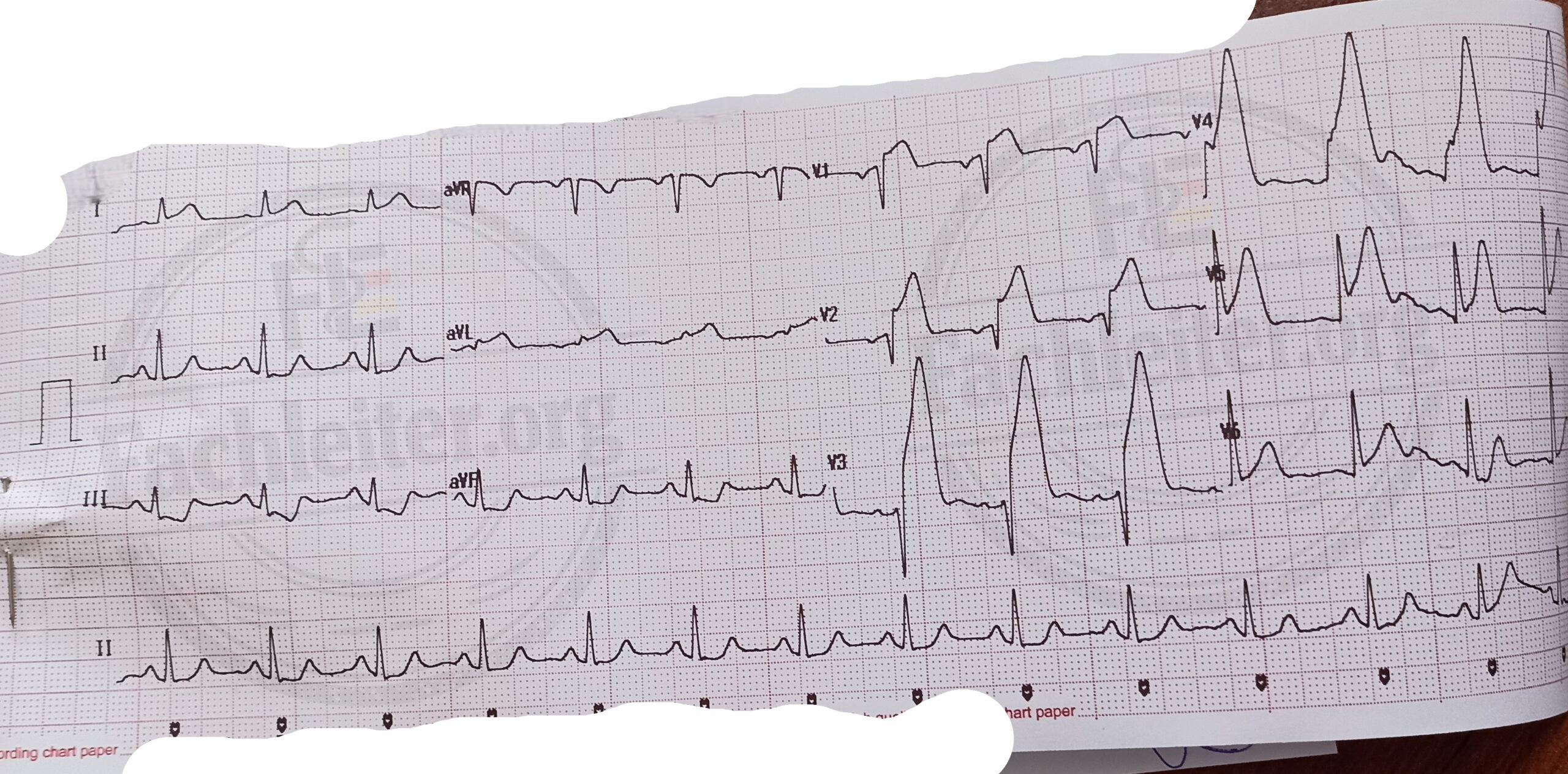
Summary ECG interpretation
- Identity and examination date: correct
- Technical quality: unremarkable
- Heart rate: approx. 88/min
- Rhythm: regular sinus rhythm (P waves positive in II, negative in aVR)
- PR interval: normal
- QRS complex: narrow, no intraventricular conduction disturbance
- ST segment: pronounced ST elevations in the precordial leads with reciprocal ST depressions in the inferior leads
Significance
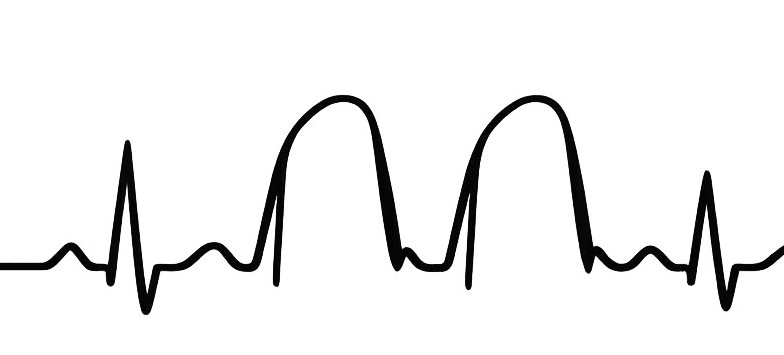
The ECG is highly consistent with an acute anterior STEMI (tombstone morphology) as an expression of an acute occlusion of the left anterior descending artery (LAD). This is a time-critical cardiology emergency that requires immediate reperfusion by means of primary PCI.
❓Questions
- Which differential diagnoses should still be briefly considered despite this ECG?
- Which immediate measures would you initiate in the practice?
- Which medications would you — if no contraindications exist — administer before transport?
- Do you need to wait for the troponin result first?
- How do you organize the further course if your practice does not have a cardiac catheterization lab?
- Which complications may occur in the next few minutes and what should you be prepared for?