Ulcus cruris is among the most common chronic wounds of the lower extremity. In this article you will learn the differences between Ulcus cruris venosum, Ulcus cruris arteriosum and diabetic foot syndrome – including risk factors, typical location, diagnostics and treatment. Ideal for FSP, knowledge exam, M3 and clinical practice.
Ulcus cruris – venous, arterial and diabetic ulcer
Main complaint
- Typically a patient over 50 years of age presents with a poorly healing ulcer on the lower extremities that has progressively enlarged over time.
- First, inquire about the location, size, condition of the wound edges, secretion and any possible odor of the ulcer.
- Next, pay attention to other trophic disturbances such as hair loss, skin discoloration or nail changes.
- Finally, specifically assess risk factors for the development of an Ulcus cruris.
Ulcer types
| Ulcer type | Location | Pain characteristics | Wound characteristics |
|---|---|---|---|
| Ulcus cruris venosum | Superior to the medial malleolus | Usually mildly painful | Superficial, irregular, granulation tissue and fibrin deposits |
| Ulcus cruris arteriosum | Lateral, pretibial or on the distal extremities | Severely painful | Deep, dry, sharply demarcated |
| Diabetic foot syndrome | Soles, interdigital spaces, toe tips and foot margins | Often painless (with polyneuropathy) | Pressure-related ulcers, dry and cracked skin |
Important: Photodocumentation of the wound should be performed during follow-up.
Risk factors
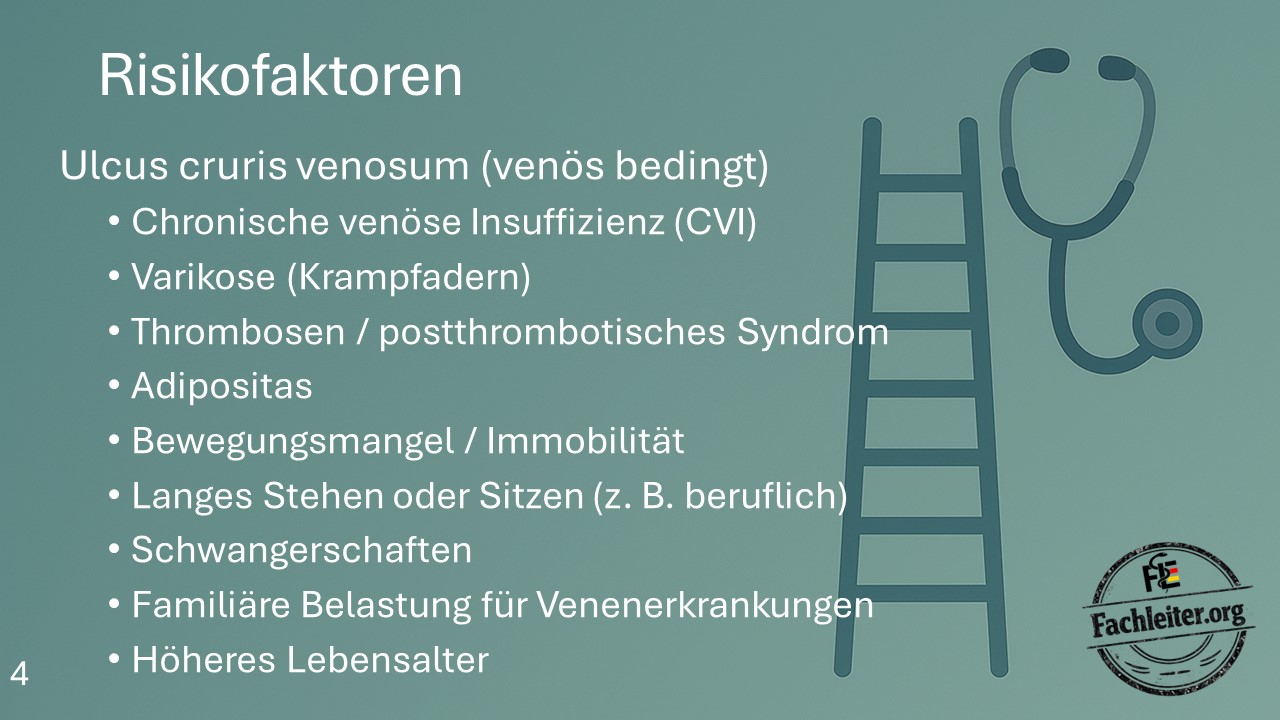
Ulcus cruris venosum (venous origin)
- Chronic venous insufficiency (CVI)
- Varicosis (varicose veins)
- Thromboses or post-thrombotic syndrome
- Obesity
- Lack of exercise or immobility
- Prolonged standing or sitting
- Pregnancies
- Family history of venous disease
- Advanced age
Ulcus cruris arteriosum (arterial origin)
- Peripheral arterial occlusive disease (PAD)
- Arteriosclerosis
- Diabetes mellitus
- Nicotine use (smoking)
- Arterial hypertension
- Dyslipidemia (elevated LDL cholesterol)
- Advanced age
- Positive family history of cardiovascular disease
Clinical classification
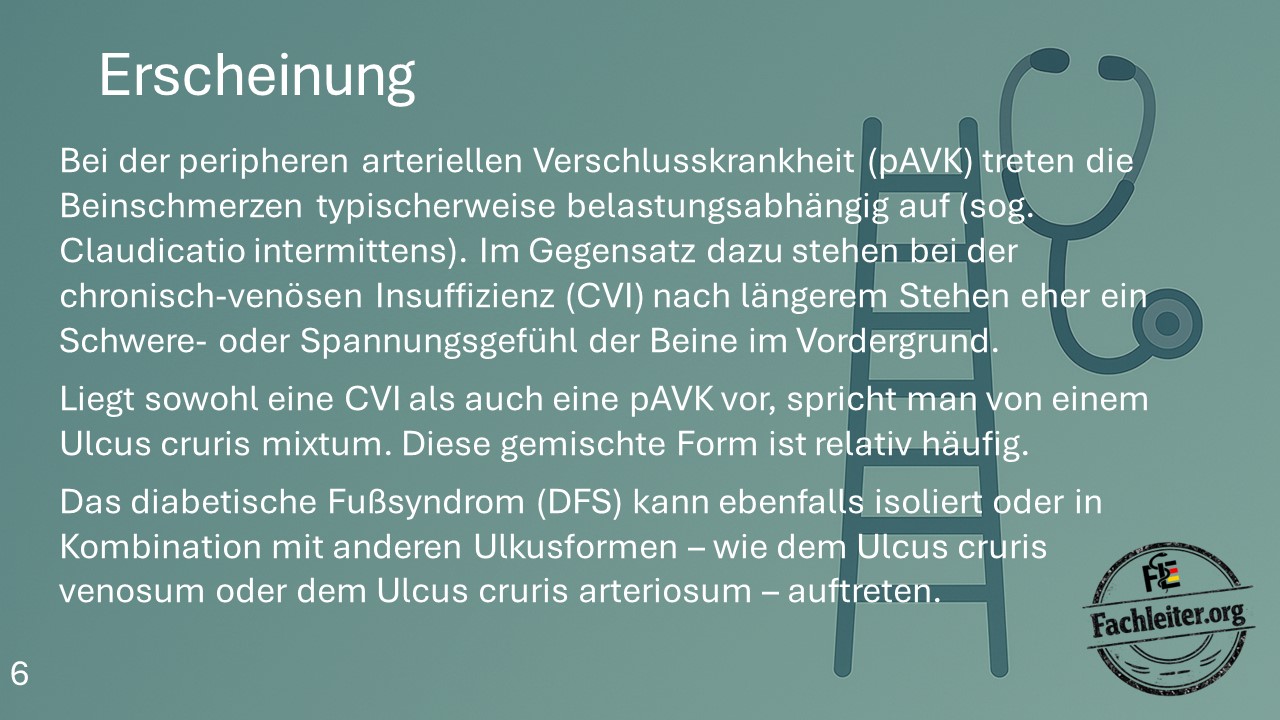
In peripheral arterial occlusive disease (PAD) leg pain typically occurs during exertion (intermittent claudication).
By contrast, in chronic venous insufficiency (CVI), prolonged standing more often leads to a sensation of heaviness and tension in the legs.
If both CVI and PAD are present, this is called an Ulcus cruris mixtum. This mixed form is relatively common.
Diabetic foot syndrome can occur both in isolation and together with other ulcer types.
Treatment
General measures
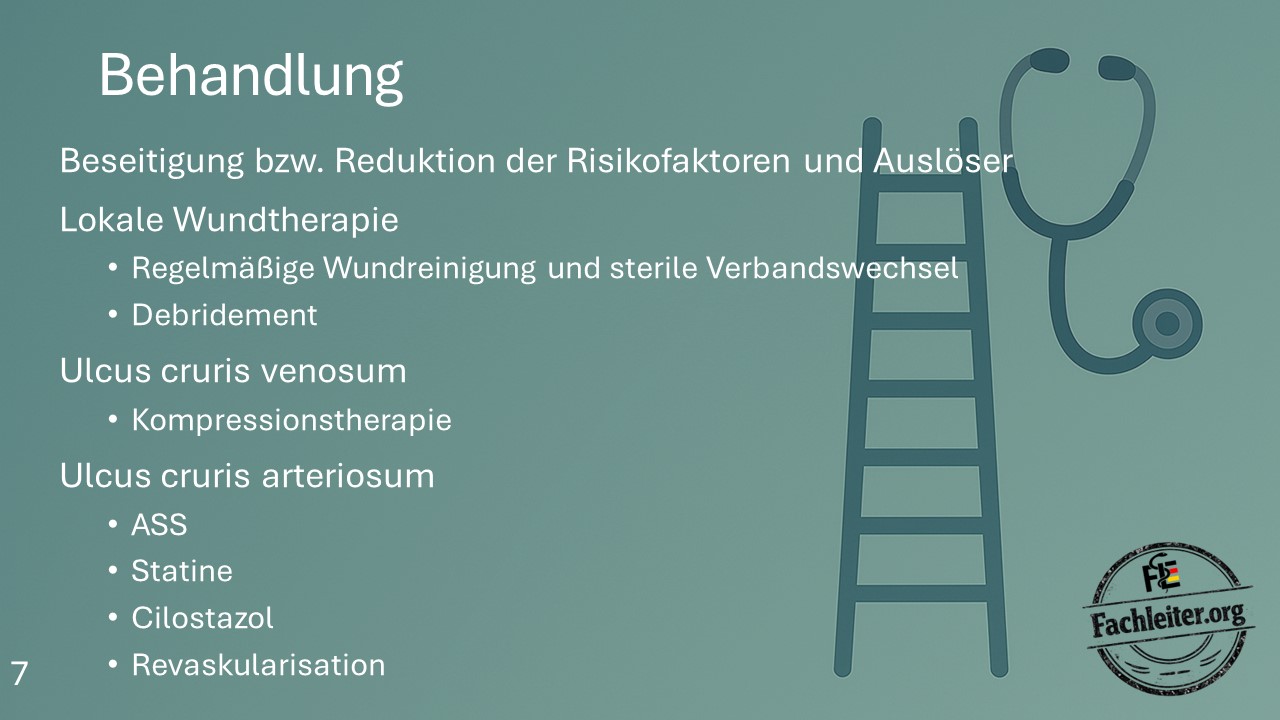
- Elimination or reduction of risk factors
- Local wound therapy
- Regular wound cleaning
- Sterile dressing changes
- Debridement
Ulcus cruris venosum
- Compression therapy
Ulcus cruris arteriosum
- ASA
- Statins
- Cilostazol (suitable patients)
- Revascularization