Sore throat and fever are among the most common reasons for presentation in primary care and the emergency department. This article explains the key differential diagnoses, shows the differences between viral pharyngitis, bacterial tonsillitis and epiglottitis, and describes typical symptoms, diagnostics and therapy. Ideal for preparation for the specialist language exam (FSP), knowledge examination (KP), M3 and clinical practice.
Sore Throat and Fever
Epidemiology and Age Aspects
- Viral infections occur regardless of age.
- They generally run more severely in older patients.
- From around age 45, the occurrence of bacterial pharyngitis becomes rather rare.
Main Symptoms
Acute onset sore throat, often in combination with fever.
Differential Diagnoses
The most important distinction here is between bacterial and viral causes.
Viral pharyngitis is the most common cause, e.g. due to rhinoviruses, adenoviruses, SARS-CoV-2, Epstein-Barr virus (EBV) or influenza viruses.
Bacterial tonsillitis is mainly caused by β-hemolytic group A streptococci.
Epiglottitis is rare but potentially life-threatening.
Although lymphomas or tuberculosis can also be associated with cervical lymphadenopathy, these cases typically do not present with sore throat. In addition, the characteristics of the lymphadenopathy usually differ, showing a chronic course and a different consistency.
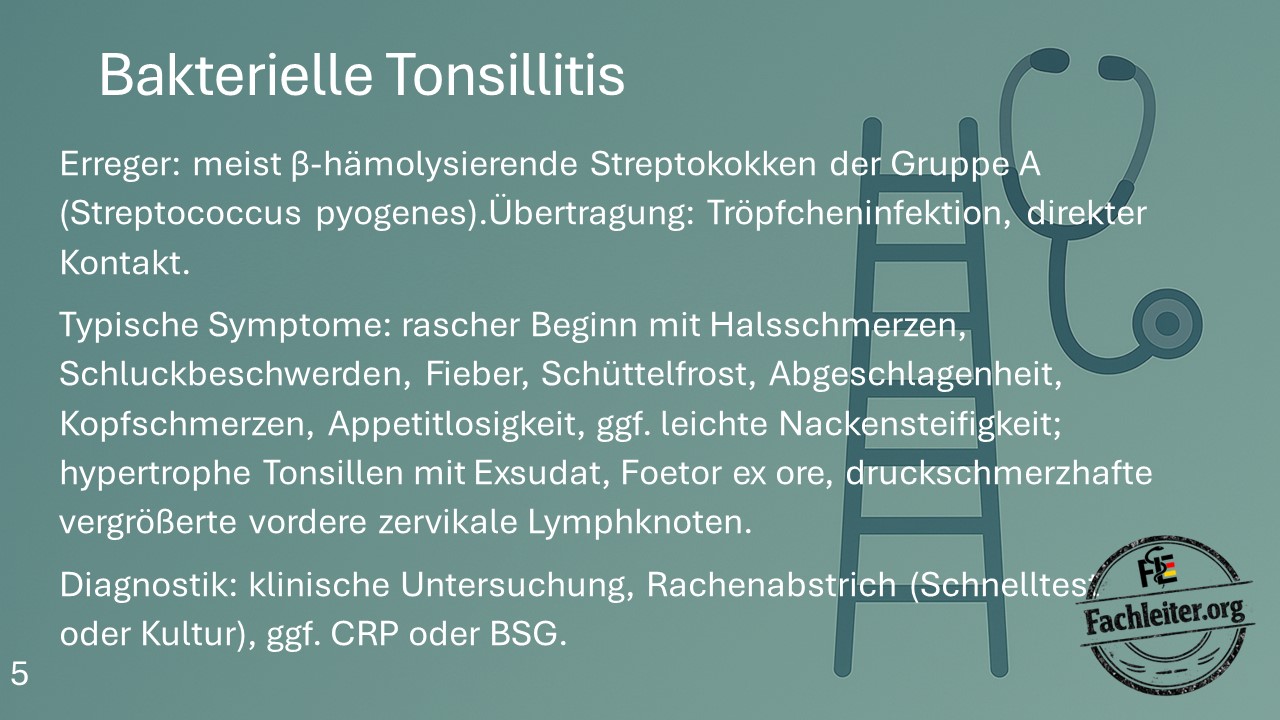
Bacterial Tonsillitis
Pathogen: mostly β-hemolytic group A streptococci (Streptococcus pyogenes).
Transmission: droplet infection and direct contact.
Typical symptoms: rapid onset with sore throat, difficulty swallowing, fever, chills, fatigue, headache, loss of appetite, possibly mild neck stiffness, hypertrophic tonsils with exudate, foetor ex ore and tender enlarged anterior cervical lymph nodes.
Diagnostics: clinical examination, throat swab with rapid test or culture, possibly CRP or ESR.
Viral Pharyngitis
Pathogen: Epstein-Barr virus (Herpesviridae).
Transmission: droplet infection and saliva contact (“kissing disease”).
Typical symptoms: pronounced malaise, cervical lymphadenopathy, frequent involvement of Waldeyer’s ring, splenomegaly, hepatomegaly and possibly a rash, especially after ampicillin administration.
Diagnostics: blood count with lymphocytosis and atypical lymphocytes, Monospot test and EBV serology.
Epiglottitis
Pathogen: formerly mainly Haemophilus influenzae type b, now rarer due to vaccination.
Transmission: droplet infection.
Typical symptoms: sudden onset, severe sore throat, marked dysphagia, drooling, muffled speech, inspiratory stridor and typically no cough.
Diagnostics: cautious clinical examination, possibly laryngoscopy in a controlled setting and blood cultures.
Therapy
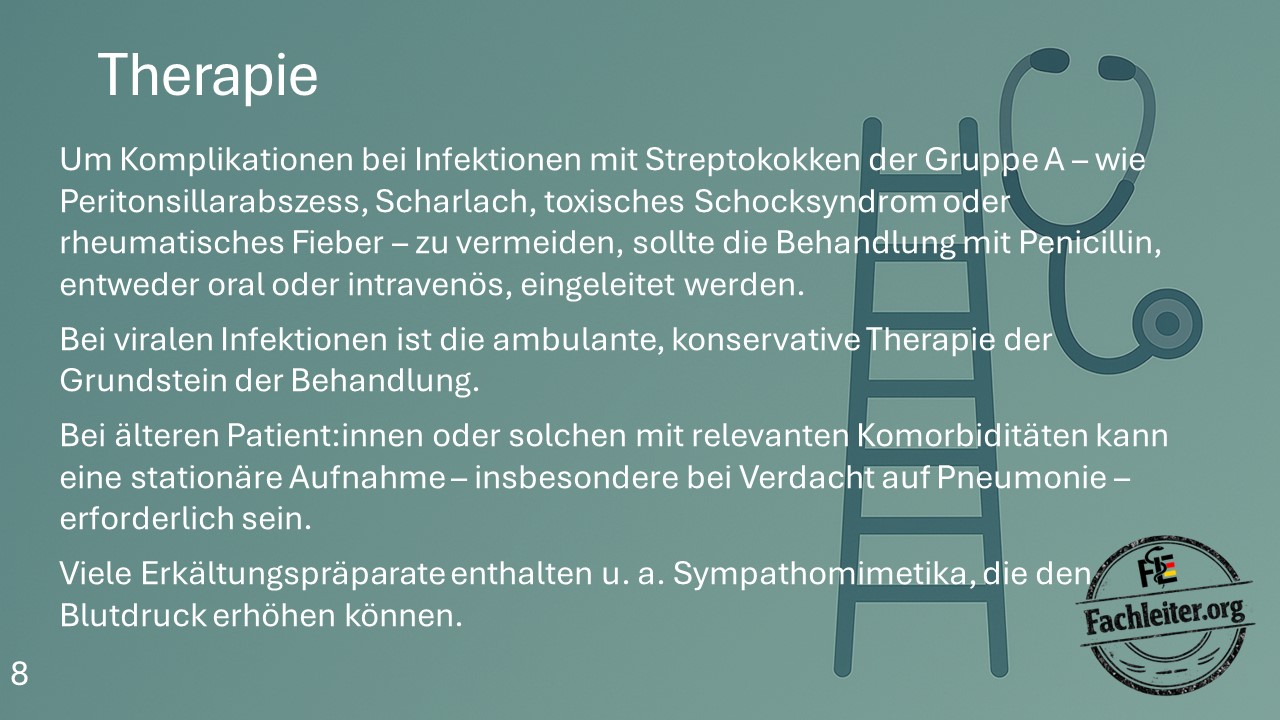
To avoid complications from group A streptococcal infections — such as peritonsillar abscess, scarlet fever, toxic shock syndrome or rheumatic fever — treatment with penicillin should be initiated, either orally or intravenously.
For viral infections, outpatient conservative therapy is the cornerstone of treatment.
Older patients or individuals with relevant comorbidities may require inpatient admission, particularly if pneumonia is suspected.
Many cold remedies contain sympathomimetics among other agents, which can increase blood pressure.