Dysphagia explained practically: This article shows the most important causes of swallowing disorders, typical courses and relevant differential diagnoses. The focus is on esophageal cancer, achalasia, Zenker diverticulum, goiter as well as laryngeal and pharyngeal cancer. Ideal for preparation for FSP, licensing exam, M3 and clinical practice.
Dysphagia
Main complaint
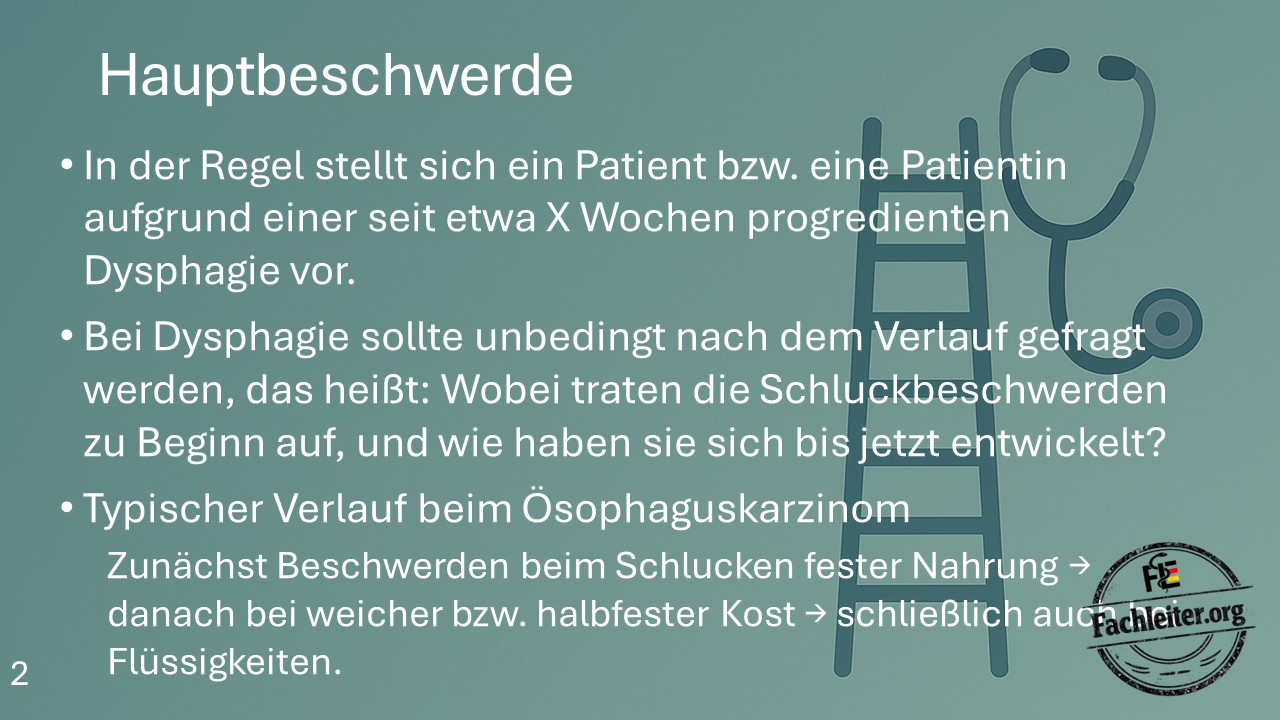
- Generally, a patient presents because of a progressive dysphagia of about X weeks’ duration.
- With dysphagia the course must be asked about: When did the swallowing difficulties first occur and how have they developed up to now?
- Typical course in esophageal cancer: initially difficulty swallowing solid food, then soft or semi-solid food and finally also liquids.
Differential diagnoses
| Condition | Typical clues / additional symptoms | Important investigations |
|---|---|---|
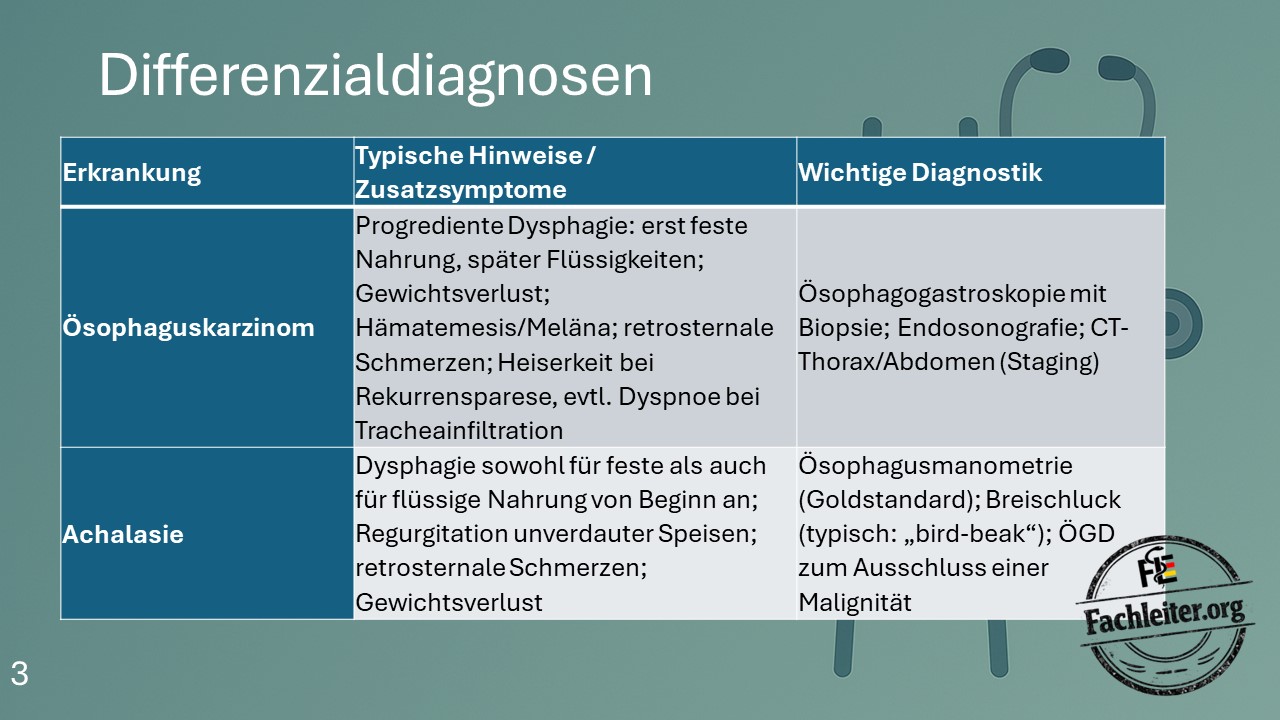
| Esophageal cancer | Progressive dysphagia: first solid food, later liquids; weight loss; hematemesis/melena; retrosternal pain; hoarseness with recurrent nerve palsy; possibly dyspnea with tracheal infiltration. | Esophagogastroscopy (EGD) with biopsy; endoscopic ultrasound (EUS); CT thorax/abdomen for staging. |
| Achalasia | Dysphagia for both solids and liquids from the onset; regurgitation of undigested food; retrosternal pain; weight loss. | Esophageal manometry as the gold standard; barium swallow, typically “bird-beak”; EGD to exclude malignancy. |
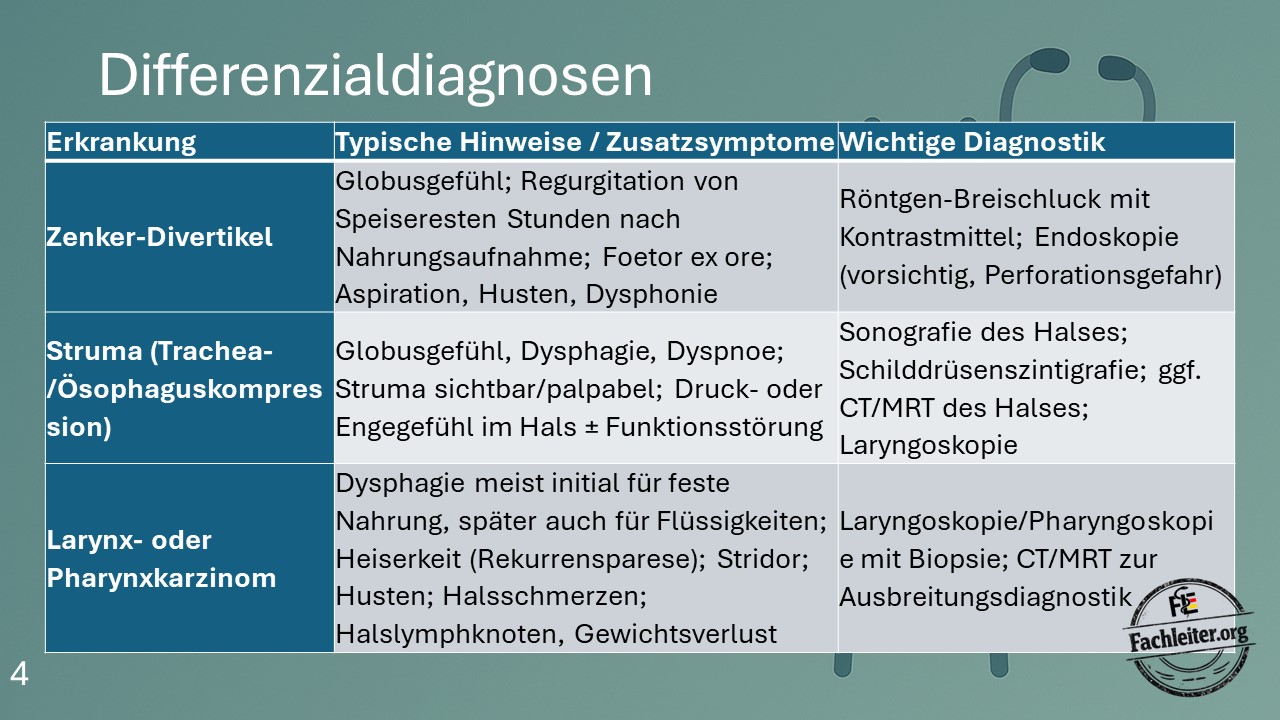
| Zenker diverticulum | Globus sensation; regurgitation of food residues hours after eating; halitosis (foetor ex ore); aspiration; cough; dysphonia. | Contrast barium swallow X-ray; endoscopy with caution due to risk of perforation. |
| Goiter (trachea/esophagus compression) |
Globus sensation, dysphagia, dyspnea; goiter visible or palpable; pressure or tightness in the neck; possibly dysfunction. | Neck ultrasound; thyroid scintigraphy; possibly CT/MRI of the neck; laryngoscopy. |
| Laryngeal or pharyngeal cancer | Dysphagia usually initially for solids, later also for liquids; hoarseness with recurrent nerve palsy; stridor; cough; sore throat; cervical lymph nodes; weight loss. | Laryngoscopy/pharyngoscopy with biopsy; CT/MRI for tumor extent assessment. |
Notes
Tobacco and alcohol consumption are major risk factors for esophageal cancer.
Squamous cell carcinoma occurs predominantly in the upper and middle third of the esophagus, while adenocarcinoma is typically located in the distal esophagus.
As the patient suffers from dysphagia, it should be specifically asked about trouble-free medication intake.
The prognosis is generally poor because the diagnosis is often made only at advanced stages.
Treatment usually includes a combination of surgical resection, chemotherapy and radiotherapy, depending on tumor stage and the patient’s general condition.