
Fachleiter
Description
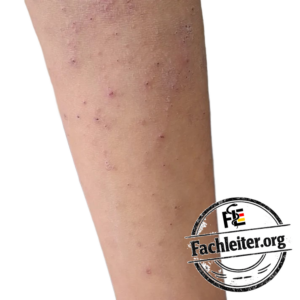
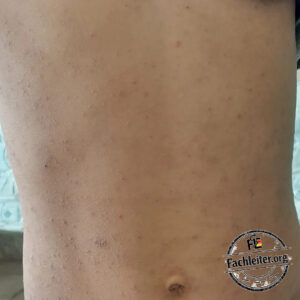
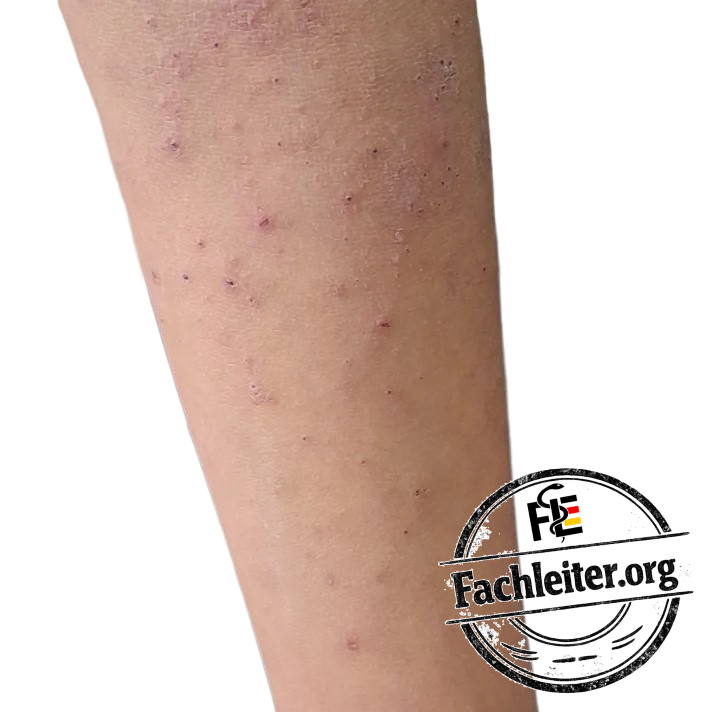
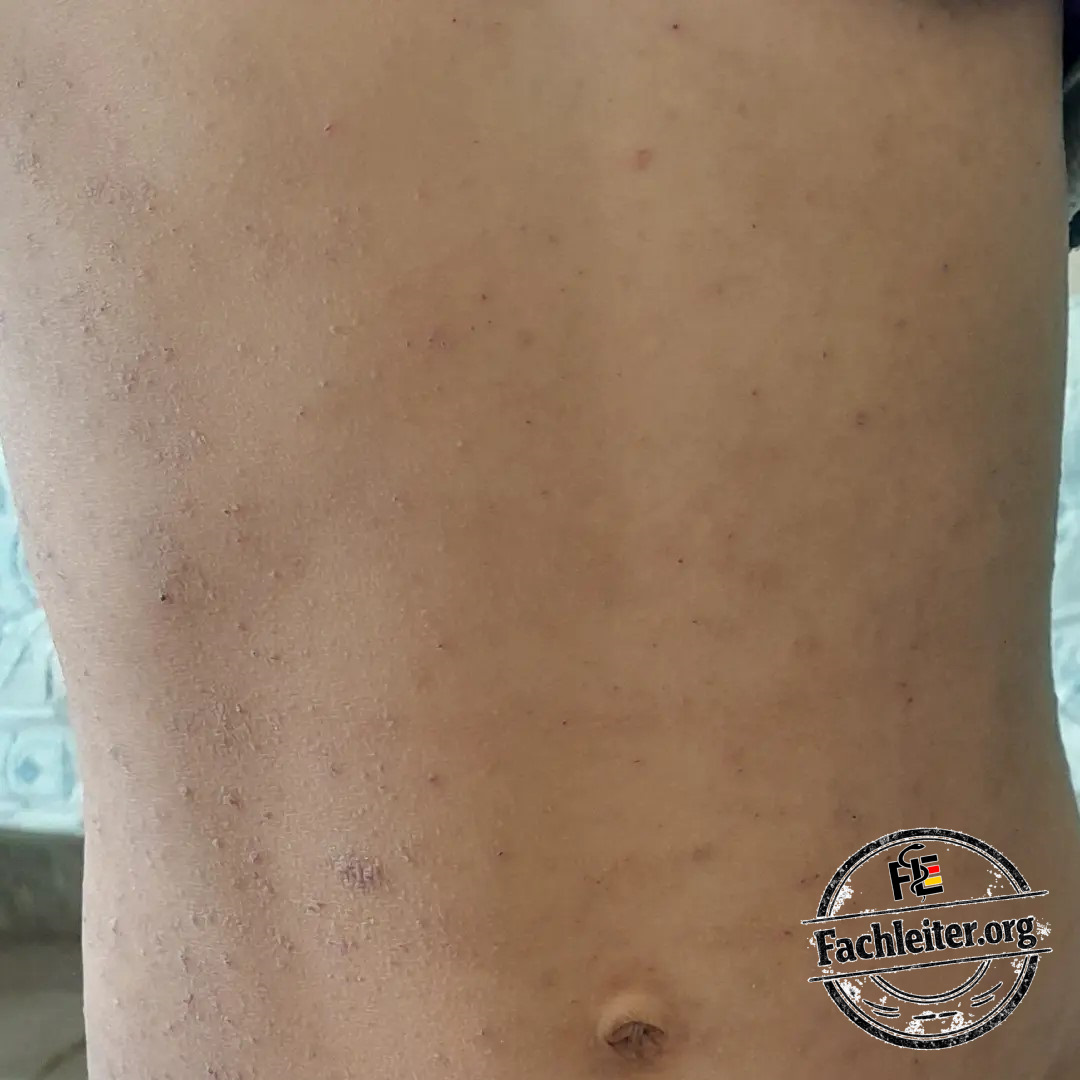
Typical findings:
- small red papules
- scratch marks (excoriations)
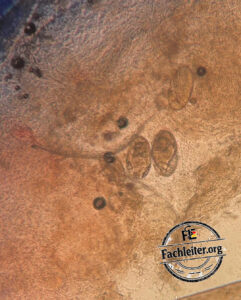
- fine, serpiginous mite burrows (“burrows”)
- sometimes vesicles or crusted skin areas
Skin changes are mainly due to the immune reaction to the mites.
Fachleiter
Localization
Commonly affected areas:
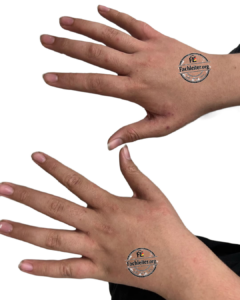
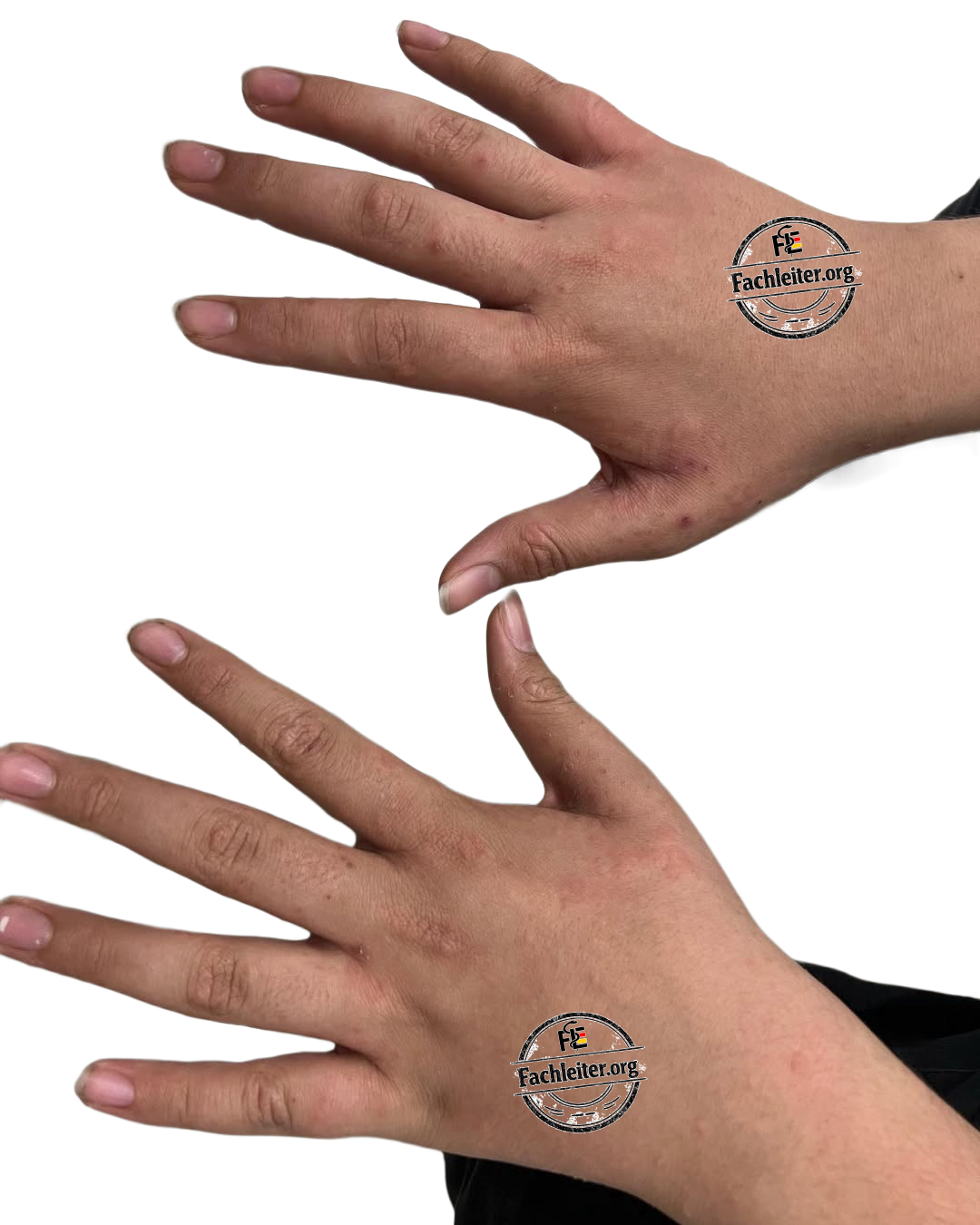
- interdigital spaces of the fingers
- wrists
- axillae (armpits)
- abdominal region and navel
- genital area
- buttocks
- nipple region
In infants/young children additionally:
- scalp
- face
- palms and soles
Fachleiter
Symptoms and course
| Lay terms | Medical terminology |
|---|---|
| Severe itching, especially at night | pronounced nocturnal pruritus |
| Small red spots or blisters | erythematous papules/vesicles |
| Skin is scratched | excoriations |
| Other family members also itch | familial clustering / positive contact history |
| Symptoms gradually worsen | progressive course |
highly contagious through close skin contact
Fachleiter
Cause
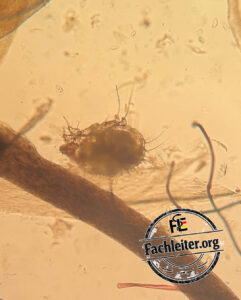
Caused by the scabies mite: Sarcoptes scabiei
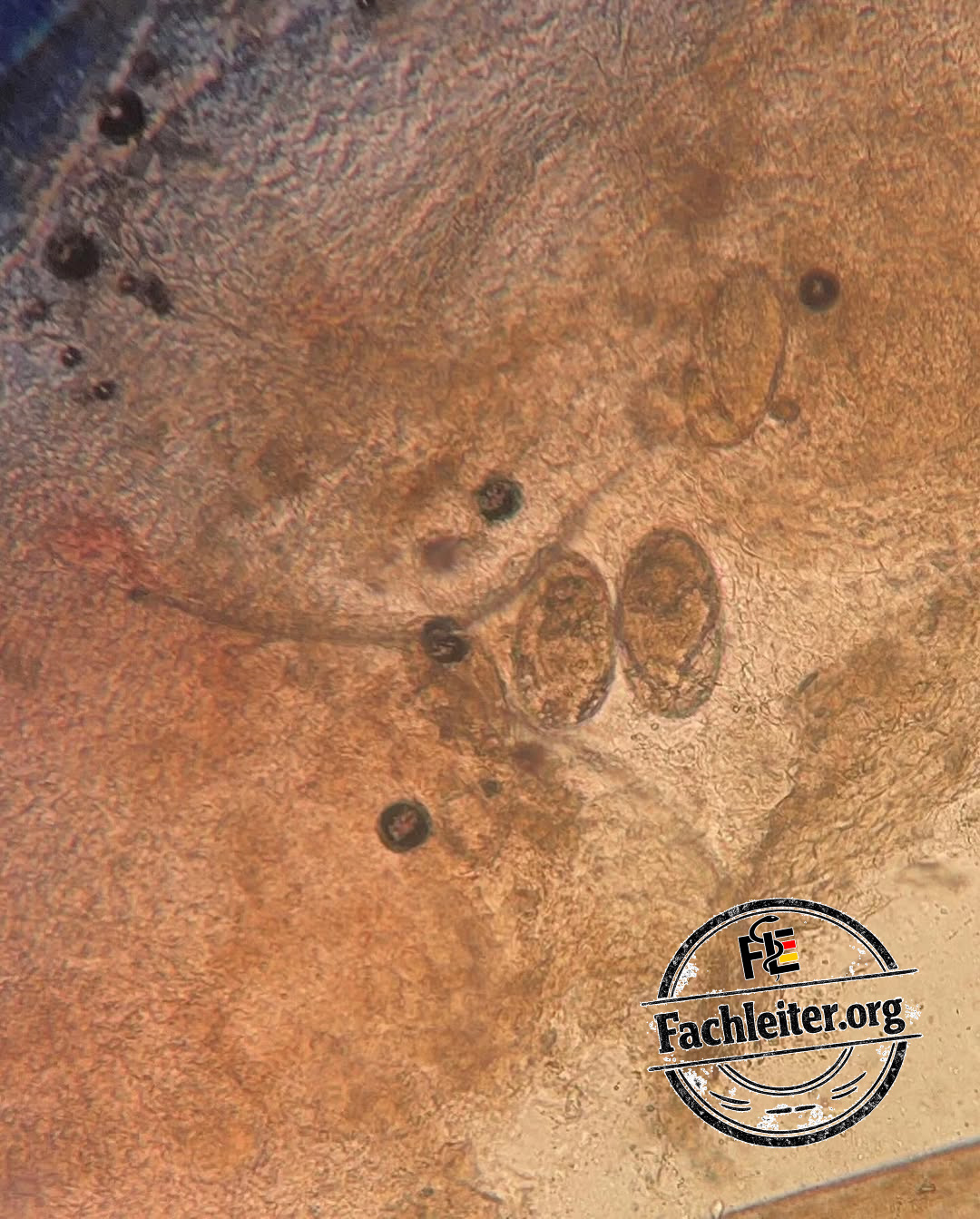
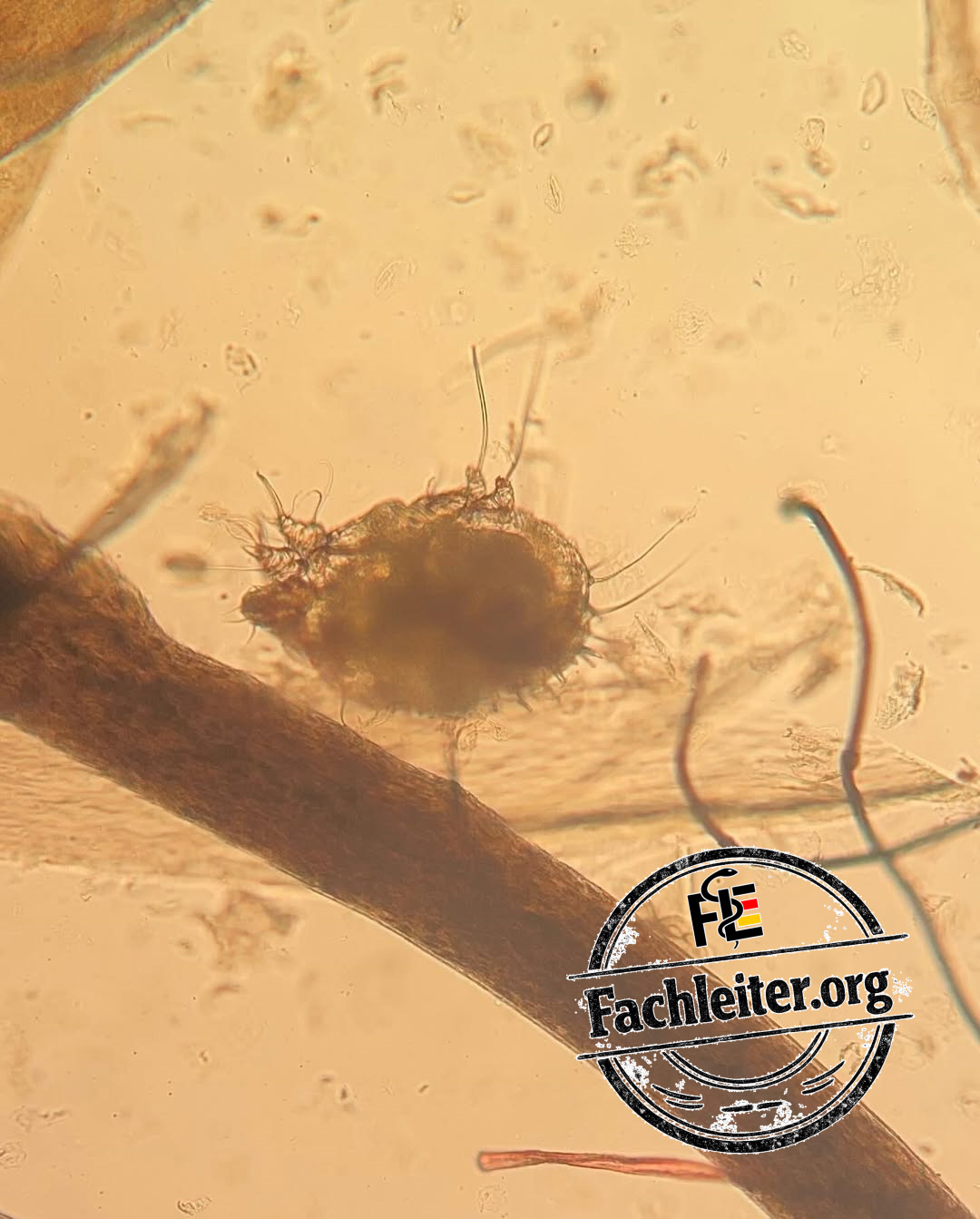
The scabies mite, Sarcoptes scabiei, is a tiny parasite that penetrates the outermost layer of the skin. There it creates small burrows and lays eggs. This leads to intense itching and skin rashes.
Fachleiter
Treatment
| Generic | Brand | Form | Dosage / Use |
|---|---|---|---|
| Permethrin 5 % | Infectoscab® 5% Cream | Cream | apply once to the entire body, leave on for 8–12 hours, then wash off |
| Ivermectin | Scabioral® | Tablets | 200 µg/kg orally once; repeat after 7–14 days possible |
| Benzyl benzoate 10–25 % | Antiscabiosum® | Lotion | apply for 3 consecutive days |
| Crotamiton | Crotamitex® | Cream/Lotion | apply for 3–5 days |
Fachleiter
Important considerations
- treat all close contacts simultaneously
- wash clothing, bedding and towels at at least 60 °C
- store non-washable items airtight for at least 72 hours
- itching may persist for several weeks despite successful therapy
- repeat treatment possible if symptoms persist
- antibiotics may be necessary in case of bacterial superinfection
- in infants, pregnant women or immunosuppressed patients, adapt therapy individually