
Introduction
Hand X‑ray is one of the most common examinations after a fall, trauma, pain or swelling. To reliably identify fractures, dislocations and other injuries, the normal bony anatomy of the hand and wrist should first be known.Röntgen
dorsopalmarer (d.-p.)
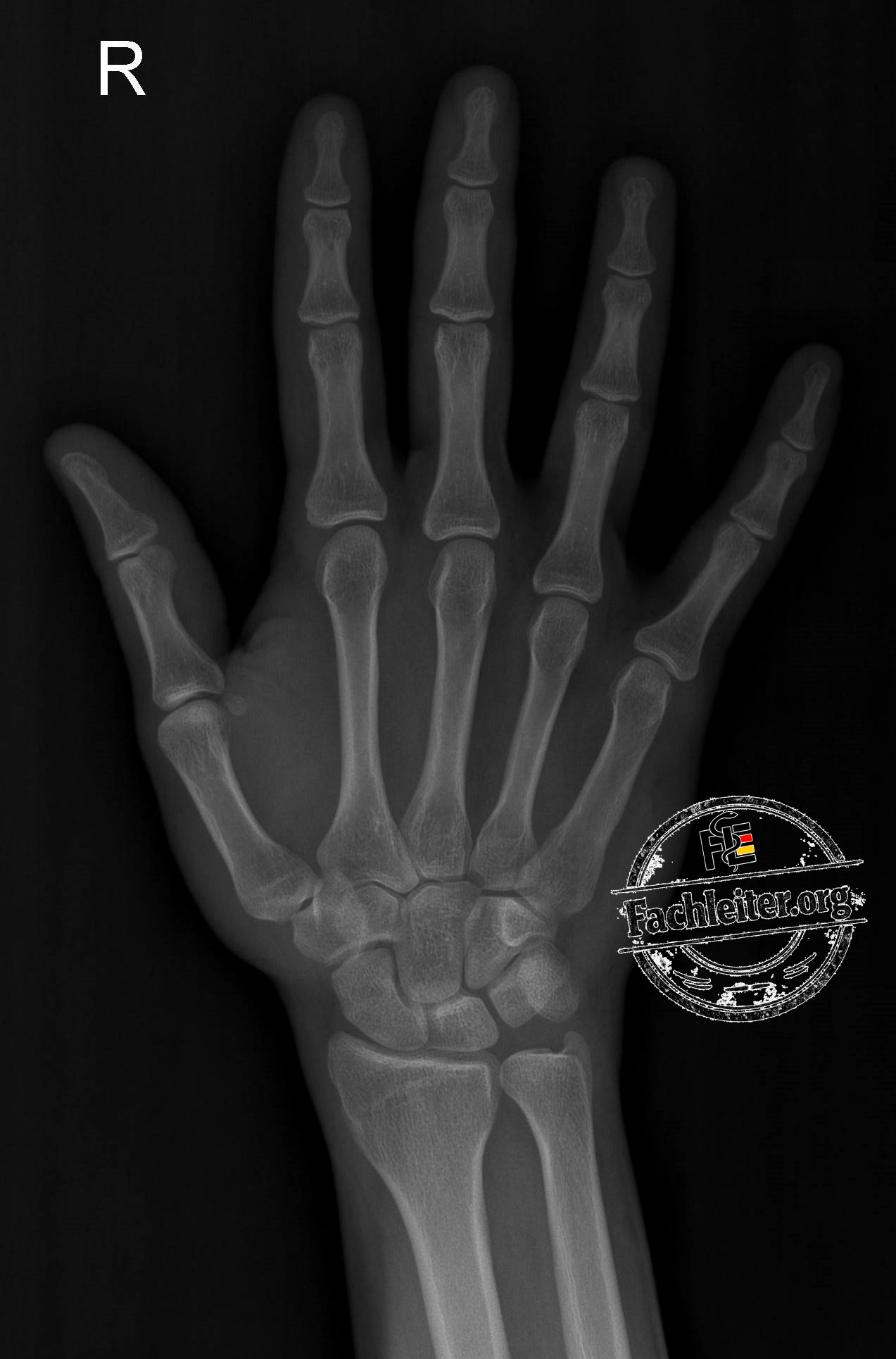
dorsopalmarer (d.-p.) 2
Schrägaufnahme
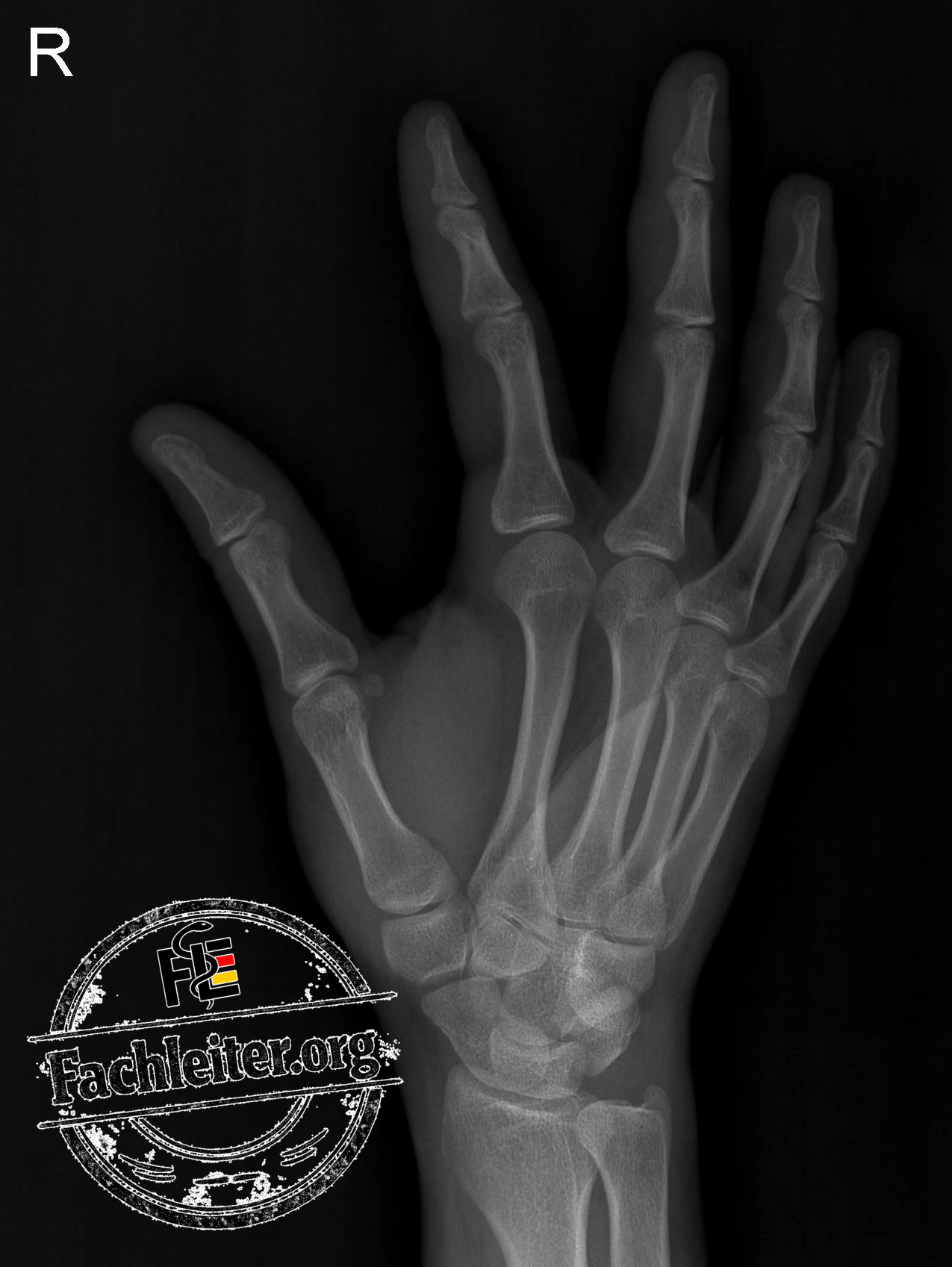
| Parameter | View | Normal value / Normal finding | Why important? |
|---|---|---|---|
| Radial inclination (Radial inclination) | PA/AP | approx. 21–25° | distal radius fracture |
| Palmar tilt (Volar tilt / Palmar tilt) | lateral | approx. 10–15° volar | distal radius fracture |
5 common injuries and fractures
1. Distal radius fracture
One of the most common fractures after a fall onto an outstretched hand.
2. Scaphoid fracture
Clinically particularly important, as the fracture may not always be clearly visible on the initial X‑ray.
3. Metacarpal fracture
A typical example is a fracture of the 5th metacarpal, especially at the neck (“boxer’s fracture”).
4. Finger fracture
Can affect the proximal, middle or distal phalanx.