
Fachleiter
Description
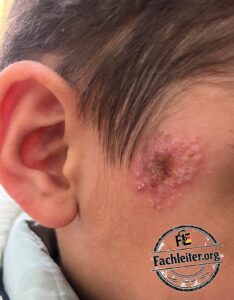
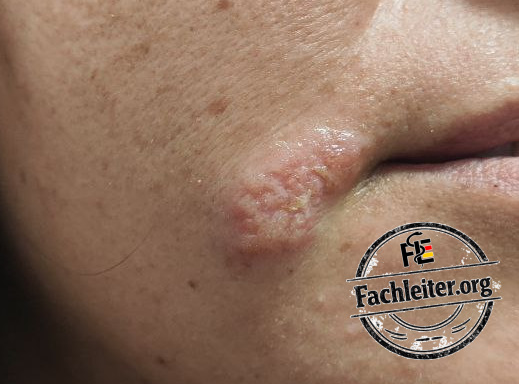
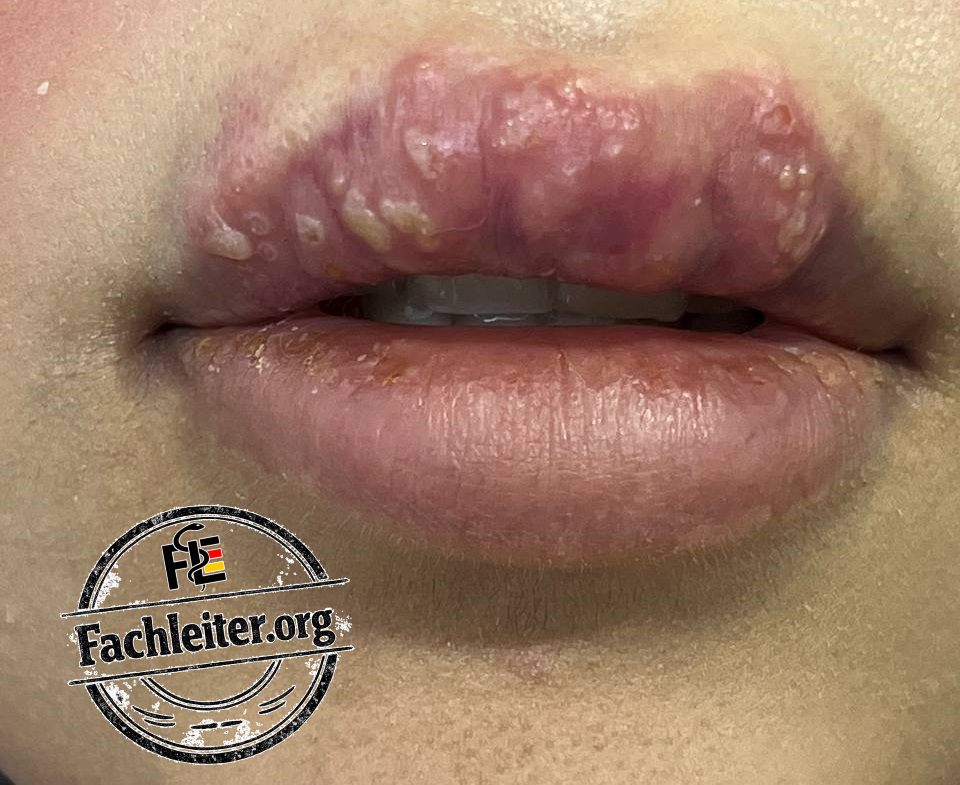
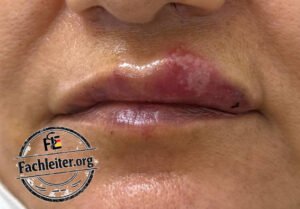
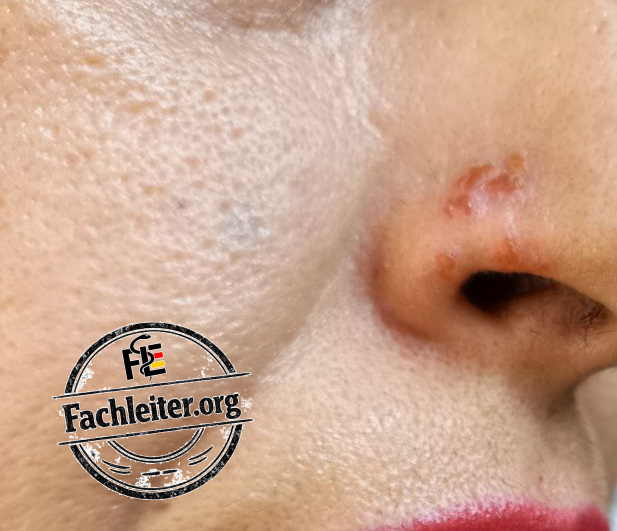
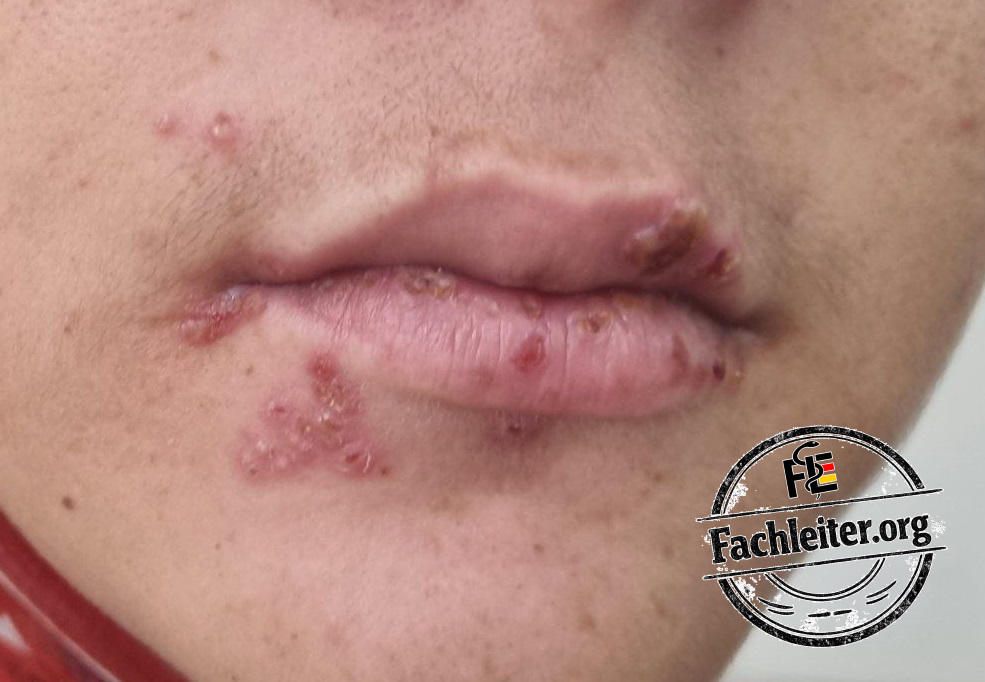
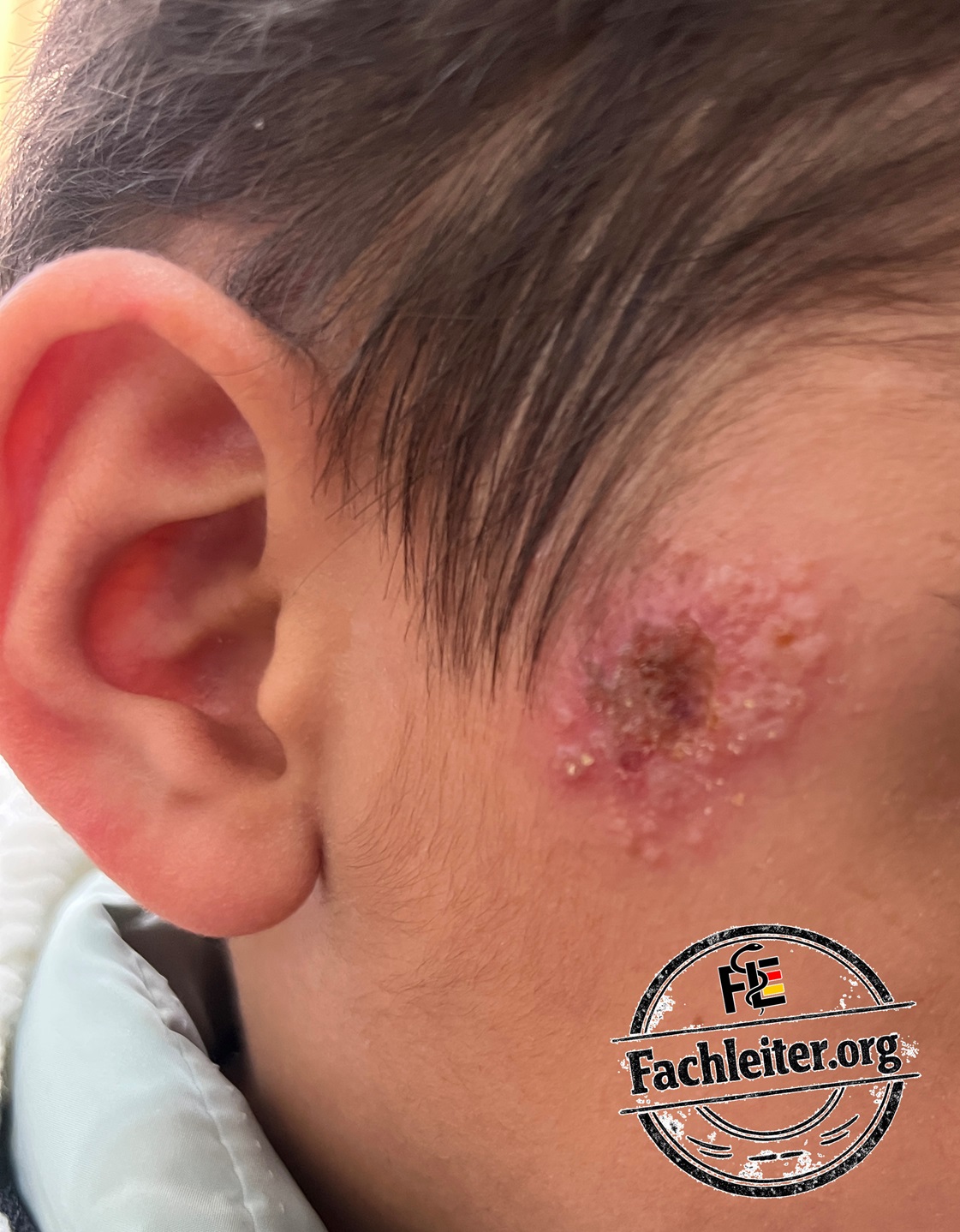
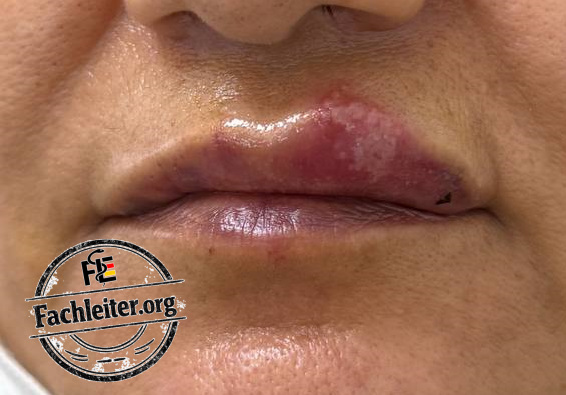
Typical are grouped small blisters on a reddened base.
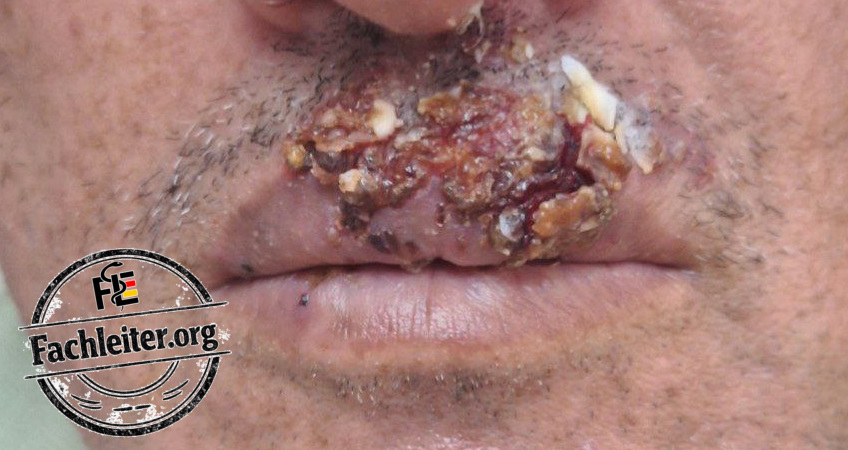
The blisters may burst, ooze and later crust over. Often burning, tingling, or a feeling of tension precedes them.
Fachleiter
Location
- Commonly on the lips (‘cold sores’)
- Corners of the mouth
- Nose / nostril
- Cheek or chin
- Rarely the eye area (caution!)
Fachleiter
Symptoms and Course
| Colloquial | Medical term |
|---|---|
| Tingling or burning | Prodromal stage |
| Small blisters | Vesicular lesions |
| Pain / burning | Dolor / burning |
| Crusting | Crust formation |
| Recurrent episodes | Recurrent infection |
1. Tingling/Burning
2. Blister formation
3. Rupture/Oozing
4. Crust formation
5. Healing usually within 7–14 days
Fachleiter
Cause / Triggers
Cause
- Caused by the herpes simplex virus type 1 (HSV-1), less commonly HSV-2.
- After the primary infection the virus remains in the body for life and can be reactivated.
Common triggers
- Stress
- Fever / infections
- UV radiation / sun
- Weakened immune system
- Lack of sleep
Fachleiter
Treatment
| Active ingredient (generic) | Brand name | Form | Dose | Use | Important notes / side effects |
|---|---|---|---|---|---|
| Aciclovir | Zovirax® | Cream 5 % | Apply thinly 5 times daily | Use early at tingling/burning | Local skin irritation or burning possible |
| Penciclovir | Fenistil Pencivir® | Cream 1 % | Every 2 hours during the day | Particularly effective in the early phase | Skin irritation possible |
| Aciclovir | Acic® / Zovirax® | Tablets | 400 mg 3 times daily or 200 mg 5 times daily | For more severe outbreaks or frequent recurrences | Nausea, headaches; monitor kidney function |
| Valaciclovir | Valtrex® | Tablets | 500–1000 mg 2 times daily | Easier dosing due to longer duration of action | Headache, nausea possible |
| Paracetamol | Ben-u-ron® / Paracetamol-ratiopharm® | Tablets | 500–1000 mg as needed | For pain or fever | Observe maximum dose |
| Ibuprofen | Nurofen® / Ibuflam® | Tablets | 400 mg as needed | For pain and inflammation | Caution with stomach problems or kidney disease |
Fachleiter
Important considerations
- Exclude eye involvement!
- Do not pick at the blisters
- Wash hands regularly
- No kissing during active blisters
- No shared towels / lip care products
- Use lip sun protection